 Indietro
lecture 9 (ns) Thermochemistry II: Hess’s Law and Heat of Formation
Guida di studio - Note intelligenti
 Appunti personalizzati basati sui tuoi materiali, ampliati con definizioni chiave, esempi e contesto.
Thermochemistry and Enthalpy Changes
Thermochemical Equations
Thermochemical equations represent chemical reactions that include both the changes in matter and the associated energy changes. The sign of the enthalpy change (ΔH) indicates whether the reaction is endothermic or exothermic:
Endothermic Reaction: Heat is absorbed, ΔH > 0.
Exothermic Reaction: Heat is released, ΔH < 0.
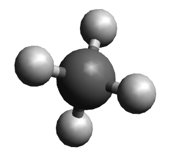
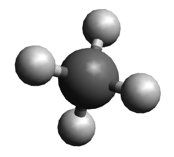
Example: Melting ice (H2O(s) → H2O(l), ΔH = +6.01 kJ/mol) is endothermic; combustion of methane (CH4(g) + 2O2(g) → CO2(g) + 2H2O(l), ΔH = -890.4 kJ/mol) is exothermic.
Enthalpy of Reaction
The enthalpy of reaction (ΔHrxn) is the heat change associated with a chemical reaction at constant pressure. Breaking chemical bonds requires energy, while forming bonds releases energy.
ΔHrxn < 0: Exothermic reaction; products have lower enthalpy than reactants.
ΔHrxn > 0: Endothermic reaction; products have higher enthalpy than reactants.
Enthalpy in Stoichiometry
ΔHrxn is proportional to the stoichiometric coefficients in the balanced chemical equation. For example, in the combustion of propane:
C3H8(g) + 5 O2(g) → 3 CO2(g) + 4 H2O(g), ΔHrxn = -2044 kJ
Each mole of C3H8 combusted releases -2044 kJ.
Constant Pressure Calorimetry
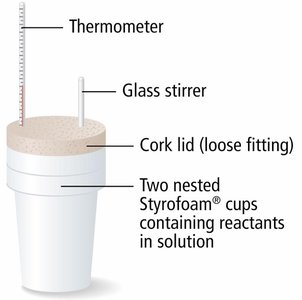
Constant pressure calorimetry ("coffee cup calorimetry") is used to measure ΔHrxn for reactions in solution. The system is the reaction, and the surroundings are the solution.
qrxn = -qsoln
qsoln = msoln × Cs,soln × ΔT
ΔHrxn = qp / moles of reactant
Processes with Energy Change
Many physical and chemical processes involve energy changes, including combustion, boiling, freezing, and dissolving.
Combustion: Exothermic process (heat released).
Boiling: Endothermic process (heat absorbed).
Freezing: Exothermic process (heat released).
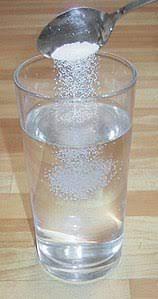
Dissolving: Can be endothermic or exothermic depending on the solute and solvent.




Types of Enthalpy Changes
Common ΔHrxn Types
Different types of enthalpy changes are associated with specific processes:
ΔHsoln: Heat of solution (dissolving).
ΔHc: Heat of combustion.
ΔHn: Heat of neutralization.
ΔHfus: Heat of fusion (melting).
ΔHvap: Heat of vaporization (boiling).
ΔHfo: Standard heat of formation.
Hess’s Law
Principle of Hess’s Law
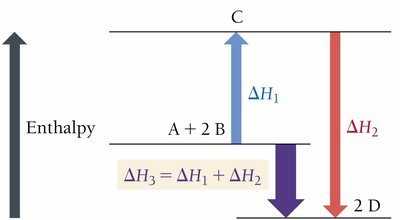
Hess’s Law states that if a reaction can be expressed as the sum of a series of steps, the overall enthalpy change is the sum of the enthalpy changes for each step. This is a consequence of enthalpy being a state function.
Mathematical Expression:
Example: If A + 2B → C (ΔH1) and C → 2D (ΔH2), then A + 2B → 2D (ΔH3 = ΔH1 + ΔH2).

Manipulating Chemical Equations
When manipulating chemical equations, the enthalpy change must be adjusted accordingly:
Multiplying: If the equation is multiplied by a factor, ΔHrxn is multiplied by the same factor.
Reversing: If the equation is reversed, the sign of ΔHrxn is changed.
Standard Enthalpy of Formation
Definition and Calculation
The standard enthalpy of formation (ΔHfo) is the enthalpy change when one mole of a compound is formed from its elements in their standard states. For pure elements in their standard state, ΔHfo = 0.
Standard State: Gas at 1 atm, liquid/solid in most stable form at 1 atm, solution at 1 M.
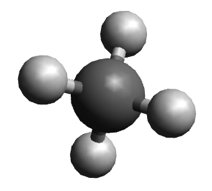
Example: C(s, graphite) + 2 H2(g) → CH4(g), ΔHfo = -74.6 kJ/mol at 25°C.
Using Standard Heats of Formation
To calculate the enthalpy change for a reaction using standard heats of formation:
Example: For 2 Al(s) + Fe2O3(s) → Al2O3(s) + 2 Fe(s):
Reactant/Product | ΔHfo (kJ/mol) |
|---|---|
Al(s) | 0.0 |
Fe2O3(s) | -826.0 |
Al2O3(s) | -1676.7 |
Fe(s) | 0.0 |
Calculation:
kJ/mol

Practice Problems and Applications
Heat of Formation Reactions
Writing the heat of formation reaction for a compound involves combining elements in their standard states to form one mole of the compound.
Example: Mg(s) + C(s, graphite) + 3/2 O2(g) → MgCO3(s)
6 C(s, graphite) + 6 H2(g) + 3 O2(g) → C6H12O6(s)
Calculating ΔHrxn Using ΔHfo
For the reaction 4 NH3(g) + 5 O2(g) → 4 NO(g) + 6 H2O(g):
Reactant/Product | ΔHfo (kJ/mol) |
|---|---|
NH3(g) | -45.9 |
NO(g) | +91.3 |
H2O(g) | -241.8 |
O2(g) | 0.0 |
Calculation:
kJ/mol
Heat of Sublimation Example
For the reaction 2 Ti(s) + 3 I2(g) → 2 TiI3(s), with ΔHrxn = -839 kJ/mol and ΔHfo of TiI3(s) = -328 kJ/mol, the heat of sublimation of I2 (ΔHsub) can be calculated:
ΔHsub = ΔHfo (I2(g)) - ΔHfo (I2(s)) = +61.0 kJ/mol
Summary Table: Enthalpy Calculations
Process | Equation |
|---|---|
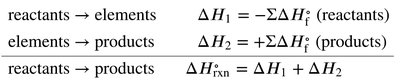
Reactants → Elements | |
Elements → Products | |
Reactants → Products |
Additional info: All equations are provided in LaTeX format for clarity and academic rigor. Images included are directly relevant to the explanation of enthalpy changes, calorimetry, Hess’s Law, and standard heats of formation.
