Ch.1 - Introduction: Matter, Energy, and Measurement
Brown - Chemistry: The Central Science 14th Edition
Brown14th EditionChemistry: The Central ScienceISBN: 9780134414232Non è quello che usi tu?Cambia libro di testo
Capitolo 1, Problema 66a

(a) Which is more likely to eventually be shown to be incorrect: an hypothesis or a theory?

Guida verificata passo dopo passo
1
Understand the definitions: An hypothesis is a proposed explanation made on the basis of limited evidence as a starting point for further investigation. A theory, on the other hand, is a well-substantiated explanation acquired through the scientific method and repeatedly tested and confirmed through observation and experimentation.
Recognize the level of evidence: Hypotheses are generally the initial step in the scientific method, often based on less evidence and not yet extensively tested. Theories have undergone extensive testing and are supported by a significant amount of evidence.
Consider the process of scientific validation: Theories are usually accepted by the scientific community after a rigorous process of evaluation and are less likely to be disproven compared to hypotheses, which are still in the early stages of evaluation.
Evaluate the likelihood of change: Since hypotheses are tentative and not yet thoroughly tested, they are more susceptible to being disproven or modified as new evidence emerges.
Conclude which is more likely to be shown incorrect: Based on the above understanding, an hypothesis is more likely to eventually be shown to be incorrect compared to a theory, due to its preliminary nature and lesser degree of testing and evidence.

Risposta video verificata per un problema simile:

Questa soluzione video è stata consigliata dai nostri tutor come utile per risolvere questo problema.
Durata del video:
2m

Concetti chiave

Ecco i concetti essenziali che devi comprendere per rispondere correttamente alla domanda.

Hypothesis

A hypothesis is a testable statement or prediction about the relationship between two or more variables. It is often formulated based on observations and prior knowledge, serving as a starting point for scientific investigation. Hypotheses can be supported or refuted through experimentation and data collection, making them inherently provisional.

Theory

A theory is a well-substantiated explanation of an aspect of the natural world that is based on a body of evidence and has withstood rigorous testing and scrutiny. Theories integrate and generalize many hypotheses and are widely accepted within the scientific community. Unlike hypotheses, theories are more comprehensive and are less likely to be shown incorrect, although they can be refined or expanded with new evidence.
Video consigliato:
Percorso guidato
02:08
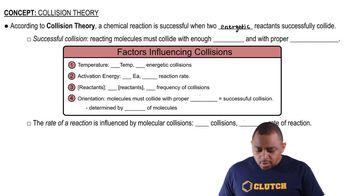
Collision Theory

Scientific Method

The scientific method is a systematic approach to inquiry that involves making observations, forming hypotheses, conducting experiments, and drawing conclusions. This iterative process allows scientists to test and refine their ideas, leading to the development of theories. Understanding the scientific method is crucial for distinguishing between the provisional nature of hypotheses and the more established status of theories.
Video consigliato:
Percorso guidato
01:41
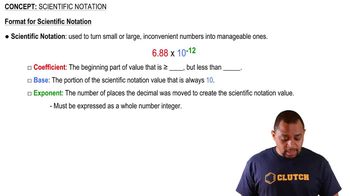
Scientific Notation Concepts
Pratica correlata
Domanda del libro di testo

Classify each of the following as a pure substance, a solution, or a heterogeneous mixture: (a) a leaf (b) a 999 gold bar

1153
views
1
rank

Domanda del libro di testo

A copper refinery produces a copper ingot weighing 70 kg. If the copper is drawn into wire whose diameter is 7.50 mm, how many meters of copper can be obtained from the ingot? The density of copper is 8.94 g/cm3. (Assume that the wire is a cylinder whose volume V = πr2h, where r is its radius and h is its height or length.)

1009
views
Domanda del libro di testo

(b) A(n) _________ reliably predicts the behavior of matter, while a(n) _________ provides an explanation for that behavior.

606
views
Domanda del libro di testo

Two students determine the percentage of lead in a sample as a laboratory exercise. The true percentage is 22.52%. The students’ results for three determinations are as follows: (1) 22.52, 22.48, 22.54 (2) 22.64, 22.58, 22.62 (a) Calculate the average percentage for each set of data and state which set is the more accurate based on the average.

1
views
Domanda del libro di testo

Classify each of the following as a pure substance, a solution, or a heterogeneous mixture: (c) stainless steel.

865
views
Domanda del libro di testo

A sample of ascorbic acid (vitamin C) is synthesized in the laboratory. It contains 1.50 g of carbon and 2.00 g of oxygen. Another sample of ascorbic acid isolated from citrus fruits contains 6.35 g of carbon. According to the law of constant composition, how many grams of oxygen does it contain?

2284
views