Domanda del libro di testo
The distance from Earth to the Moon is approximately 240,000 mi. (c) The speed of light is 3.00 ⨉ 108 m/s. How long does it take for light to travel from Earth to the Moon and back again?
616
views

 Brown 14th EditionCh.1 - Introduction: Matter, Energy, and MeasurementProblema 72g
 Guida verificata passo dopo passo
 02:13
02:13
 01:26
01:26 00:47
00:47The distance from Earth to the Moon is approximately 240,000 mi. (c) The speed of light is 3.00 ⨉ 108 m/s. How long does it take for light to travel from Earth to the Moon and back again?
The distance from Earth to the Moon is approximately 240,000 mi. (a) What is this distance in meters?
What type of quantity (for example, length, volume, density) do the following units indicate? (g) Pa.
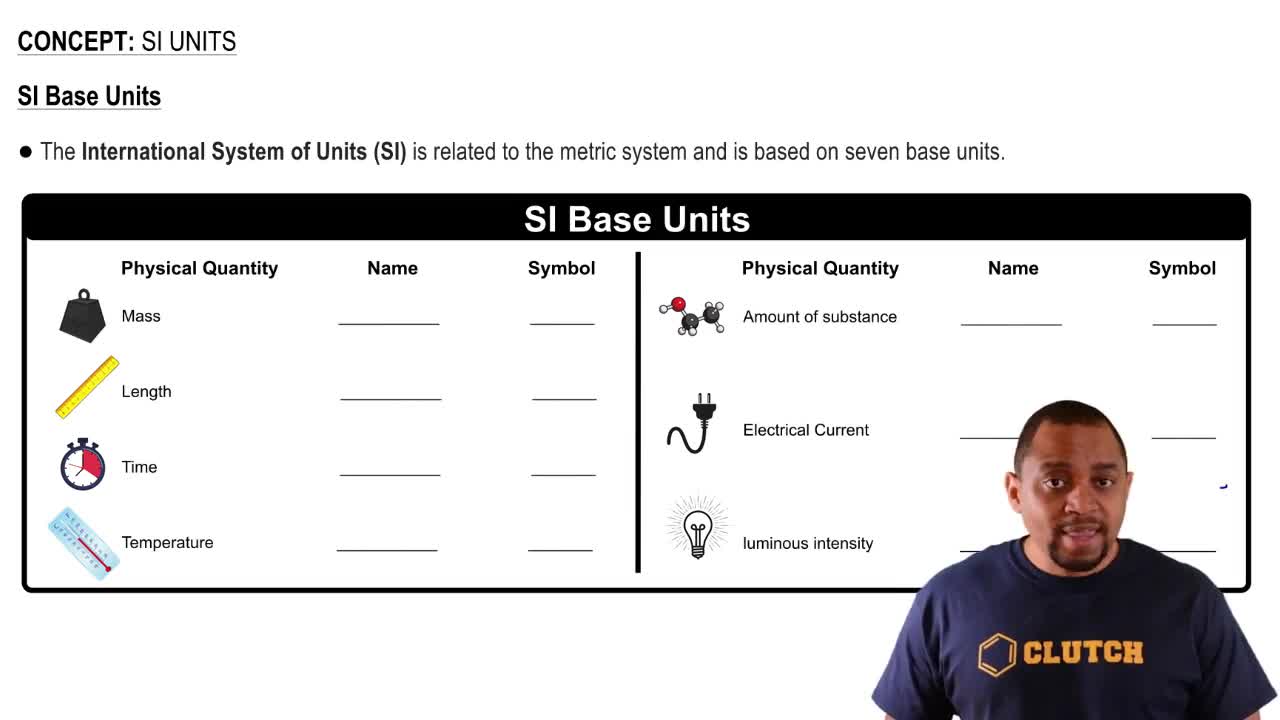
Give the derived SI units for each of the following quantities in base SI units: (a) acceleration = distance/time2 (b) force = mass × acceleration (c) work = force × distance (d) pressure = force/area
Give the derived SI units for each of the following quantities in base SI units: (e) power = work/time
The distance from Earth to the Moon is approximately 240,000 mi. (b) The peregrine falcon has been measured as traveling up to 350 km/ hr in a dive. If this falcon could fly to the Moon at this speed, how many seconds would it take?