Ch.16 - Acid-Base Equilibria
Brown - Chemistry: The Central Science 14th Edition
Brown14th EditionChemistry: The Central ScienceISBN: 9780134414232Non è quello che usi tu?Cambia libro di testo
Capitolo 16, Problema 96

Identify the Lewis acid and Lewis base in each of the following reactions:
(a) HNO2(aq) + OH-(aq) ⇌ NO2-(aq) + H2O(l)
(b) FeBr3(s) + Br-(aq) ⇌ FeBr4-(aq)
(c) Zn2+(aq) + 4 NH3(aq) ⇌ Zn(NH3)42+(aq)
(d) SO2(g) + H2O(l) ⇌ H2SO3(aq)

Guida verificata passo dopo passo
1
Identify the species involved in the reaction: FeBr3(s) and Br^-(aq).
Recall the definition of a Lewis acid: a species that can accept an electron pair.
Recall the definition of a Lewis base: a species that can donate an electron pair.
Determine which species is accepting an electron pair: FeBr3 is accepting an electron pair from Br^- to form FeBr4^-.
Determine which species is donating an electron pair: Br^- is donating an electron pair to FeBr3, making Br^- the Lewis base.

Risposta video verificata per un problema simile:

Questa soluzione video è stata consigliata dai nostri tutor come utile per risolvere questo problema.
Durata del video:
2m

Concetti chiave

Ecco i concetti essenziali che devi comprendere per rispondere correttamente alla domanda.

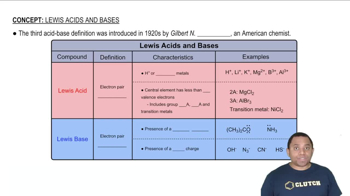
Lewis Acids and Bases

Lewis acids are substances that can accept an electron pair, while Lewis bases are those that can donate an electron pair. This theory expands the definition of acids and bases beyond protons, focusing instead on electron pair interactions. Understanding this concept is crucial for identifying the roles of reactants in chemical reactions.
Video consigliato:
Percorso guidato
05:04
Lewis Acids and Bases

Electron Pair Donation

In the context of Lewis acid-base theory, electron pair donation refers to the process by which a Lewis base donates a pair of electrons to a Lewis acid. This interaction forms a coordinate covalent bond, which is essential in many chemical reactions. Recognizing which species donates and which accepts electrons is key to determining the acid-base roles in a reaction.
Video consigliato:
Percorso guidato
00:47
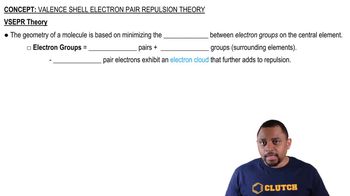
Valence Shell Electron Pair Repulsion Theory

Coordination Complexes

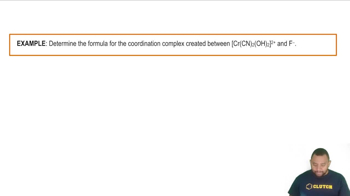
Coordination complexes are formed when a central metal atom or ion binds to surrounding ligands through coordinate covalent bonds. In the given reaction, the formation of FeBr4- involves the coordination of bromide ions to the iron center. Understanding how these complexes form helps in identifying the Lewis acid and base in the reaction.
Video consigliato:
Percorso guidato
00:43
Coordination Complexes Example