Ch.20 - Electrochemistry
Brown - Chemistry: The Central Science 14th Edition
Brown14th EditionChemistry: The Central ScienceISBN: 9780134414232Non è quello che usi tu?Cambia libro di testo
Capitolo 20, Problema 32

(a) Which electrode of a voltaic cell, the cathode or the anode, corresponds to the higher potential energy for the electrons? (b) What are the units for electrical potential? How does this unit relate to energy expressed in joules?

Guida verificata passo dopo passo
1
Step 1: Understand the roles of the anode and cathode in a voltaic cell. The anode is where oxidation occurs, and electrons are released. The cathode is where reduction occurs, and electrons are accepted.
Step 2: Recognize that electrons flow from the anode to the cathode in a voltaic cell. This flow is due to the difference in potential energy between the two electrodes.
Step 3: Determine which electrode has higher potential energy for electrons. Since electrons move from high to low potential energy, the anode has higher potential energy for electrons compared to the cathode.
Step 4: Identify the units for electrical potential. Electrical potential is measured in volts (V).
Step 5: Relate volts to energy in joules. One volt is defined as one joule per coulomb (1 V = 1 J/C), indicating the amount of energy per unit charge.

Concetti chiave

Ecco i concetti essenziali che devi comprendere per rispondere correttamente alla domanda.

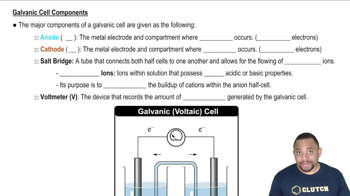
Voltaic Cell Components

A voltaic cell consists of two electrodes: the anode and the cathode. The anode is where oxidation occurs, releasing electrons, while the cathode is where reduction takes place, accepting electrons. The cathode has a higher potential energy for electrons compared to the anode, as it is the site of electron gain, leading to a flow of electrons from the anode to the cathode.
Video consigliato:
Percorso guidato
03:55
Galvanic Cell Components

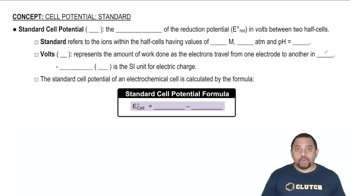
Electrical Potential and Its Units

Electrical potential, often measured in volts (V), represents the potential energy per unit charge available to move electrons through a circuit. One volt is defined as one joule of energy per coulomb of charge. This relationship indicates that higher electrical potential corresponds to greater energy available for electron movement, which is crucial for understanding how voltaic cells operate.
Video consigliato:
Percorso guidato
01:27
Standard Cell Potential

Relationship Between Joules and Volts

The relationship between joules and volts is fundamental in electrical systems. Specifically, 1 volt equals 1 joule per coulomb, meaning that if a charge of one coulomb moves through an electrical potential difference of one volt, it gains one joule of energy. This connection is essential for calculating energy changes in electrochemical reactions within voltaic cells.
Video consigliato:
Percorso guidato
02:57
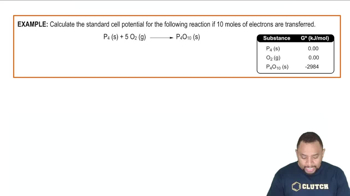
Relationship between ∆E°, ∆G°, and K Example