
Domanda del libro di testo
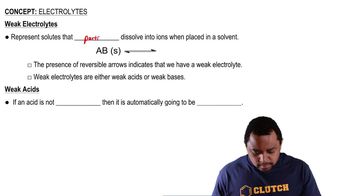
Specify what ions are present upon dissolving each of the following substances in water: (b) K2CO3
886
views
1
comments

 Guida verificata passo dopo passo
 00:55
00:55
 00:54
00:54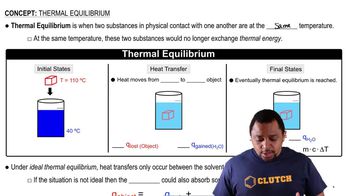 02:35
02:35Specify what ions are present upon dissolving each of the following substances in water: (b) K2CO3
Acetone, CH3COCH3, is a nonelectrolyte; hypochlorous acid, HClO, is a weak electrolyte; and ammonium chloride, NH4Cl, is a strong electrolyte. (a) What are the solutes present in aqueous solutions of each compound? What solute particles are present in an aqueous solution of HClO?
Specify what ions are present upon dissolving each of the following substances in water: (d) NaCH3COO
Formic acid, HCOOH, is a weak electrolyte. Write the chemical equation for the ionization of HCOOH.
Acetone, CH3COCH3, is a nonelectrolyte; hypochlorous acid, HClO, is a weak electrolyte; and ammonium chloride, NH4Cl, is a strong electrolyte. (a) What are the solutes present in aqueous solutions of each compound? What solute particles are present in an aqueous solution of NH4Cl?
Specify what ions are present upon dissolving each of the following substances in water: (c) HClO4