Ch.10 - Gases: Their Properties & Behavior
McMurry - Chemistry 8th Edition
McMurry8th EditionChemistryISBN: 9781292336145Non è quello che usi tu?Cambia libro di testo
Capitolo 10, Problema 62

Imagine that you have two identical flasks, one containing hydrogen at STP and the other containing oxygen at STP. How can you tell which is which without opening them?

Guida verificata passo dopo passo
1
1. The problem is asking us to differentiate between two flasks containing hydrogen and oxygen gases at Standard Temperature and Pressure (STP) without opening them. We can do this by using the properties of these gases.
2. Hydrogen and oxygen gases have different densities. At STP, the density of a gas can be calculated using the formula: Density = Molar mass / (22.4 L/mol). The molar mass of hydrogen (H2) is approximately 2 g/mol, and the molar mass of oxygen (O2) is approximately 32 g/mol.
3. By substituting the molar masses into the density formula, we find that the density of hydrogen is much less than the density of oxygen. This means that the flask containing hydrogen will be lighter than the flask containing oxygen, assuming the flasks are identical and contain equal volumes of gas.
4. Therefore, by comparing the weights of the two flasks, we can determine which flask contains hydrogen and which contains oxygen. The lighter flask contains hydrogen, and the heavier flask contains oxygen.
5. It's important to note that this method assumes that the gases are ideal and that the flasks are at the same temperature and pressure. In reality, gases are not perfectly ideal, and their behavior can deviate from the ideal gas law, especially at high pressures and low temperatures. However, at STP, gases behave relatively ideally, so this method should work well.

Risposta video verificata per un problema simile:

Questa soluzione video è stata consigliata dai nostri tutor come utile per risolvere questo problema.
Durata del video:
2m

Concetti chiave

Ecco i concetti essenziali che devi comprendere per rispondere correttamente alla domanda.

Physical Properties of Gases

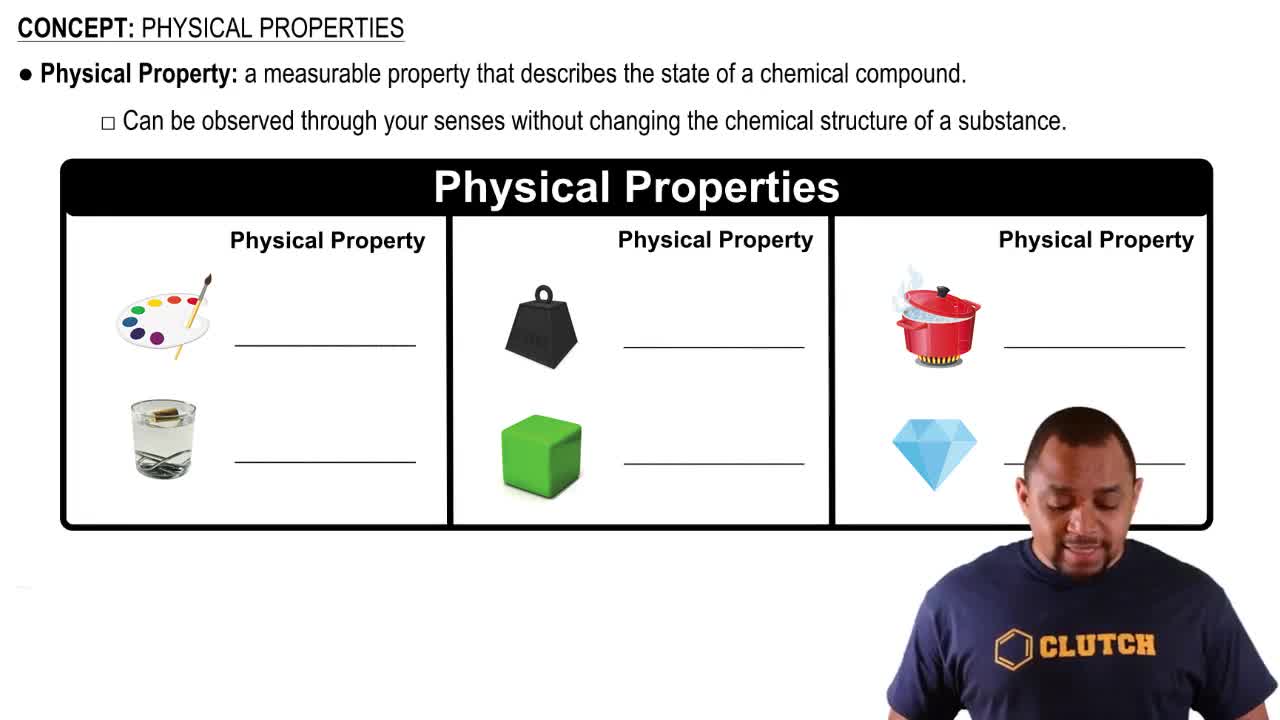
Gases have distinct physical properties such as density, solubility, and reactivity. At standard temperature and pressure (STP), hydrogen is much less dense than oxygen, which can be used to differentiate them. For instance, if you were to place a small object in each flask, the hydrogen would lift the object more easily due to its lower density.
Video consigliato:
Percorso guidato
02:54
Physical Properties

Chemical Behavior of Gases

Hydrogen and oxygen exhibit different chemical behaviors, particularly in their reactivity. Hydrogen is a highly flammable gas, while oxygen supports combustion. By introducing a small ignition source near the flasks, the presence of hydrogen would result in a more vigorous reaction, indicating its identity.
Video consigliato:

Gas Diffusion

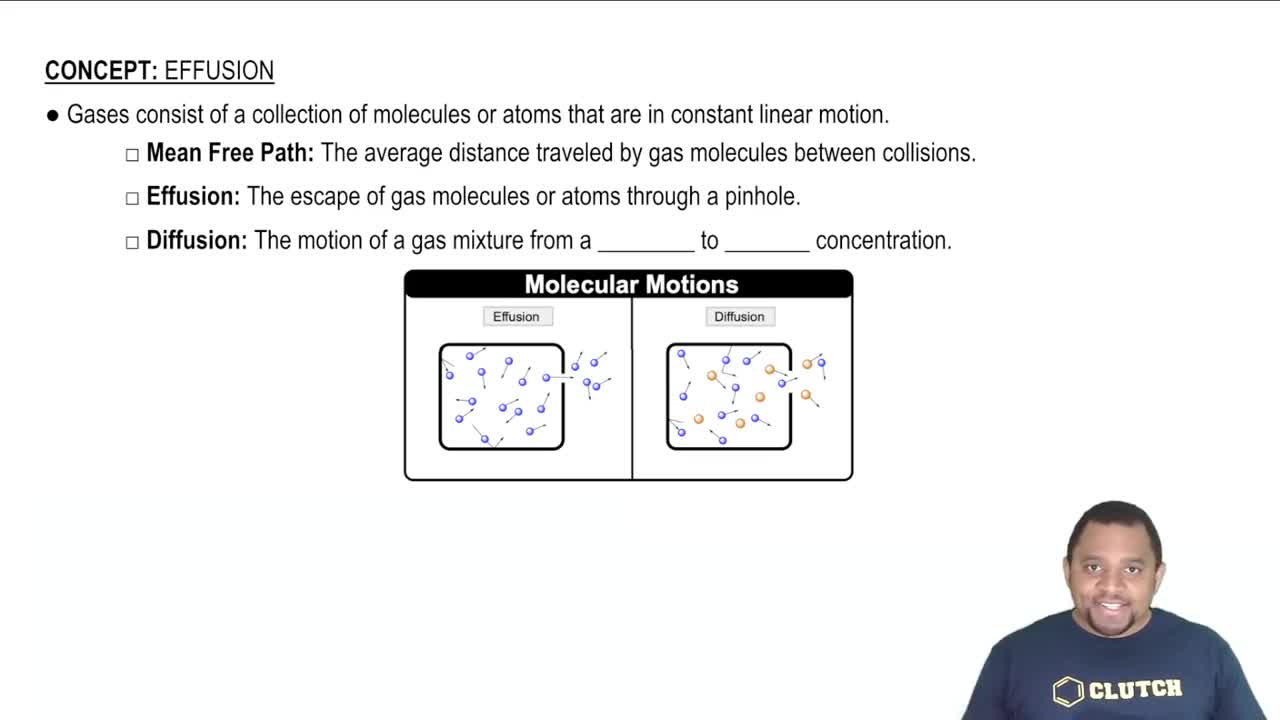
Diffusion is the process by which gas molecules spread from areas of high concentration to low concentration. Hydrogen, being lighter, diffuses faster than oxygen. If you were to observe the rate at which gas escapes from a small opening in each flask, the flask with hydrogen would show a quicker rate of diffusion compared to the flask with oxygen.
Video consigliato:
Percorso guidato
02:33
Effusion vs Diffusion