
Ch.15 - Chemical Equilibrium
McMurry - Chemistry 8th Edition
McMurry8th EditionChemistryISBN: 9781292336145Non è quello che usi tu?Cambia libro di testo
Capitolo 15, Problema 51a

The following pictures represent the initial and equilibrium states for the exothermic reaction of solid A (red) with gas- eous B2 (blue) to give gaseous AB. (a) Write a balanced chemical equation for the reaction.

Guida verificata passo dopo passo
1
Identify the reactants and products from the description: solid A and gaseous B2 react to form gaseous AB.
Write the unbalanced chemical equation: A (solid) + B2 (gas) -> AB (gas).
Balance the equation by ensuring the number of atoms of each element is the same on both sides.
Since B2 is a diatomic molecule, you may need to adjust coefficients to balance the B atoms.
Check the balance of the equation: ensure the number of A and B atoms are equal on both sides.

Risposta video verificata per un problema simile:

Questa soluzione video è stata consigliata dai nostri tutor come utile per risolvere questo problema.
Durata del video:
1m

Concetti chiave

Ecco i concetti essenziali che devi comprendere per rispondere correttamente alla domanda.

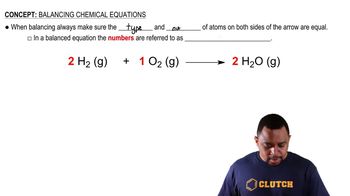
Balanced Chemical Equation

A balanced chemical equation represents a chemical reaction with equal numbers of each type of atom on both sides of the equation. This ensures the law of conservation of mass is upheld, meaning that matter is neither created nor destroyed during the reaction. Balancing involves adjusting coefficients in front of the chemical formulas to achieve this equality.
Video consigliato:
Percorso guidato
01:32
Balancing Chemical Equations

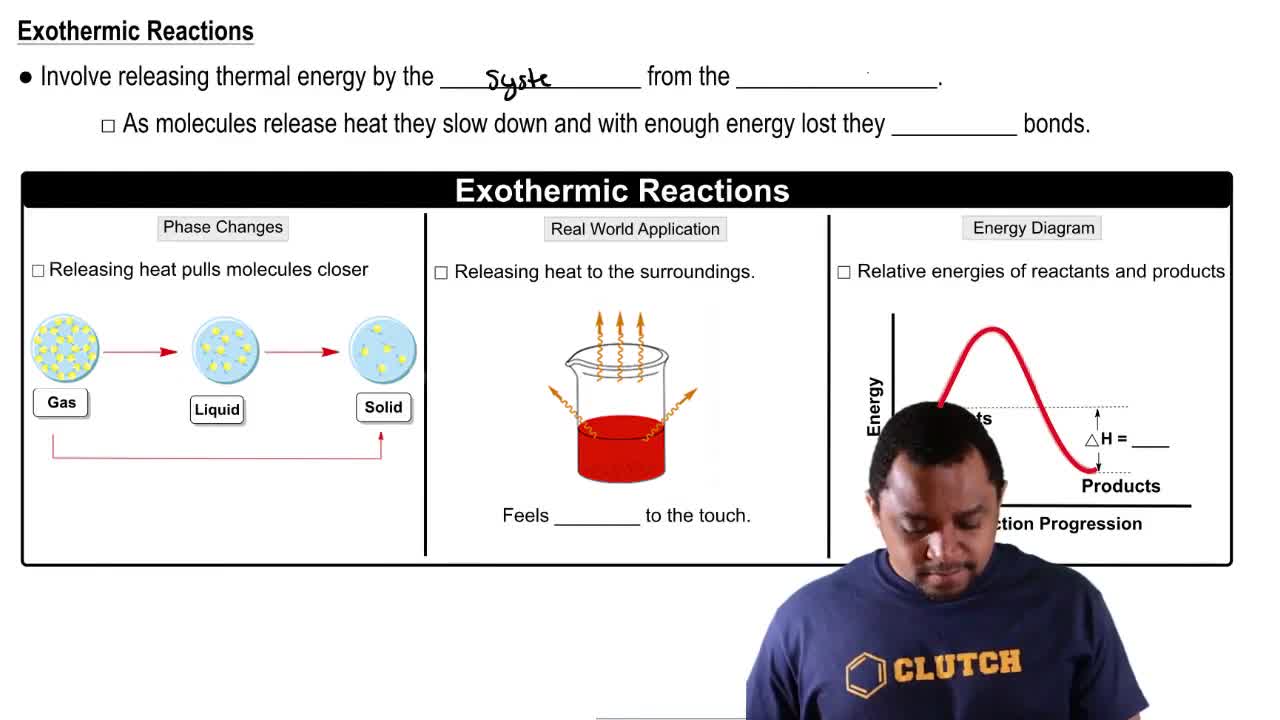
Exothermic Reaction

An exothermic reaction is a type of chemical reaction that releases energy, usually in the form of heat, to its surroundings. This occurs when the total energy of the products is lower than that of the reactants, resulting in a net release of energy. Understanding this concept is crucial for predicting temperature changes and the direction of the reaction.
Video consigliato:
Percorso guidato
02:38
Endothermic & Exothermic Reactions

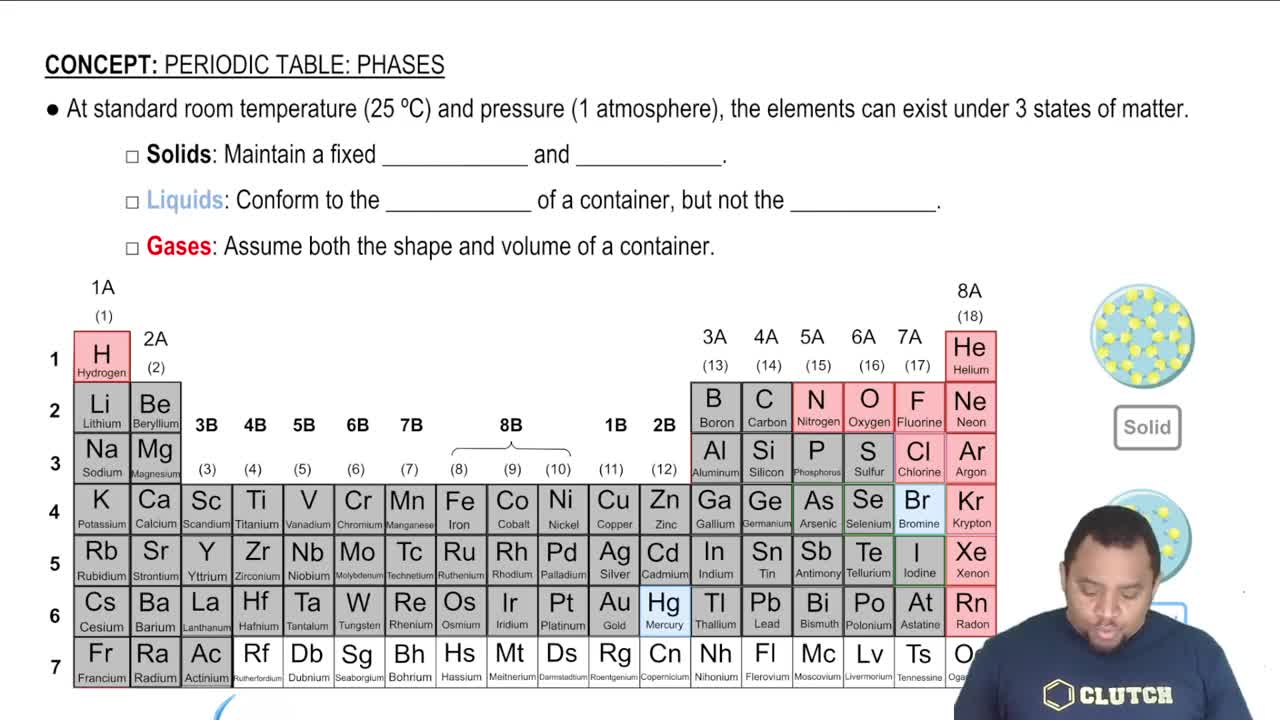
States of Matter

The states of matter refer to the distinct forms that different phases of matter take on, primarily solid, liquid, and gas. In the context of chemical reactions, the state of each reactant and product can influence reaction rates and equilibrium. Recognizing the states of matter involved helps in writing accurate chemical equations and understanding the behavior of substances during reactions.
Video consigliato:
Percorso guidato
03:25
Element States of Matter