Of ammonia, hydrazine, and hydroxylamine, which reacts to the greatest extent with the weak acid HNO₂? Consult Appendix C for equilibrium constants.
Guida verificata passo dopo passo
1
Step 1: Identify the chemical species involved in the reaction with the weak acid HNO₂. These are ammonia (NH₃), hydrazine (N₂H₄), and hydroxylamine (NH₂OH).
Step 2: Understand that the extent of reaction with a weak acid is determined by the base strength of the chemical species. The stronger the base, the more it will react with the weak acid.
Step 3: Consult Appendix C for the equilibrium constants, specifically the base dissociation constants (K_b) for ammonia, hydrazine, and hydroxylamine. These constants indicate the strength of each base.
Step 4: Compare the K_b values of ammonia, hydrazine, and hydroxylamine. The species with the highest K_b value is the strongest base and will react to the greatest extent with the weak acid HNO₂.
Step 5: Conclude which species has the highest K_b value and therefore reacts the most with HNO₂, based on the comparison of the equilibrium constants.
Concetti chiave
Ecco i concetti essenziali che devi comprendere per rispondere correttamente alla domanda.
Acid-Base Reactions
Acid-base reactions involve the transfer of protons (H+) between reactants. In this context, weak acids like HNO₂ can donate protons, while bases such as ammonia, hydrazine, and hydroxylamine can accept them. Understanding the strength of these acids and bases is crucial for predicting the extent of their reactions.
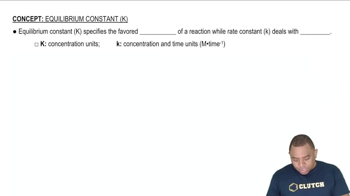
Equilibrium constants (K) quantify the ratio of products to reactants at equilibrium for a given reaction. A higher K value indicates a greater tendency for the reaction to proceed towards products. By consulting Appendix C for the equilibrium constants of the reactions involving ammonia, hydrazine, and hydroxylamine with HNO₂, one can determine which compound reacts most extensively.
Basicity refers to the ability of a substance to accept protons, while nucleophilicity describes the tendency of a species to donate an electron pair to form a bond. Ammonia, hydrazine, and hydroxylamine differ in their basicity and nucleophilicity, which influences their reactivity with weak acids like HNO₂. Understanding these properties helps predict which compound will react more significantly.


 Guida verificata passo dopo passo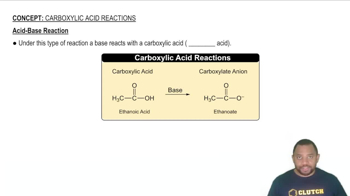
 01:09
01:09