Name the following binary molecular compounds:
(a) CCl4
(b) ClO2
(c) N2O
(d) N2O3
Guida verificata passo dopo passo
1
Identify that these are binary molecular compounds, which consist of two nonmetals.
Use the prefix system for naming binary molecular compounds: mono- (1), di- (2), tri- (3), tetra- (4), penta- (5), etc.
For each compound, name the first element using its full name and the second element with an -ide suffix.
Apply the appropriate prefix to each element based on the number of atoms present, except omit 'mono-' for the first element.
Combine the names and prefixes to form the complete name for each compound.
Risposta video verificata per un problema simile:
Questa soluzione video è stata consigliata dai nostri tutor come utile per risolvere questo problema.
Durata del video:
7m
Guarda un video:
0 Commenti
Concetti chiave
Ecco i concetti essenziali che devi comprendere per rispondere correttamente alla domanda.
Binary Molecular Compounds
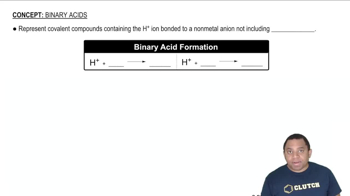
Binary molecular compounds consist of two different nonmetals. They are named using prefixes to indicate the number of atoms of each element present in the compound. For example, 'mono-' for one, 'di-' for two, and 'tri-' for three. The first element retains its name, while the second element's name is modified to end in '-ide'.
Chemical nomenclature is the systematic naming of chemical compounds based on established rules. For binary molecular compounds, the name is derived from the elements involved, using prefixes to denote the number of atoms. This ensures clarity and consistency in communication among chemists regarding the composition of compounds.
Common examples of binary molecular compounds include carbon tetrachloride (CCl4), chlorine dioxide (ClO2), nitrous oxide (N2O), and nitrogen trioxide (N2O3). Each of these compounds illustrates the application of naming conventions, where the prefixes and modified element names reflect the specific ratios of the constituent elements.