Ch.6 - Ionic Compounds: Periodic Trends and Bonding Theory
McMurry - Chemistry 8th Edition
McMurry8th EditionChemistryISBN: 9781292336145Non è quello che usi tu?Cambia libro di testo
Capitolo 6, Problema 77c

Each of the following pairs of elements will react to form a binary ionic compound. Write the formula of each compound formed, and give its name. (c) Lithium and nitrogen

Guida verificata passo dopo passo
1
Identify the charges of the ions formed by each element. Lithium (Li) typically forms a +1 charge as it loses one electron to achieve a stable electron configuration. Nitrogen (N) typically gains three electrons to form a -3 charge, achieving a stable electron configuration similar to the nearest noble gas, neon.
Write the formula for the compound by balancing the total positive and negative charges. Since lithium has a +1 charge and nitrogen has a -3 charge, three lithium ions are needed for every one nitrogen ion to balance the charges, resulting in a neutral compound.
Combine the ions in the correct ratio to write the formula. The formula for the compound formed by lithium and nitrogen is Li3N.
Name the compound by stating the cation followed by the anion. The cation is the positively charged ion (lithium), and the anion is the negatively charged ion (nitride, from nitrogen).
The name of the compound is lithium nitride.

Risposta video verificata per un problema simile:

Questa soluzione video è stata consigliata dai nostri tutor come utile per risolvere questo problema.
Durata del video:
42s

Concetti chiave

Ecco i concetti essenziali che devi comprendere per rispondere correttamente alla domanda.

Ionic Compounds

Ionic compounds are formed when atoms transfer electrons, resulting in the formation of positively charged cations and negatively charged anions. These oppositely charged ions attract each other, creating a stable compound. The properties of ionic compounds include high melting and boiling points, and they typically conduct electricity when dissolved in water.
Video consigliato:
Percorso guidato
02:11
Ionic Compounds Naming

Valence Electrons

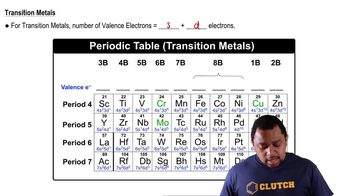
Valence electrons are the outermost electrons of an atom and are crucial in determining how an element will react chemically. In the case of lithium (Li), it has one valence electron, while nitrogen (N) has five. The transfer of lithium's valence electron to nitrogen allows nitrogen to achieve a stable octet, leading to the formation of an ionic bond.
Video consigliato:
Percorso guidato
02:12
Transition Metals Valence Electrons

Chemical Nomenclature

Chemical nomenclature is the system of naming chemical compounds based on their composition and structure. For binary ionic compounds, the name typically consists of the cation's name followed by the anion's name with an '-ide' suffix. In this case, lithium forms the cation Li⁺ and nitrogen forms the anion N³⁻, resulting in the compound lithium nitride (Li₃N).
Video consigliato:
Percorso guidato
03:31
Chemical Properties