Domanda del libro di testo
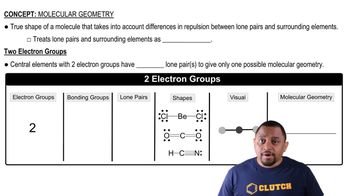
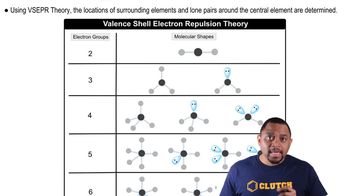
Determine the electron geometry, molecular geometry, and idealized bond angles for each molecule. In which cases do you expect deviations from the idealized bond angle? a. PF3 b. SBr2 c. CHCl3 d. CS2
1624
views
1
comments

 Tro 4th EditionCh.10 - Chemical Bonding II: Molecular Shapes & Valence Bond TheoryProblema 37
 Guida verificata passo dopo passo
 01:33
01:33
 02:13
02:13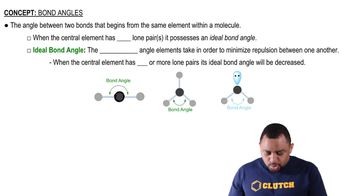 01:53
01:53Determine the electron geometry, molecular geometry, and idealized bond angles for each molecule. In which cases do you expect deviations from the idealized bond angle? a. PF3 b. SBr2 c. CHCl3 d. CS2
Determine the electron geometry, molecular geometry, and idealized bond angles for each molecule. In which cases do you expect deviations from the idealized bond angle? a. CF4 b. NF3 c. OF2 d. H2S
Determine the molecular geometry and sketch each molecule or ion using the bond conventions shown in 'Representing Molecular Geometries on Paper' in Section 10.4. c. IF2-
Which species has the smaller bond angle, ClO4- or ClO3- ? Explain.
For each molecular geometry, list the number of total electron groups, the number of bonding groups, and the number of lone pairs on the central atom. (c)