Domanda del libro di testo
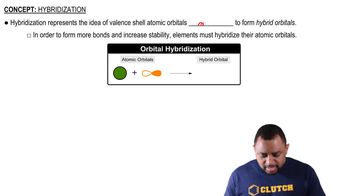
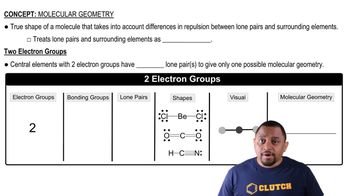
Write a hybridization and bonding scheme for each molecule or ion. Sketch the structure, including overlapping orbitals, and label all bonds using the notation shown in Examples 10.6 and 10.7. d. I3-
1304
views
1
rank

 Tro 4th EditionCh.10 - Chemical Bonding II: Molecular Shapes & Valence Bond TheoryProblema 61c,d
 Guida verificata passo dopo passo
 00:51
00:51
 01:33
01:33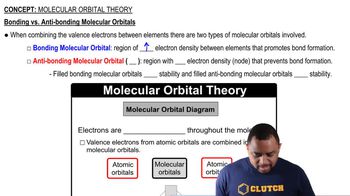 03:06
03:06Write a hybridization and bonding scheme for each molecule or ion. Sketch the structure, including overlapping orbitals, and label all bonds using the notation shown in Examples 10.6 and 10.7. d. I3-
Write a hybridization and bonding scheme for each molecule. Sketch the molecule, including overlapping orbitals, and label all bonds using the notation shown in Examples 10.6 and 10.7.a. CH2Br2 b. SO2 c. NF3 d. BF3
Write a hybridization and bonding scheme for each molecule or ion. Sketch the structure, including overlapping orbitals, and label all bonds using the notation shown in Examples 10.6 and 10.7.
a. COCl2 (carbon is the central atom)
b. BrF5
c. XeF2
Write a hybridization and bonding scheme for each molecule. Sketch the molecule, including overlapping orbitals, and label all bonds using the notation shown in Examples 10.6 and 10.7. a. CCl4
Write a hybridization and bonding scheme for each molecule. Sketch the molecule, including overlapping orbitals, and label all bonds using the notation shown in Examples 10.6 and 10.7. b. NH3
Which hybridization scheme allows the central atom to form more than four bonds? sp3, sp3d, sp2