Ch.13 - Solutions
Tro - Chemistry: A Molecular Approach 4th Edition
Tro4th EditionChemistry: A Molecular ApproachISBN: 9780134112831Non è quello che usi tu?Cambia libro di testo
Capitolo 13, Problema 36a

When lithium iodide (LiI) is dissolved in water, the solution becomes hotter. a. Is the dissolution of lithium iodide endothermic or exothermic?

Guida verificata passo dopo passo
1
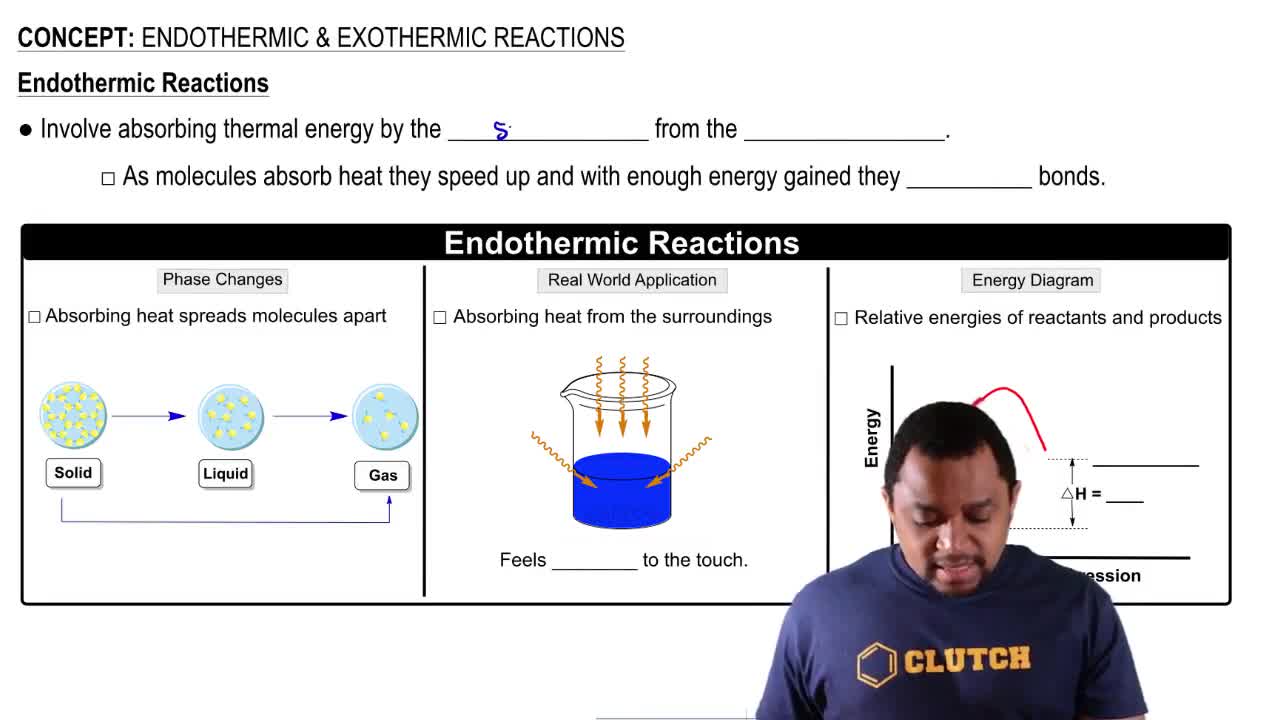
Understand the terms: Endothermic reactions absorb heat from the surroundings, causing the temperature to decrease. Exothermic reactions release heat into the surroundings, causing the temperature to increase.
Observe the effect: When lithium iodide (LiI) is dissolved in water, the solution becomes hotter, indicating a rise in temperature.
Relate the effect to the type of reaction: Since the temperature of the solution increases, it suggests that heat is being released into the solution.
Conclude the type of reaction: Based on the release of heat and the increase in temperature, the dissolution of lithium iodide in water is an exothermic reaction.
Apply the concept: In exothermic reactions like the dissolution of LiI in water, the system (LiI and water) releases heat, making the surroundings (the solution) hotter.

Risposta video verificata per un problema simile:

Questa soluzione video è stata consigliata dai nostri tutor come utile per risolvere questo problema.
Durata del video:
1m

Concetti chiave

Ecco i concetti essenziali che devi comprendere per rispondere correttamente alla domanda.

Endothermic and Exothermic Reactions

Endothermic reactions absorb heat from their surroundings, resulting in a temperature drop in the environment, while exothermic reactions release heat, causing the surroundings to become warmer. Understanding these definitions is crucial for determining the thermal nature of a dissolution process.
Video consigliato:
Percorso guidato
02:30
Endothermic & Exothermic Reactions

Dissolution Process

The dissolution process involves the interaction between solute and solvent molecules, where solute particles are separated and surrounded by solvent molecules. This process can either absorb or release energy, depending on the strength of the interactions formed compared to those broken.
Video consigliato:
Percorso guidato
04:20
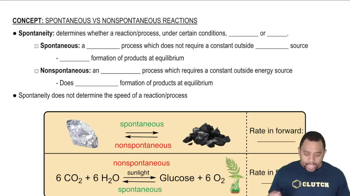
Spontaneity of Processes

Thermodynamics of Solutions

Thermodynamics in solutions examines how energy changes during the dissolution process. The enthalpy change associated with dissolution can indicate whether the process is endothermic or exothermic, which is essential for predicting temperature changes in the solution.
Video consigliato:
Percorso guidato
01:18
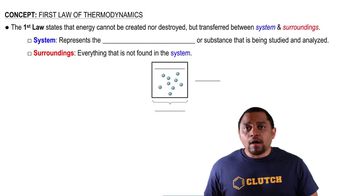
First Law of Thermodynamics