Ch.11 - Chemical Bonding II: Molecular Shapes, VSEPR & MO Theory
Tro - Chemistry: A Molecular Approach 5th Edition
Tro5th EditionChemistry: A Molecular ApproachISBN: 9780134874371Non è quello che usi tu?Cambia libro di testo
Capitolo 11, Problema 35

Determine the electron geometry, molecular geometry, and idealized bond angles for each molecule. In which cases do you expect deviations from the idealized bond angle? a. PF3 b. SBr2 c. CHCl3 d. CS2

Guida verificata passo dopo passo
1
1. To determine the electron geometry, molecular geometry, and idealized bond angles for each molecule, we first need to draw the Lewis structure for each molecule. The Lewis structure will show us the arrangement of the atoms and the distribution of the electrons in the molecule.
2. Once we have the Lewis structure, we can determine the electron geometry by considering both the bonding and non-bonding electron pairs. The electron geometry is determined by the arrangement of electron pairs around the central atom.
3. The molecular geometry is determined by the arrangement of the atoms in space. It only considers the bonding pairs of electrons. To determine the molecular geometry, we ignore the non-bonding electron pairs and only focus on the atoms.
4. The idealized bond angles can be determined based on the electron geometry. For example, in a molecule with a tetrahedral electron geometry, the idealized bond angle is 109.5 degrees. However, the presence of non-bonding electron pairs can cause the actual bond angles to deviate from these idealized values.
5. To determine if there will be deviations from the idealized bond angle, we need to consider the presence of non-bonding electron pairs and multiple bonds. Non-bonding electron pairs take up more space than bonding pairs, causing the bond angles to be smaller than the idealized values. Similarly, multiple bonds also take up more space, causing the bond angles to be larger than the idealized values.

Risposta video verificata per un problema simile:

Questa soluzione video è stata consigliata dai nostri tutor come utile per risolvere questo problema.
Durata del video:
3m

Concetti chiave

Ecco i concetti essenziali che devi comprendere per rispondere correttamente alla domanda.

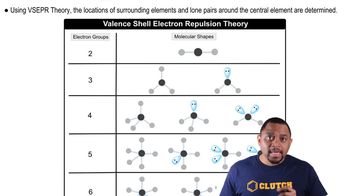
VSEPR Theory

Valence Shell Electron Pair Repulsion (VSEPR) Theory is a model used to predict the geometry of individual molecules based on the repulsion between electron pairs in the valence shell of the central atom. According to VSEPR, electron pairs will arrange themselves as far apart as possible to minimize repulsion, leading to specific molecular shapes and bond angles.
Video consigliato:
Percorso guidato
02:13
Molecular Shapes and VSEPR

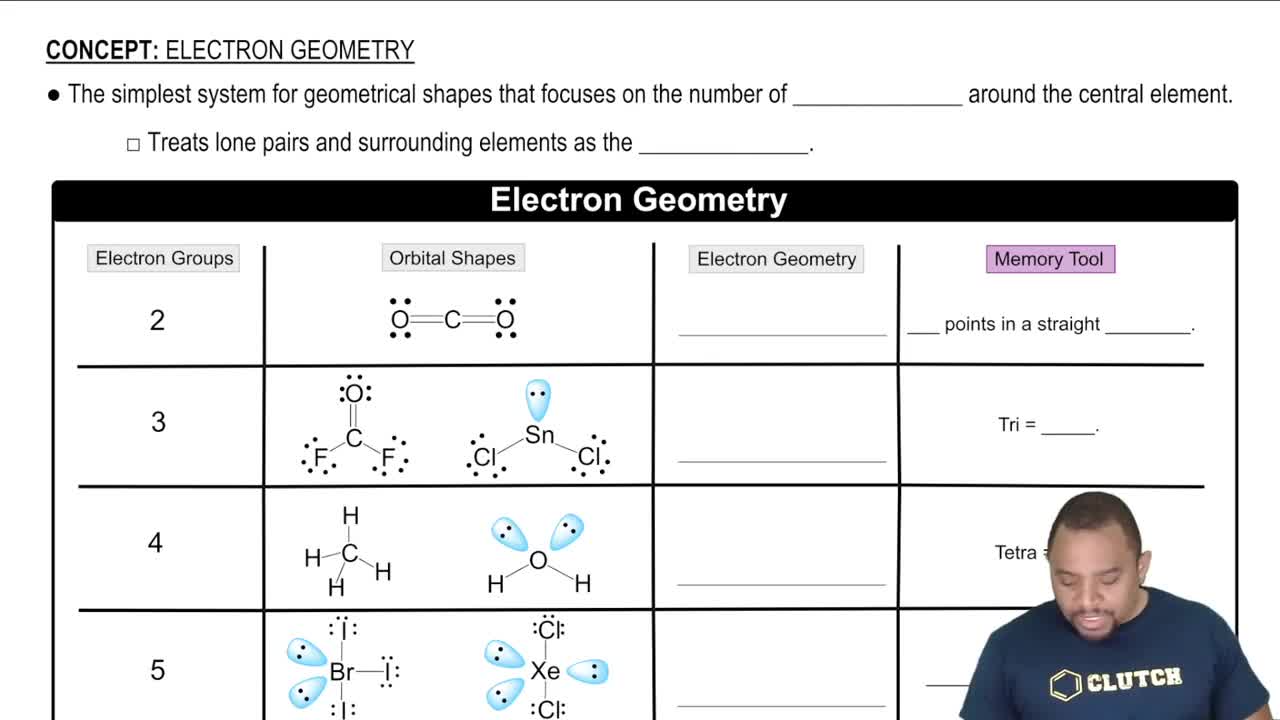
Molecular Geometry vs. Electron Geometry

Molecular geometry refers to the three-dimensional arrangement of atoms in a molecule, while electron geometry considers the spatial arrangement of all electron pairs, including lone pairs. The presence of lone pairs can alter the observed molecular geometry, leading to differences between the idealized electron geometry and the actual molecular shape.
Video consigliato:
Percorso guidato
04:44
Electron Geometry

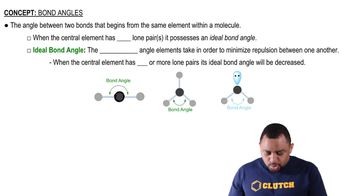
Bond Angle Deviations

Bond angle deviations occur when the actual angles between bonds in a molecule differ from the idealized angles predicted by VSEPR theory. These deviations can arise due to factors such as the presence of lone pairs, differences in electronegativity between atoms, or steric hindrance, which can push bonded atoms closer together or further apart than expected.
Video consigliato: