
Ch.12 - Liquids, Solids & Intermolecular Forces
Tro - Chemistry: A Molecular Approach 5th Edition
Tro5th EditionChemistry: A Molecular ApproachISBN: 9780134874371Non è quello che usi tu?Cambia libro di testo
Capitolo 12, Problema 77a

The phase diagram for sulfur is shown here. The rhombic and monoclinic states are two solid states with different structures. a. Below what pressure does solid sulfur sublime?

Guida verificata passo dopo passo
1
Identify the phase transition line between the solid and gas phases on the phase diagram for sulfur. This line represents the conditions under which solid sulfur can sublime directly into gas.
Locate the point on the phase diagram where the solid-gas transition line starts. This point indicates the minimum pressure at which solid sulfur begins to sublime.
Follow the solid-gas transition line vertically downwards to find the lowest pressure at which sublimation occurs.
Note the pressure value at this lowest point. This is the pressure below which solid sulfur can sublime.
Understand that at pressures lower than this value, solid sulfur will not remain stable and will transition directly to the gaseous state without passing through a liquid phase.

Risposta video verificata per un problema simile:

Questa soluzione video è stata consigliata dai nostri tutor come utile per risolvere questo problema.
Durata del video:
1m

Concetti chiave

Ecco i concetti essenziali che devi comprendere per rispondere correttamente alla domanda.

Phase Diagram

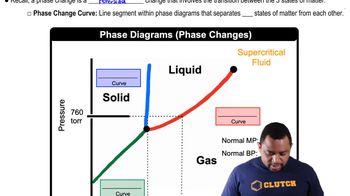
A phase diagram is a graphical representation that shows the phases of a substance at various temperatures and pressures. It delineates the boundaries between different states of matter—solid, liquid, and gas—and indicates conditions under which these phases coexist. Understanding phase diagrams is crucial for predicting the behavior of substances under varying environmental conditions.
Video consigliato:
Percorso guidato
03:22
Phase Changes in Diagrams

Sublimation

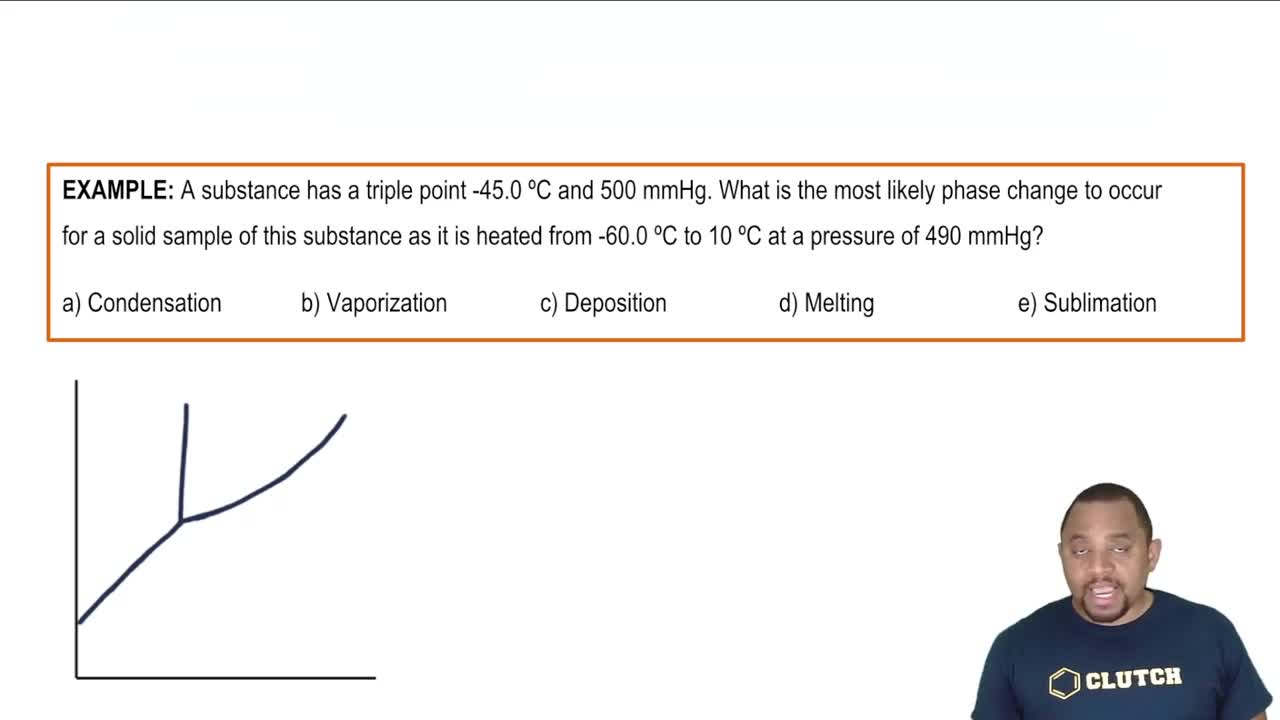
Sublimation is the process by which a solid transitions directly into a gas without passing through the liquid phase. This phenomenon occurs under specific temperature and pressure conditions, typically at low pressures for certain substances. In the context of sulfur, identifying the pressure below which sublimation occurs is essential for understanding its phase behavior.
Video consigliato:
Percorso guidato
01:52
Sublimation Phase Change Example

Solid States of Sulfur

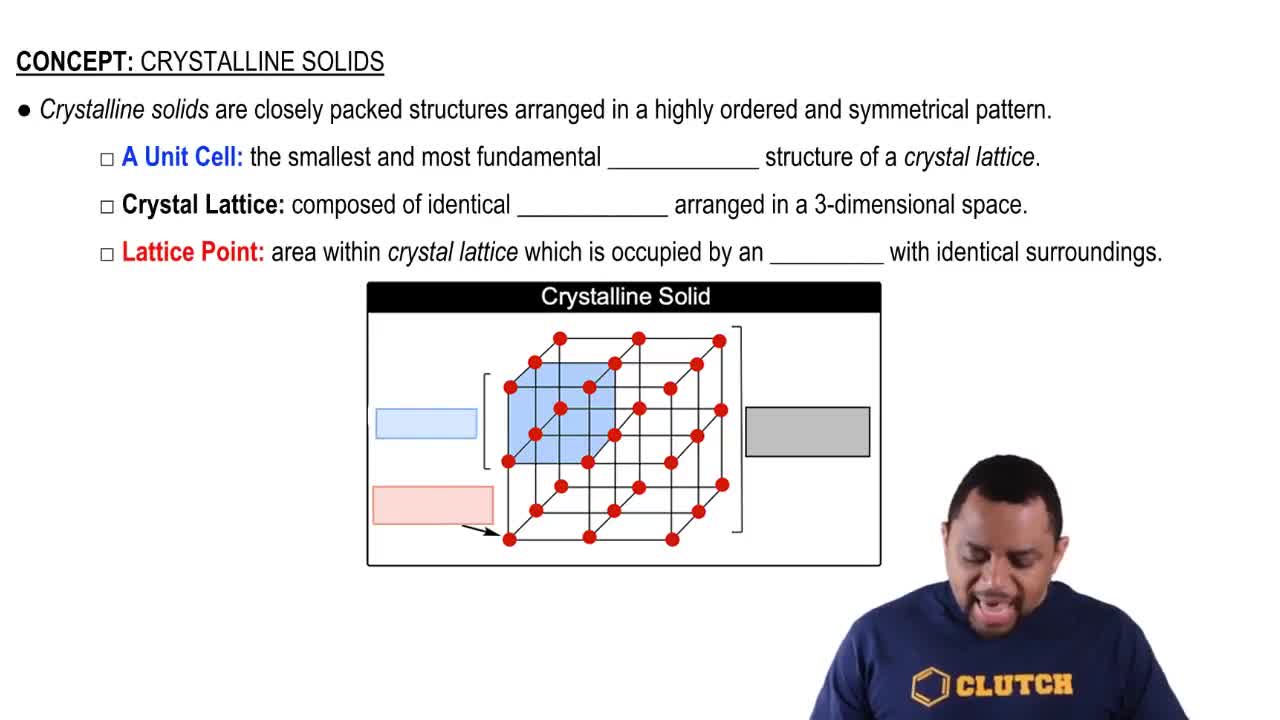
Sulfur can exist in different solid forms, primarily rhombic and monoclinic, each with distinct crystal structures and properties. The rhombic form is stable at room temperature and atmospheric pressure, while the monoclinic form is stable at higher temperatures. Recognizing these solid states is important for interpreting the phase diagram and understanding the conditions under which sublimation occurs.
Video consigliato:
Percorso guidato
01:31
Crystalline Solids Structure