Ch.11 - Chemical Bonding II: Molecular Shapes, VSEPR & MO Theory
Tro - Chemistry: A Molecular Approach 6th Edition
Tro6th EditionChemistry: A Molecular ApproachISBN: 9780137832217Non è quello che usi tu?Cambia libro di testo
Capitolo 11, Problema 53b

The valence electron configurations of several atoms are shown here. How many bonds can each atom make without hybridization? b. B 2s2sp1

Guida verificata passo dopo passo
1
Identify the valence electrons for the atom in question. For boron (B), the valence electron configuration is 2s^2 2p^1.
Determine the number of unpaired electrons in the valence shell. In this case, boron has one unpaired electron in the 2p orbital.
Recall that the number of bonds an atom can form is typically equal to the number of unpaired electrons it has.
Since boron has one unpaired electron, it can form one covalent bond without hybridization.
Consider that hybridization can change the number of bonds an atom can form, but the problem specifies no hybridization, so we focus on the unpaired electron count.

Risposta video verificata per un problema simile:

Questa soluzione video è stata consigliata dai nostri tutor come utile per risolvere questo problema.

Concetti chiave

Ecco i concetti essenziali che devi comprendere per rispondere correttamente alla domanda.

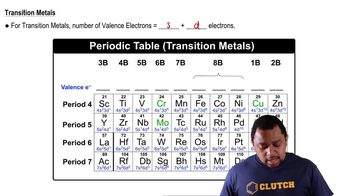
Valence Electrons

Valence electrons are the outermost electrons of an atom and are crucial in determining how an atom can bond with others. The number of valence electrons influences the atom's ability to form bonds, as these electrons are involved in chemical reactions and bond formation.
Video consigliato:
Percorso guidato
02:12
Transition Metals Valence Electrons

Bonding Capacity

Bonding capacity refers to the maximum number of bonds an atom can form based on its valence electron configuration. For example, an atom with three valence electrons, like boron (B), can typically form three bonds by sharing its valence electrons with other atoms.
Video consigliato:

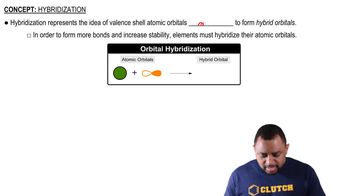
Hybridization

Hybridization is the process of mixing atomic orbitals to create new hybrid orbitals that can form bonds. In the context of the question, understanding that the atom can form bonds without hybridization means considering only the available unhybridized orbitals for bonding, which affects the number of bonds that can be formed.
Video consigliato: