Ch.11 - Chemical Bonding II: Molecular Shapes, VSEPR & MO Theory
Tro - Chemistry: A Molecular Approach 6th Edition
Tro6th EditionChemistry: A Molecular ApproachISBN: 9780137832217Non è quello che usi tu?Cambia libro di testo
Capitolo 11, Problema 84c

According to MO theory, which molecule or ion has the shortest bond length? O2, O2- , O22-

Guida verificata passo dopo passo
1
Identify the molecular orbitals involved in the bonding of O_2, O_2^-, and O_2^{2-}.
Determine the bond order for each species using the formula: Bond Order = (Number of bonding electrons - Number of antibonding electrons) / 2.
For O_2, fill the molecular orbitals with 12 electrons and calculate the bond order.
For O_2^-, add one electron to the molecular orbitals of O_2 and recalculate the bond order.
For O_2^{2-}, add two electrons to the molecular orbitals of O_2 and recalculate the bond order.

Risposta video verificata per un problema simile:

Questa soluzione video è stata consigliata dai nostri tutor come utile per risolvere questo problema.
Durata del video:
11m

Concetti chiave

Ecco i concetti essenziali che devi comprendere per rispondere correttamente alla domanda.

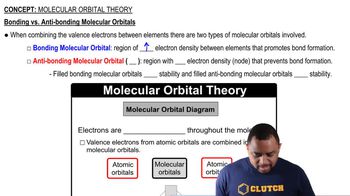
Molecular Orbital Theory (MO Theory)

Molecular Orbital Theory describes the behavior of electrons in molecules, where atomic orbitals combine to form molecular orbitals that can be occupied by electrons. This theory helps predict molecular properties, including bond order, which is the difference between the number of bonding and antibonding electrons. A higher bond order typically indicates a stronger bond and shorter bond length.
Video consigliato:
Percorso guidato
03:06
Molecular Orbital Theory

Bond Order

Bond order is a measure of the number of chemical bonds between a pair of atoms. It is calculated as the difference between the number of bonding electrons and the number of antibonding electrons, divided by two. In general, a higher bond order correlates with a shorter bond length and greater bond strength, making it a critical factor in determining molecular stability.
Video consigliato:
Percorso guidato
00:36
Average Bond Order

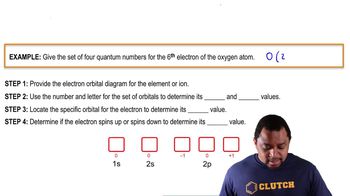
Electron Configuration of O<sub>2</sub>, O<sub>2</sub><sup>-</sup>, and O<sub>2</sub><sup>2-</sup>

The electron configurations of O2, O2-, and O2^2- differ due to the addition of electrons in the case of the anions. O2 has a bond order of 2, while O2- has a bond order of 1.5, and O2^2- has a bond order of 1. As bond order decreases, bond length increases, meaning O2 has the shortest bond length among these species due to its higher bond order.
Video consigliato:
Percorso guidato
02:50
Quantum Numbers and Electron Configuration Example