Ch.13 - Solids & Modern Materials
Tro - Chemistry: A Molecular Approach 6th Edition
Tro6th EditionChemistry: A Molecular ApproachISBN: 9780137832217Non è quello che usi tu?Cambia libro di testo
Capitolo 13, Problema 44a

Identify each solid as molecular, ionic, or atomic. a. Ru(s)

Guida verificata passo dopo passo
1
Step 1: Understand the different types of solids. Molecular solids are composed of molecules held together by intermolecular forces. Ionic solids are composed of positive and negative ions held together by electrostatic forces. Atomic solids are composed of atoms bonded to each other.
Step 2: Look at the given solid. In this case, it's Ru(s), which stands for solid Ruthenium. Ruthenium is a chemical element, and it's represented by a single symbol, which means it's a single type of atom.
Step 3: Since Ruthenium is a single type of atom and it's a metal, it forms metallic bonds with other Ruthenium atoms. Metals typically form atomic solids.
Step 4: Therefore, Ru(s) is an atomic solid.

Risposta video verificata per un problema simile:

Questa soluzione video è stata consigliata dai nostri tutor come utile per risolvere questo problema.
Durata del video:
1m

Concetti chiave

Ecco i concetti essenziali che devi comprendere per rispondere correttamente alla domanda.

Types of Solids

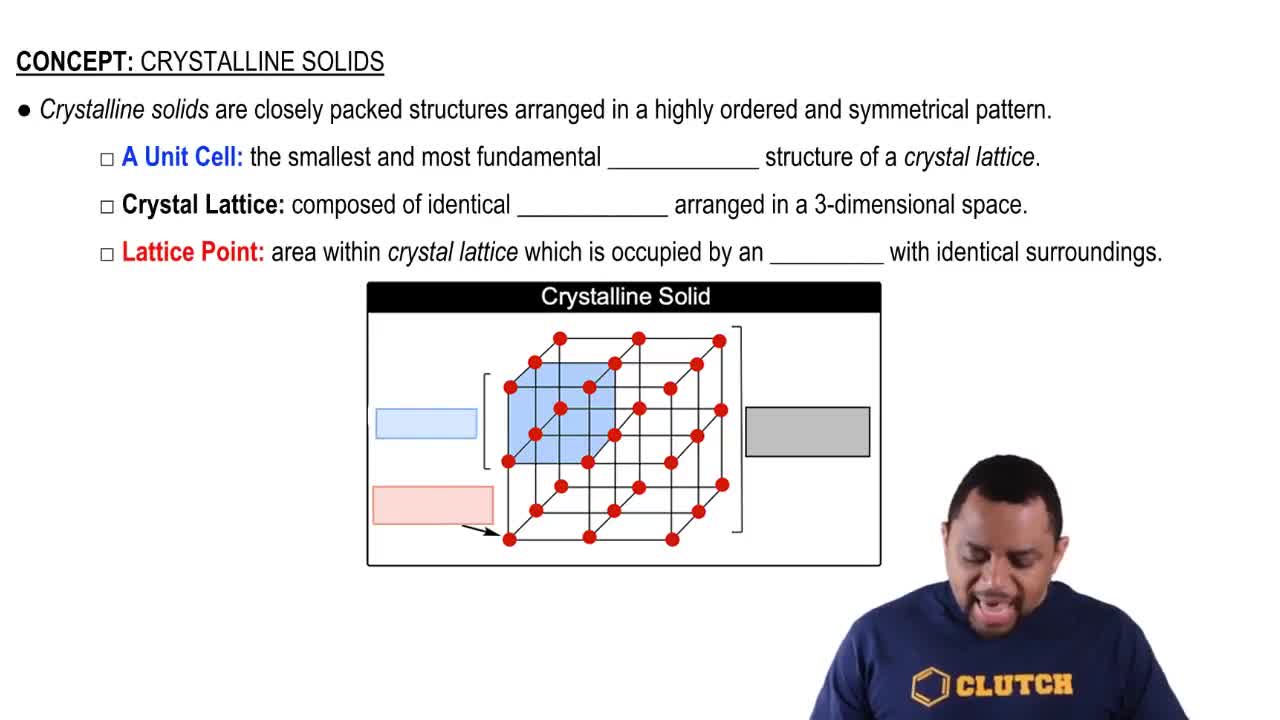
Solids can be classified into three main categories: molecular, ionic, and atomic. Molecular solids consist of molecules held together by intermolecular forces, ionic solids are composed of ions held together by ionic bonds, and atomic solids consist of atoms connected by covalent bonds or metallic bonds. Understanding these categories helps in identifying the nature of a solid based on its composition and bonding.
Video consigliato:
Percorso guidato
01:31
Crystalline Solids Structure

Ruthenium (Ru)

Ruthenium (Ru) is a transition metal that is part of the platinum group. It typically exists as a solid at room temperature and forms metallic bonds, which are characterized by a sea of delocalized electrons that allow for conductivity and malleability. Recognizing Ru as a metal is crucial for classifying it correctly among the types of solids.
Video consigliato:
Percorso guidato
00:46
Electron Configurations Of Transition Metals: Exceptions Example

Metallic Bonding

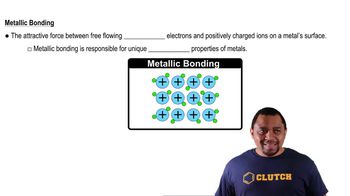
Metallic bonding occurs in metals and is characterized by the attraction between positively charged metal ions and a sea of delocalized electrons. This type of bonding imparts unique properties to metals, such as electrical conductivity, ductility, and luster. Understanding metallic bonding is essential for identifying solid metals like Ru as atomic solids.
Video consigliato: