 Indietro
DNA Structure and Analysis: Evidence for DNA as Genetic Material
Guida di studio - Note intelligenti
 Appunti personalizzati basati sui tuoi materiali, ampliati con definizioni chiave, esempi e contesto.
Chapter 9: DNA Structure and Analysis
Introduction to DNA Structure
DNA (deoxyribonucleic acid) is the hereditary material in almost all living organisms. Its structure and function are central to understanding genetics. The double helix model, first described by Watson and Crick, is supported by a wealth of experimental evidence.
Nucleotides are the building blocks of DNA, each consisting of a phosphate group, a deoxyribose sugar, and a nitrogenous base.
Phosphodiester bonds link nucleotides together, forming the sugar-phosphate backbone.
DNA strands are antiparallel, meaning they run in opposite directions (5' to 3' and 3' to 5').
Base pairing follows Chargaff’s rules: Adenine (A) pairs with Thymine (T), and Cytosine (C) pairs with Guanine (G).
DNA strands are synthesized in the 5’ to 3’ direction during replication.
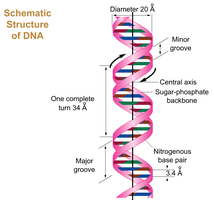
X-ray Diffraction and the Helical Structure of DNA
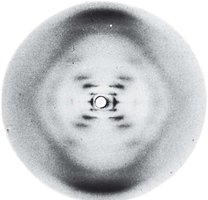
X-ray diffraction studies, particularly those by Rosalind Franklin, provided crucial evidence for the helical structure of DNA. The periodicity observed (3.4 Å) is characteristic of the double helix.
X-ray diffraction patterns reveal the regular, repeating structure of DNA.
Franklin’s work was instrumental in confirming the double helix model.
Historical Discoveries in DNA Research
The identification of DNA as the genetic material was a gradual process, involving many key experiments and researchers.
Friedrich Miescher first discovered nucleic acids in 1869.
Gregory Mendel established the principles of heredity in 1866.
The Chromosome Theory linked chromosomes to inheritance.
The Transformation Principle was demonstrated by Griffith, Avery, MacLeod, and McCarty.
Watson and Crick (1953) described the double helix structure of DNA.
Modern advances include the Human Genome Project and CRISPR-CAS9 technology.
Evidence Favoring DNA as Genetic Material
Experimental evidence from bacteria and bacteriophages established DNA as the molecule responsible for heredity.
Avery, MacLeod, and McCarty (1944) provided direct proof that DNA is the transforming principle in bacteria.
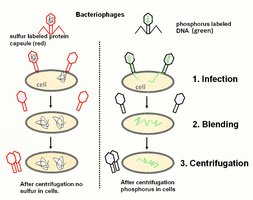
Hershey and Chase (1952) used radioisotopes to show that DNA, not protein, enters bacterial cells and directs viral reproduction.
Griffith’s transformation experiments demonstrated the transfer of genetic information.
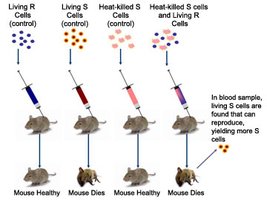
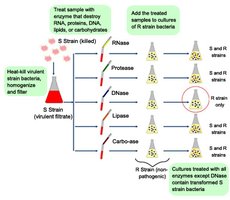
Indirect and Direct Evidence for DNA as Genetic Material
Both indirect and direct evidence support the role of DNA as the genetic material in living organisms.
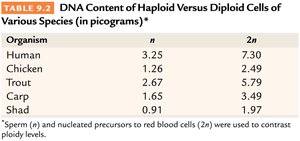
Indirect evidence includes the correlation between DNA content and chromosome sets in gametes and diploids.
Direct evidence comes from recombinant DNA studies and transgenic animals.
Mitochondria and chloroplasts contain DNA and perform genetic functions.
Recombinant DNA Technology and Transgenic Animals
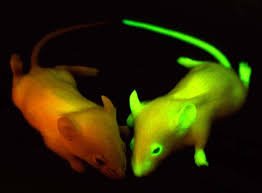
Recombinant DNA technology allows for the isolation and insertion of eukaryotic genes into bacterial DNA, providing direct evidence for the function of DNA. Transgenic animals, such as mice expressing human genes, further demonstrate the role of DNA in heredity and expression.
Human genes can be expressed in mice, and the trait is transmitted to progeny.
Transgenic animals are used in genetic research and biotechnology.
Check Points: Key Concepts in DNA Structure and Function
Three main structural components of DNA: phosphate group, deoxyribose sugar, and nitrogenous base.
Phosphodiester bonds create the backbone; hydrogen bonds between bases stabilize the double helix.
DNA strands are antiparallel and exhibit 5’ to 3’ polarity.
RNA shares similarities with DNA but differs in sugar (ribose) and base (uracil instead of thymine).
DNA is the genetic material in almost all living organisms, supported by direct and indirect evidence.
Table: DNA Content in Haploid Versus Diploid Cells
This table compares the DNA content in haploid (n) and diploid (2n) cells of various species, illustrating the correlation between DNA amount and chromosome sets.
Organism | n | 2n |
|---|---|---|
Human | 3.25 | 7.30 |
Chicken | 1.26 | 2.49 |
Trout | 2.67 | 5.79 |
Carp | 1.65 | 3.49 |
Shad | 0.91 | 1.97 |
Key Equations and Concepts
Phosphodiester bond formation:
Base pairing:
Antiparallel strands: and
Additional info: The notes include practical questions and case studies, such as sequence analysis using BLAST, which are important for understanding DNA's diagnostic and research applications.
