 Indietro
Mendelian Genetics II & Patterns of Inheritance: Probability, Pedigrees, and Sex-Linkage
Guida di studio - Note intelligenti
 Appunti personalizzati basati sui tuoi materiali, ampliati con definizioni chiave, esempi e contesto.
Mendelian Genetics II & Patterns of Inheritance
Laws of Probability in Genetics
Genetic probability calculations are essential for predicting the likelihood of specific genotypes or phenotypes among offspring, especially as the number of genes or offspring increases. The main rules used are the Sum Rule, Product Rule, and the Binomial Theorem.
Sum Rule: Used when a single event can occur in more than one way. Add the probabilities of each way. This is often described as the "OR" rule.
Product Rule: Used when a combination of independent events must occur together. Multiply the probability of each event. This is the "AND" rule.
Binomial Theorem: Used for calculating probabilities when there are multiple ways to achieve a combination of events, such as the probability of having a certain number of children with a trait in a set of offspring.
Example: If both parents are heterozygous for the freckles gene (Ff), the probability of having a child with freckles can be calculated using the sum rule for the genotypes FF or Ff.
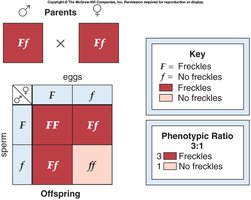
Determining Probability: Practice and Applications
Probability calculations can be extended to multiple traits and more complex scenarios. For example, the product rule is used to determine the probability that a child will inherit multiple traits, such as freckles and free earlobes.
Example: For parents with genotypes KkLlMm x KKLlmm, the probability of having a child with genotype Kkllmm can be calculated by multiplying the probabilities for each gene independently, assuming the genes assort independently.
Binomial Theorem Formula: The probability of having a specific combination of offspring (e.g., two without freckles and one with freckles) is given by: where n = total number of events, s = number of times outcome a occurs, t = number of times outcome b occurs, a = probability of outcome a, b = probability of outcome b.
Pedigree Analysis
Pedigree Charts and Symbols
A pedigree is a chart that shows genetic connections among individuals in a family. Pedigrees are used to analyze inheritance patterns and determine genotypes based on phenotypes.
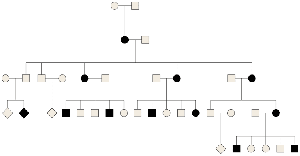
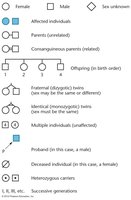
Mendelian Traits and Pedigree Patterns
Mendelian traits are determined by a genotype at a single locus and can be dominant or recessive. Pedigree patterns for Mendelian traits include autosomal dominant, autosomal recessive, X-linked dominant, X-linked recessive, and Y-linked inheritance.
Autosomal Dominant: Trait appears in every generation; affected individuals have at least one affected parent.
Autosomal Recessive: Trait may skip generations; affected individuals often have unaffected parents who are carriers.
X-linked Dominant/Recessive: Traits are associated with genes on the X chromosome; inheritance patterns differ between males and females.
Y-linked: Trait is passed from father to son only.

Autosomal Traits: Patterns of Inheritance
Autosomal traits are determined by genes located on autosomes (non-sex chromosomes). The inheritance patterns are:
Autosomal Dominant: Heterozygotes (Aa) are affected. Two affected parents can produce an unaffected child. Both males and females are affected equally.
Autosomal Recessive: Only homozygous recessive individuals (aa) show the trait. Heterozygotes are carriers but unaffected.
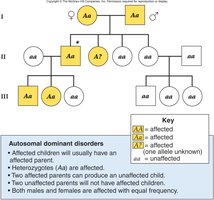
Pedigree Analysis: Steps and Practice
Geneticists analyze pedigrees to determine:
The mode of inheritance (dominant, recessive, X-linked, etc.)
The genotypes of individuals based on their phenotype and family history
The probability that certain individuals will have the condition, using sum and product rules

Sex-Linkage and Patterns of Inheritance
Discovery of X-Linked Traits: Drosophila melanogaster Studies
Sex-linked traits were first discovered in Drosophila melanogaster (fruit flies) through studies of eye color. Reciprocal crosses between wild-type and mutant flies revealed different outcomes, leading to the discovery of X-linked inheritance.
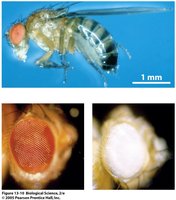
X-Linked Inheritance
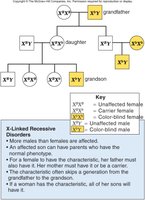
X-linked genes are located on the X chromosome. In males, alleles present on the X chromosome are directly expressed because males are hemizygous (possess only one X chromosome).
Hemizygosity: Males have only one copy of X-linked genes, so recessive alleles are expressed in the phenotype.
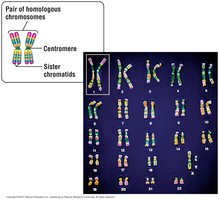
X-Linked Recessive Traits
X-linked recessive traits are more common in males because they only need one recessive allele to express the trait, while females need two.
Examples: Red-green color-blindness, Hemophilia A, Duchenne Muscular Dystrophy, Adrenoleukodystrophy (ALD)
Inheritance: Females (XrXr) must inherit two recessive alleles; males (XrY) need only one.
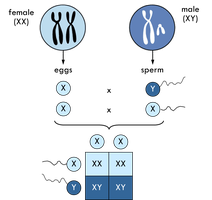
Sex Chromosomes Segregation
During gamete formation, mothers pass an X chromosome to all children, while fathers pass an X chromosome to daughters and a Y chromosome to sons. This segregation explains the inheritance patterns of sex-linked traits.
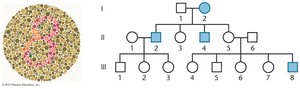
X-Linked Trait: Pedigree Patterns
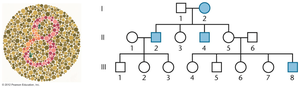
X-linked recessive traits often show a criss-cross pattern of inheritance, where affected mothers pass the trait to all sons. Pedigree analysis can help distinguish X-linked recessive from other inheritance modes.
Y-Linked Inheritance
Y-linked traits are inherited exclusively from father to son. Only males are affected, and the trait is passed through the male lineage. Y-linked dominant traits would affect all sons of an affected father, while Y-linked recessive traits require the presence of a recessive allele on the Y chromosome.
Summary Table: Patterns of Inheritance
Pattern | Key Features | Example Traits |
|---|---|---|
Autosomal Dominant | Affected in every generation; both sexes equally affected | Huntington Disease, Achondroplasia |
Autosomal Recessive | May skip generations; carriers unaffected | Tay-Sachs, Cystic Fibrosis, Phenylketonuria |
X-linked Recessive | More males affected; criss-cross inheritance | Red-green color-blindness, Hemophilia A |
X-linked Dominant | Affected males pass trait to all daughters, not sons | Rare, e.g., Rett syndrome |
Y-linked | Only males affected; father to son transmission | Y-linked deafness (rare) |
Additional info: Probability calculations assume independent assortment unless otherwise specified. Pedigree analysis is a fundamental tool in medical genetics for diagnosing and predicting inherited disorders.
