 Indietro
Microbial Genetics: Genetic Analysis and Mapping in Bacteria and Bacteriophages
Guida di studio - Note intelligenti
 Appunti personalizzati basati sui tuoi materiali, ampliati con definizioni chiave, esempi e contesto.
Microbial Genetics and Genome Mapping
Overview of Genetic Mapping in Microbes
Genetic mapping in bacteria and bacteriophages is a fundamental technique for understanding gene order, linkage, and recombination. The process involves calculating distances between genes (measured in centiMorgans, cM) and deducing their sequence order based on recombination frequencies. The largest genetic distance typically identifies flanking genes, which are positioned at the ends of the map.
Gene Mapping: Genes are mapped by analyzing recombination frequencies in interrupted mating experiments.
Sequence Order: The order of genes is deduced by starting with the largest distance and sequentially placing the remaining genes based on their relative distances.
Application: Mapping is essential for understanding microbial genetics and for constructing physical and genetic maps of chromosomes.
Growth and Genetic Variation in Bacteria
Bacterial Growth Phases
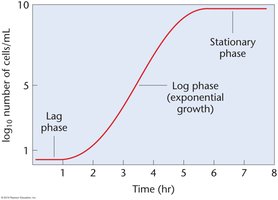
Bacteria exhibit distinct growth phases when cultured in laboratory conditions. Understanding these phases is crucial for genetic experiments and quantification of bacterial populations.
Lag Phase: Period of slow growth as bacteria adapt to their environment.
Log Phase: Exponential growth phase where cell division is rapid.
Stationary Phase: Growth ceases as nutrients are depleted and waste accumulates.
Media Types and Bacterial Genotypes
Bacteria are grown in either liquid or semisolid media. The type of medium used depends on the nutritional requirements of the bacterial strain.
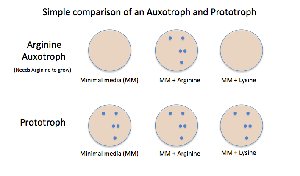
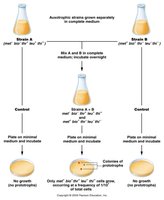
Minimal Medium: Contains only essential inorganic ions and a carbon source. Only prototrophs (wild-type) can grow on this medium.
Complete Medium: Supplemented with additional nutrients such as amino acids. Auxotrophs (mutants) require this medium due to their inability to synthesize certain compounds.
Prototrophs vs. Auxotrophs
Prototrophs are wild-type bacteria capable of synthesizing all essential organic compounds, while auxotrophs are mutants that have lost this ability and require supplementation.
Prototroph: Grows on minimal medium.
Auxotroph: Requires complete medium for growth.
Bacterial Mutation and Genetic Variation
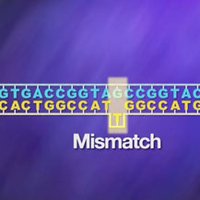
Mutations are the primary source of genetic variation in bacteria. They occur spontaneously at rates between and per cell per generation. Mutations can confer resistance to antibiotics or result in auxotrophy.
Quantifying Bacterial Populations
Serial Dilution and Colony Counting
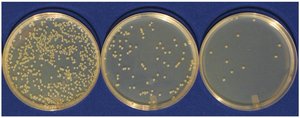
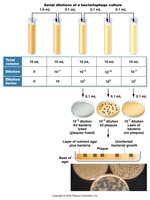
Bacterial cultures are quantified by serial dilution and plating. Each colony on a plate represents a population of genetically identical bacteria derived from a single cell.
Calculation: Number of colonies × dilution factor = number of bacteria per mL in the original sample.
Genetic Recombination in Bacteria
Gene Transfer Mechanisms
Bacteria can exchange genetic material through several mechanisms, leading to genetic recombination and altered genotypes.
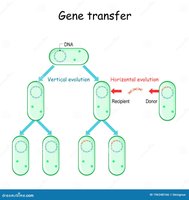
Vertical Gene Transfer: From parent to offspring.
Horizontal Gene Transfer: From one bacterium to another, not involving parent-offspring relationship.
Conjugation
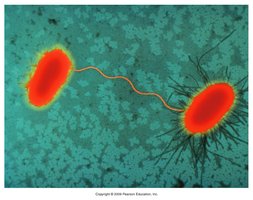
Conjugation is a process where genetic material is transferred between bacteria via direct physical contact, typically mediated by a sex pilus. The F factor (fertility factor) is a plasmid that enables this process.
F+ Cells: DNA donors containing the F factor.
F- Cells: DNA recipients lacking the F factor.
Hfr Strains: High-frequency recombination strains with the F factor integrated into the chromosome.
Bacterial Plasmids
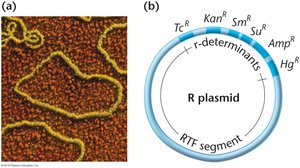
Plasmids are double-stranded, circular DNA molecules that replicate independently of the bacterial chromosome. They often carry genes for antibiotic resistance (R plasmids) or toxins (Col plasmids).
R Plasmids: Confer resistance to antibiotics.
Col Plasmids: Encode colicins, toxic proteins to other bacteria.
Conjugation Cycle and Hfr Mapping
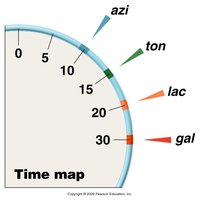
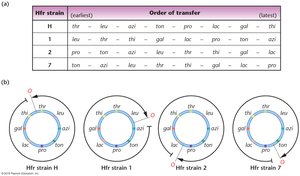
Hfr strains transfer chromosomal genes to F- cells in a linear fashion. Interrupted mating experiments allow mapping of gene order and distances based on the time of entry during conjugation.
Gene Order: Genes closest to the origin (O) are transferred first.
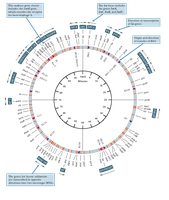
Mapping: The E. coli chromosome is circular, and different Hfr strains transfer different sets of genes.
Transformation
Mechanism of Transformation
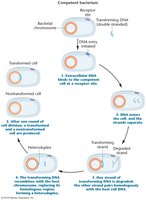
Transformation involves the uptake of extracellular DNA by a competent bacterial cell. This DNA can be integrated into the chromosome, resulting in genetic recombination without physical contact.
Competency: Some bacteria are naturally competent; others require treatment (e.g., calcium ions).
Cotransformation: Linked genes are often transferred together.
Transduction
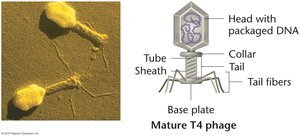
Bacteriophage Structure and Life Cycles
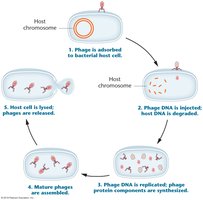
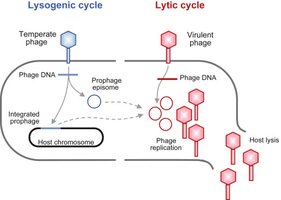
Bacteriophages are viruses that infect bacteria. They can reproduce via the lytic or lysogenic cycle, both of which involve genetic recombination.
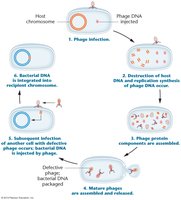
Lytic Cycle: Phage DNA is injected, host cell is lysed, and new phages are released.
Lysogenic Cycle: Phage DNA integrates into the host genome as a prophage and is replicated along with the chromosome.
Plaque Assay for Phage Quantification
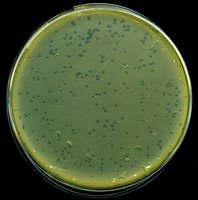
The plaque assay is used to determine the number of phages produced after infection. Each plaque represents a clearing caused by a single phage infecting a bacterium and subsequent lytic cycles.
Transduction Mechanism
Transduction is the virus-mediated transfer of bacterial DNA. Temperate phages can package bacterial DNA and transfer it to another cell, resulting in recombination.
Generalized Transduction: Any bacterial gene can be transferred.
Specialized Transduction: Only specific genes are transferred.
Summary Table: Bacterial Gene Transfer Mechanisms
Mechanism | Physical Contact Required | DNA Source | Competency Required | Virus Involved |
|---|---|---|---|---|
Conjugation | Yes | Donor cell (F factor or chromosome) | No | No |
Transformation | No | Extracellular DNA | Yes | No |
Transduction | No | Bacterial DNA packaged by phage | No | Yes |
Key Concepts and Applications
Bacterial mutation is a source of genetic diversity and can confer resistance or auxotrophy.
Gene mapping in bacteria is achieved through interrupted mating and recombination analysis.
Conjugation, transformation, and transduction are distinct mechanisms of horizontal gene transfer.
Bacteriophages play a crucial role in genetic recombination and mapping via transduction.
