 Indietro
Pearson Edexcel International Advanced Level Biology Specification: Structured Study Notes
Guida di studio - Note intelligenti
 Appunti personalizzati basati sui tuoi materiali, ampliati con definizioni chiave, esempi e contesto.
Overview of Pearson Edexcel International Advanced Level Biology
The Pearson Edexcel International Advanced Subsidiary and Advanced Level in Biology provide a comprehensive curriculum for students seeking advanced understanding in biological sciences. The course is modular, with a focus on both theoretical knowledge and practical skills, and is designed to prepare students for further study or careers in biology and related fields.
Key Features of the Specification
Modular Structure: The qualification is divided into six units, with three at the Subsidiary (IAS) level and three at the Advanced (IA2) level.
Comprehensive Content: Covers major biological topics including molecules, cells, genetics, energy, environment, microbiology, immunity, respiration, coordination, and gene technology.
Assessment: Externally assessed written papers, including practical skills units. Mathematical skills are integrated throughout, with at least 10% of marks awarded for Level 2 mathematics or above.
Practical Skills: 18 core practical activities are required, with additional practical work encouraged.
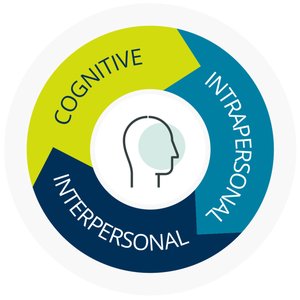
Transferable Skills: Emphasis on cognitive, intrapersonal, and interpersonal skills for academic and professional development.
Unit Breakdown and Main Topics
Unit 1: Molecules, Diet, Transport and Health
This unit introduces the fundamental molecules of life, their roles in health, and the cardiovascular system. It also covers cell membrane transport, proteins, enzymes, protein synthesis, and genetic disorders.
Biological Molecules: Water, carbohydrates (monosaccharides, disaccharides, polysaccharides), lipids, proteins, nucleic acids.
Diet and Health: Role of diet in cardiovascular health, risk factors for cardiovascular disease (CVD), treatments, and health risk analysis.
Transport: Structure and function of blood vessels, cardiac cycle, haemoglobin, oxygen dissociation curves.
Genetics: Genetic code, mutations, genetic screening, ethical and social issues.
Practical Skills: Estimation of reducing sugars and starch, investigation of vitamin C content, analysis of health data.
Unit 2: Cells, Development, Biodiversity and Conservation
This unit explores cell structure, division, development, plant biology, biodiversity, and conservation methods.
Cell Biology: Ultrastructure of eukaryotic and prokaryotic cells, organelles, microscopy, cell division (mitosis, meiosis), gamete specialization, fertilization.
Development: Stem cells, gene expression, epigenetics, polygenic inheritance.
Plant Biology: Structure and function of plant cells, plant fibers, mineral nutrition, antimicrobial properties.
Biodiversity and Conservation: Classification, measurement of biodiversity, genetic diversity, Hardy-Weinberg equation, conservation strategies.
Practical Skills: Microscopy, root tip squash for mitosis, tensile strength of plant fibers, antimicrobial testing.
Unit 3: Practical Skills in Biology I
Focuses on developing and assessing experimental skills, including planning, implementation, measurement, and data processing.
Experimental Design: Identifying variables, apparatus, measurement techniques, health and safety, data analysis.
Data Handling: Calculations, graph plotting, error analysis, improvements to experiments.
Unit 4: Energy, Environment, Microbiology and Immunity
Examines photosynthesis, energy flow, ecosystems, climate change, microbiology, immunity, and forensic biology.
Photosynthesis: Light-dependent and light-independent reactions, chloroplast structure, pigment analysis.
Ecology: Productivity, energy transfer, population studies, succession, climate change, carbon cycle.
Microbiology: Culturing microorganisms, growth measurement, bacterial and viral structure, infection mechanisms.
Immunity: Immune responses, antigens, antibodies, B and T cells, immunity types, antibiotic action.
Forensics: DNA amplification (PCR), gel electrophoresis, DNA profiling, determination of time of death.
Practical Skills: Photosynthesis rate investigation, ecological studies, microorganism growth, antibiotic testing.
Unit 5: Respiration, Internal Environment, Coordination and Gene Technology
Focuses on cellular respiration, muscle physiology, homeostasis, nervous and hormonal coordination, and gene technology.
Respiration: Aerobic and anaerobic pathways, glycolysis, Krebs cycle, oxidative phosphorylation, respiratory quotient.
Muscle Physiology: Structure and function of muscle fibers, sliding filament theory, cardiac muscle coordination.
Homeostasis: Kidney function, urea production, osmoregulation, negative feedback mechanisms.
Coordination: Nervous system structure, reflex arcs, synapses, neurotransmitters, drug effects, sensory detection.
Gene Technology: Recombinant DNA, microarrays, bioinformatics, genetically modified organisms.
Practical Skills: Respiration investigation, spirometry, amylase production in plants.
Unit 6: Practical Skills in Biology II
Further development and assessment of practical skills, including planning investigations, data analysis, and evaluation.
Experimental Planning: Apparatus selection, hypothesis formulation, calibration, ethical considerations.
Data Analysis: Tabulation, calculations, graph plotting, trend analysis, error reduction.
Mathematical Skills in Biology
Mathematical skills are integrated throughout the course, including:
Arithmetic and numerical computation
Handling data: significant figures, means, frequency tables, probability, sampling, measures of dispersion
Algebra: changing the subject, substituting values, solving equations, logarithms
Graphs: plotting, interpreting, calculating rates, tangents
Geometry: calculating areas and volumes
Example formula for biodiversity index:
Where N is the total number of organisms and n is the number of individuals of each species.
Transferable Skills Framework
The course emphasizes the development of cognitive, intrapersonal, and interpersonal skills, supporting critical thinking, problem solving, teamwork, and adaptability.
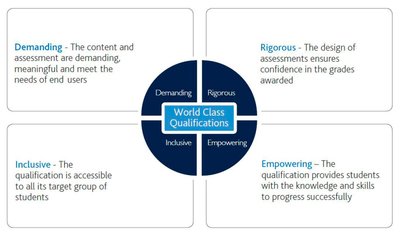
Pearson World Class Qualification Principles
Pearson's qualifications are designed to be demanding, rigorous, inclusive, and empowering, ensuring high standards and accessibility for all students.
Assessment and Progression
Assessment: Written exams, practical skills papers, mathematical questions.
Grading: IAS graded A–E; IAL graded A*–E.
Progression: Suitable for students with GCSE Biology, leading to higher education or employment in biology-related fields.
Glossary of Key Terms
Assessment Objectives: Knowledge, application, analysis, evaluation, and experimental skills.
External Assessment: Exams held globally at fixed times.
Modular/Linear: Modular allows unit assessment during the course; linear assesses all at the end.
Raw Marks/UMS: Actual marks achieved, converted to uniform mark scale for grading.
Summary
The Pearson Edexcel International Advanced Level Biology specification provides a rigorous, comprehensive, and practical curriculum, equipping students with essential biological knowledge, practical skills, and transferable competencies for academic and professional success.
