
Ch. 1 - Introduction to Genetics
Klug - Essentials of Genetics 10th Edition
Klug10th EditionEssentials of GeneticsISBN: 9780135588789Non è quello che usi tu?Cambia libro di testo
Capitolo 1, Problema 14

How has the use of model organisms advanced our knowledge of the genes that control human diseases?

Guida verificata passo dopo passo
1
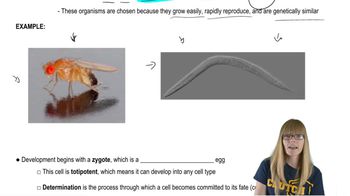
Step 1: Understand what model organisms are — these are non-human species, such as fruit flies (Drosophila), mice, or zebrafish, that are extensively studied to gain insights into biological processes relevant to humans.
Step 2: Recognize that many genes are conserved across species, meaning that genes controlling fundamental biological functions in model organisms often have counterparts in humans.
Step 3: Explore how genetic manipulation techniques (like gene knockouts or transgenics) in model organisms allow scientists to observe the effects of specific gene changes, helping to identify gene functions related to diseases.
Step 4: Learn that studying disease phenotypes in model organisms helps researchers understand the molecular pathways and mechanisms underlying human diseases, which can be difficult to study directly in humans.
Step 5: Appreciate that discoveries made in model organisms have led to the identification of disease-causing genes, development of treatments, and improved diagnostic tools for human genetic diseases.

Risposta video verificata per un problema simile:

Questa soluzione video è stata consigliata dai nostri tutor come utile per risolvere questo problema.
Durata del video:
2m

Concetti chiave

Ecco i concetti essenziali che devi comprendere per rispondere correttamente alla domanda.

Model Organisms in Genetics

Model organisms are non-human species extensively studied to understand biological processes. They have genetic, cellular, or physiological similarities to humans, making them valuable for studying gene functions and disease mechanisms. Examples include fruit flies, mice, and zebrafish.
Video consigliato:
Percorso guidato
08:30
Genetics of Development

Gene Function and Disease Mechanisms

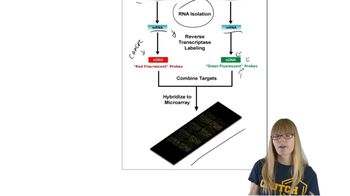
Studying genes in model organisms helps identify how specific genes contribute to normal development and disease. By manipulating genes, researchers can observe effects on health, revealing pathways and mutations involved in human diseases.
Video consigliato:
Percorso guidato
08:26
Functional Genomics

Translational Research and Genetic Conservation

Many genes are conserved across species, allowing findings in model organisms to be applied to humans. This conservation enables translational research, where discoveries in models lead to understanding human genetic diseases and developing treatments.
Video consigliato:
Percorso guidato
07:58
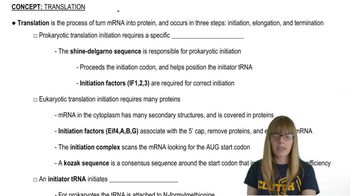
Translation initiation