Ch. 13 - Translation and Proteins
Klug - Essentials of Genetics 10th Edition
Klug10th EditionEssentials of GeneticsISBN: 9780135588789Non è quello che usi tu?Cambia libro di testo
Capitolo 13, Problema 19

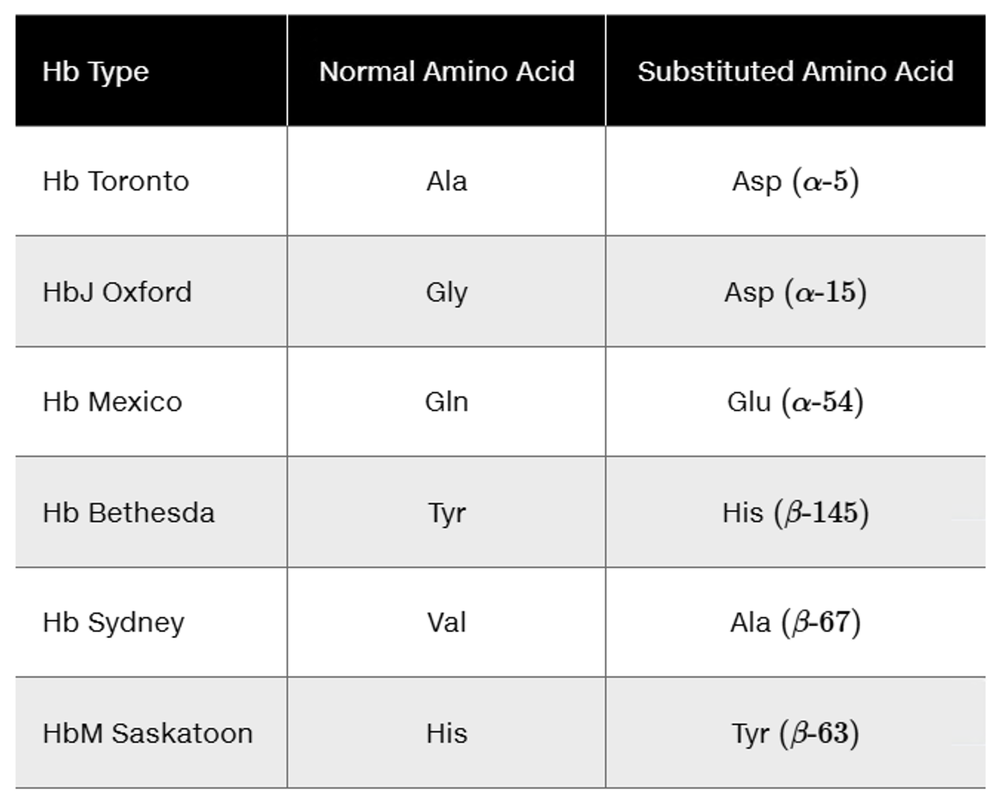
Several amino acid substitutions in the α and β chains of human hemoglobin are shown in the following table.
Table listing human hemoglobin variants with normal and substituted amino acids in α and β chains at specific positions.
Using the code table, determine how many of them can occur as a result of a single-nucleotide change.

Guida verificata passo dopo passo
1
Step 1: Identify the codons for the normal and substituted amino acids using the standard genetic code table. Each amino acid is encoded by one or more codons (triplets of nucleotides).
Step 2: For each hemoglobin variant, write down the codon(s) that could encode the normal amino acid and the codon(s) that could encode the substituted amino acid.
Step 3: Compare the codons for the normal and substituted amino acids to determine if the substitution can be caused by a single-nucleotide change. This means checking if changing one nucleotide in the normal codon can produce a codon for the substituted amino acid.
Step 4: Count how many of the amino acid substitutions in the table can be explained by a single-nucleotide change in the codon.
Step 5: Summarize your findings by stating the total number of substitutions that can occur due to a single-nucleotide change, based on your codon comparisons.

Risposta video verificata per un problema simile:

Questa soluzione video è stata consigliata dai nostri tutor come utile per risolvere questo problema.
Durata del video:
4m

Concetti chiave

Ecco i concetti essenziali che devi comprendere per rispondere correttamente alla domanda.

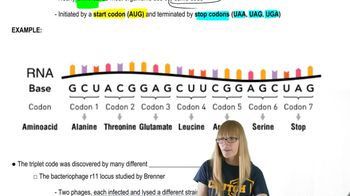
Genetic Code and Codon Table

The genetic code consists of nucleotide triplets called codons, each specifying an amino acid. Understanding the codon table is essential to determine how a single-nucleotide change (point mutation) can alter a codon to code for a different amino acid, leading to amino acid substitutions in proteins.
Video consigliato:
Percorso guidato
11:43
The Genetic Code

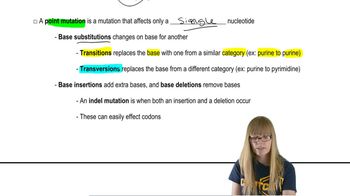
Missense Mutations and Single-Nucleotide Changes

Missense mutations are point mutations where a single nucleotide change results in a codon that codes for a different amino acid. Identifying whether an amino acid substitution can arise from a single-nucleotide change requires comparing codons of the original and substituted amino acids.
Video consigliato:
Percorso guidato
09:49
Point Mutations

Hemoglobin Structure and Variants

Hemoglobin is composed of α and β chains, each with specific amino acid sequences. Variants arise from amino acid substitutions in these chains, which can affect function. Understanding the location and nature of these substitutions helps relate genetic mutations to protein changes.
Video consigliato:
Percorso guidato
07:10
Chromosome Structure
Pratica correlata
Domanda del libro di testo

How does an enzyme function? Why are enzymes essential for living organisms on Earth?

720
views

Domanda del libro di testo

Three independently assorting genes (A, B, and C) are known to control the following biochemical pathway that provides the basis for flower color in a hypothetical plant:

Three homozygous recessive mutations are also known, each of which interrupts a different one of these steps. Determine the phenotypic results in the F1 and F2 generations resulting from the P1 crosses of true-breeding plants listed here:

speckled (AABBCC) × yellow (AAbbCC)

847
views
Domanda del libro di testo

Three independently assorting genes (A, B, and C) are known to control the following biochemical pathway that provides the basis for flower color in a hypothetical plant:

Three homozygous recessive mutations are also known, each of which interrupts a different one of these steps. Determine the phenotypic results in the F1 and F2 generations resulting from the P1 crosses of true-breeding plants listed here:

colorless (aaBBCC) × green (AABBcc)

678
views
Domanda del libro di testo

List as many different categories of protein functions as you can. Wherever possible, give an example of each category.

685
views
Domanda del libro di testo

Three independently assorting genes (A, B, and C) are known to control the following biochemical pathway that provides the basis for flower color in a hypothetical plant:

Three homozygous recessive mutations are also known, each of which interrupts a different one of these steps. Determine the phenotypic results in the F1 and F2 generations resulting from the P1 crosses of true-breeding plants listed here:

yellow (AAbbCC) × green (AABBcc)

531
views