Ch. 16 - Regulation of Gene Expression in Eukaryotes
Klug10th EditionEssentials of GeneticsISBN: 9780135588789
Non è quello che usi tu?Cambia libro di testoScegli un libro di testo diverso
TOC.tableOfContents
- Ch. 1 - Introduction to Genetics16
- Ch. 2 - Mitosis and Meiosis28
- Ch. 3 - Mendelian Genetics37
- Ch. 4 - Modification of Mendelian Ratios53
- Ch. 5 - Sex Determination and Sex Chromosomes32
- Ch. 6 - Chromosome Mutations: Variation in Number and Arrangement37
- Ch. 7 - Linkage and Chromosome Mapping in Eukaryotes36
- Ch. 8 - Genetic Analysis and Mapping in Bacteria and Bacteriophages24
- Ch. 9 - DNA Structure and Analysis38
- Ch. 10 - DNA Replication29
- Ch. 11 - Chromosome Structure and DNA Sequence Organization22
- Ch. 12 - The Genetic Code and Transcription36
- Ch. 13 - Translation and Proteins27
- Ch. 14 - Gene Mutation, DNA Repair, and Transposition34
- Ch. 15 - Regulation of Gene Expression in Bacteria22
- Ch. 16 - Regulation of Gene Expression in Eukaryotes37
- Ch. 17 - Recombinant DNA Technology27
- Ch. 18 - Genomics, Bioinformatics, and Proteomics30
- Ch. 19 - The Genetics of Cancer21
- Ch. 20 - Quantitative Genetics and Multifactorial Traits37
- Ch. 21 - Population and Evolutionary Genetics45
Klug10th EditionEssentials of GeneticsISBN: 9780135588789Non è quello che usi tu?Cambia libro di testo
Tutti i libri di testo Klug 10th EditionCh. 16 - Regulation of Gene Expression in EukaryotesProblema 16
Klug 10th EditionCh. 16 - Regulation of Gene Expression in EukaryotesProblema 16Capitolo 16, Problema 16
Nonsense-mediated decay is an mRNA surveillance pathway that eliminates mRNAs with premature stop codons. How does the cell distinguish between normal mRNAs and those with a premature stop?
 Guida verificata passo dopo passo
1
Understand that nonsense-mediated decay (NMD) targets mRNAs containing premature stop codons (also called nonsense codons) to prevent the production of truncated, potentially harmful proteins.
Recognize that during normal mRNA processing, exon junction complexes (EJCs) are deposited upstream of exon-exon junctions after splicing.
Know that during the first round of translation, the ribosome removes EJCs as it moves along the mRNA.
Identify that if a stop codon is encountered before the last EJC is removed (i.e., upstream of an EJC), the cell recognizes this as a premature stop codon, triggering NMD.
Conclude that the presence of an EJC downstream of a stop codon acts as a signal for the cell to distinguish premature stop codons from normal stop codons, leading to degradation of the faulty mRNA.
Concetti chiave
Ecco i concetti essenziali che devi comprendere per rispondere correttamente alla domanda.
Nonsense-Mediated Decay (NMD) Pathway
NMD is a cellular quality control mechanism that detects and degrades mRNAs containing premature stop codons to prevent the production of truncated, potentially harmful proteins. It ensures only properly processed mRNAs are translated, maintaining protein integrity.
Video consigliato:
Percorso guidato
 09:49
09:49
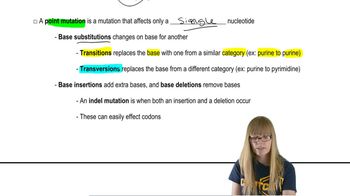
Point Mutations
Premature Stop Codons and Their Recognition
Premature stop codons occur when a stop signal appears earlier than expected in the mRNA sequence, often due to mutations. The cell distinguishes these by their position relative to downstream exon-exon junctions marked by exon junction complexes (EJCs), which are key signals in identifying faulty mRNAs.
Video consigliato:
Percorso guidato
 01:55
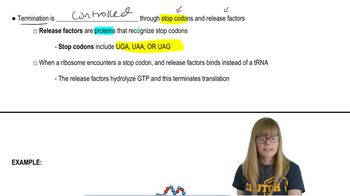
01:55Translation Termination
Exon Junction Complexes (EJCs) and mRNA Surveillance
EJCs are protein complexes deposited near exon-exon junctions after splicing. During the pioneer round of translation, if a stop codon is detected upstream of an EJC, the mRNA is flagged as abnormal, triggering NMD. This spatial relationship helps the cell differentiate normal from premature stop codons.
Video consigliato:
Percorso guidato
 08:26
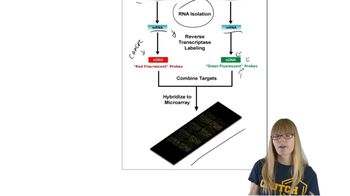
08:26Functional Genomics
Pratica correlata