

Ch. 4 - Modification of Mendelian Ratios
Klug - Essentials of Genetics 10th Edition
Klug10th EditionEssentials of GeneticsISBN: 9780135588789Non è quello che usi tu?Cambia libro di testo
Capitolo 4, Problema 1c

The discussion centers on extensions and modifications of Mendelian principles and ratios. In the process, we encountered many opportunities to consider how this information was acquired. On the basis of these discussions, what answers would you propose to the following fundamental questions?
How do we know that specific genes are located on the sex-determining chromosomes rather than on autosomes?

Guida verificata passo dopo passo
1
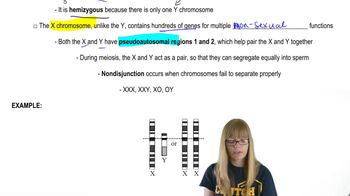
Understand that sex chromosomes (X and Y in many organisms) differ from autosomes in their inheritance patterns, which can be observed through genetic crosses.
Examine the inheritance patterns of traits: if a trait is sex-linked, it will show distinct patterns such as appearing more frequently in one sex or being passed from mother to son, unlike autosomal traits which typically show equal distribution among sexes.
Perform test crosses and analyze offspring phenotypes to see if the trait segregates with sex; for example, a gene on the X chromosome will show different ratios in males and females due to males having only one X chromosome.
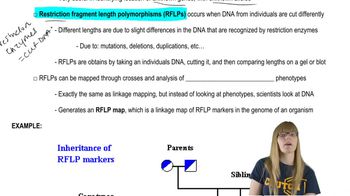
Use molecular techniques such as chromosome mapping, linkage analysis, or fluorescent in situ hybridization (FISH) to physically locate genes on specific chromosomes, confirming whether they reside on sex chromosomes or autosomes.
Combine genetic data from inheritance patterns with molecular evidence to confidently determine the chromosomal location of specific genes, distinguishing those on sex chromosomes from those on autosomes.

Risposta video verificata per un problema simile:

Questa soluzione video è stata consigliata dai nostri tutor come utile per risolvere questo problema.
Durata del video:
1m

Concetti chiave

Ecco i concetti essenziali che devi comprendere per rispondere correttamente alla domanda.

Sex-Linked Inheritance

Sex-linked inheritance refers to genes located on sex chromosomes (X or Y) that show distinct patterns of inheritance compared to autosomal genes. Traits linked to these chromosomes often display unique ratios in offspring, such as males being more affected by X-linked recessive disorders, helping to identify gene location.
Video consigliato:
Percorso guidato
07:56
Sex-Linked Genes

Genetic Crosses and Phenotypic Ratios

Analyzing offspring phenotypes from controlled genetic crosses reveals inheritance patterns. Deviations from Mendelian autosomal ratios, such as sex-specific expression or reciprocal cross differences, indicate gene linkage to sex chromosomes rather than autosomes.
Video consigliato:
Percorso guidato
10:20
Monohybrid Cross

Chromosome Mapping and Cytogenetics

Chromosome mapping techniques, including linkage analysis and cytogenetic methods like fluorescent in situ hybridization (FISH), allow direct localization of genes on chromosomes. These methods confirm whether genes reside on sex chromosomes or autosomes by visualizing gene positions or tracking recombination frequencies.
Video consigliato:
Percorso guidato
07:11
Mapping with Markers