Ch. 19 - Epigenetics
Klug - Concepts of Genetics 12th Edition
Klug12th EditionConcepts of GeneticsISBN: 9780135564776Non è quello che usi tu?Cambia libro di testo
Capitolo 19, Problema 19c

A developmental disorder in humans called spina bifida is a neural tube defect linked to a maternal diet low in folate during pregnancy.
Should researchers be looking for mutant alleles of genes that control formation and differentiation of the neural tube?

Guida verificata passo dopo passo
1
Understand the context of the problem: Spina bifida is a neural tube defect influenced by maternal diet low in folate during pregnancy. Neural tube defects occur during early embryonic development, and folate plays a critical role in DNA synthesis and cell division.
Consider the genetic aspect: Researchers should investigate whether mutant alleles of genes involved in neural tube formation and differentiation could contribute to spina bifida. These genes may regulate processes such as cell signaling, tissue development, and structural formation during embryogenesis.
Identify candidate genes: Focus on genes known to be involved in neural tube development, such as those encoding transcription factors, signaling molecules, or enzymes critical for folate metabolism. Examples include genes in the Wnt, BMP, or SHH signaling pathways.
Design experiments: Researchers can use techniques like genome-wide association studies (GWAS) to identify genetic variants associated with spina bifida. Functional studies, such as gene knockout or knockdown experiments in model organisms, can help determine the role of specific genes in neural tube development.
Integrate findings with environmental factors: Since folate deficiency is a known risk factor, researchers should also study gene-environment interactions. This includes examining how genetic variants may influence susceptibility to folate deficiency and its impact on neural tube formation.

Risposta video verificata per un problema simile:

Questa soluzione video è stata consigliata dai nostri tutor come utile per risolvere questo problema.
Durata del video:
59s

Concetti chiave

Ecco i concetti essenziali che devi comprendere per rispondere correttamente alla domanda.

Neural Tube Development

The neural tube is a structure in the early embryo that eventually develops into the brain and spinal cord. Proper formation and closure of the neural tube are critical for normal central nervous system development. Defects in this process can lead to conditions like spina bifida, where the neural tube does not close completely, resulting in various physical and neurological issues.
Video consigliato:
Percorso guidato
21:21
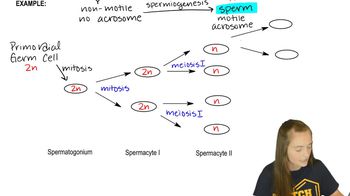
Gamete Development

Folate and Neural Tube Defects

Folate, a B-vitamin, is essential for DNA synthesis and repair, as well as cell division. A maternal diet low in folate during pregnancy has been linked to an increased risk of neural tube defects, including spina bifida. This highlights the importance of adequate folate intake before and during early pregnancy to support proper neural tube formation.
Video consigliato:
Percorso guidato
07:10
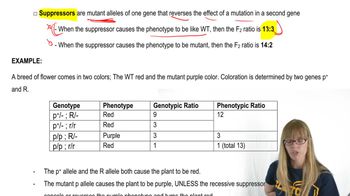
Other Gene Interactions

Genetic Mutations and Alleles

Mutant alleles are variations of genes that can lead to altered functions or traits. In the context of neural tube defects, researchers may investigate specific genes involved in neural tube formation and differentiation to identify any mutations that could contribute to conditions like spina bifida. Understanding these genetic factors can help in developing preventive strategies and treatments.
Video consigliato:
Percorso guidato
03:03
New Alleles and Migration
Pratica correlata
Domanda del libro di testo

A developmental disorder in humans called spina bifida is a neural tube defect linked to a maternal diet low in folate during pregnancy.

What does this suggest about the cause of spina bifida?

494
views
Domanda del libro di testo

Prader–Willi syndrome (PWS) is a genetic disorder with a clinical profile of obesity, intellectual disability, and short stature. It can be caused in several ways. Most common is a deletion on the paternal copy of chromosome 15, but it can also be caused by an epigenetic imprinting disorder and uniparental disomy, an event in which the affected child receives two copies of the maternal chromosome 15. A child with PWS comes to your clinic for a diagnosis of the molecular basis for this condition. The gel below shows the results of testing with short tandem repeats (STRs) from the region of chromosome 15 associated with the disorder.

Based on your interpretation of the data, what is the cause of PWS in this case? Explain your reasoning. 

1108
views
Domanda del libro di testo

How are mutations in histone acetylation (HAT) genes linked to cancer?

609
views
Domanda del libro di testo

A developmental disorder in humans called spina bifida is a neural tube defect linked to a maternal diet low in folate during pregnancy.

Does this exclude genetic mutations as a cause of this condition?

367
views
Domanda del libro di testo

Trace the relationship between the methylation status of the glucocorticoid receptor gene and the behavioral response to stress.

676
views
Domanda del libro di testo

Prader–Willi syndrome (PWS) is a genetic disorder with a clinical profile of obesity, intellectual disability, and short stature. It can be caused in several ways. Most common is a deletion on the paternal copy of chromosome 15, but it can also be caused by an epigenetic imprinting disorder and uniparental disomy, an event in which the affected child receives two copies of the maternal chromosome 15. A child with PWS comes to your clinic for a diagnosis of the molecular basis for this condition. The gel below shows the results of testing with short tandem repeats (STRs) from the region of chromosome 15 associated with the disorder.

Is this case caused by a deletion in the paternal copy of chromosome 15? Explain.

1276
views