Ch. 19 - Epigenetics
Klug - Concepts of Genetics 12th Edition
Klug12th EditionConcepts of GeneticsISBN: 9780135564776Non è quello che usi tu?Cambia libro di testo
Capitolo 19, Problema 18

How are mutations in histone acetylation (HAT) genes linked to cancer?

Guida verificata passo dopo passo
1
span>Step 1: Understand the role of histone acetylation in gene expression.
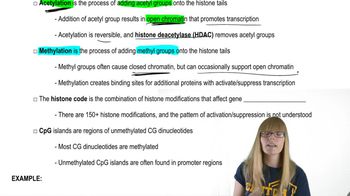
span>Step 2: Recognize that histone acetylation is a process where acetyl groups are added to histone proteins, leading to a more relaxed chromatin structure and increased gene expression.
span>Step 3: Identify that Histone Acetyltransferases (HATs) are enzymes responsible for adding acetyl groups to histones.
span>Step 4: Consider how mutations in HAT genes can disrupt normal acetylation patterns, potentially leading to abnormal gene expression.
span>Step 5: Explore how such disruptions in gene expression can contribute to the development and progression of cancer by affecting genes involved in cell cycle regulation, apoptosis, and other critical cellular processes.

Risposta video verificata per un problema simile:

Questa soluzione video è stata consigliata dai nostri tutor come utile per risolvere questo problema.
Durata del video:
2m

Concetti chiave

Ecco i concetti essenziali che devi comprendere per rispondere correttamente alla domanda.

Histone Acetylation

Histone acetylation is a post-translational modification where acetyl groups are added to histone proteins, leading to a more relaxed chromatin structure. This modification enhances gene expression by allowing transcription factors easier access to DNA. The balance of acetylation and deacetylation is crucial for normal cellular function and regulation of gene expression.
Video consigliato:
Percorso guidato
07:55
Histone Protein Modifications

HAT Genes

Histone Acetyltransferase (HAT) genes encode enzymes that catalyze the addition of acetyl groups to histones. Mutations in these genes can disrupt normal acetylation patterns, potentially leading to aberrant gene expression. This dysregulation can contribute to oncogenesis by activating oncogenes or silencing tumor suppressor genes.
Video consigliato:

Cancer and Epigenetics

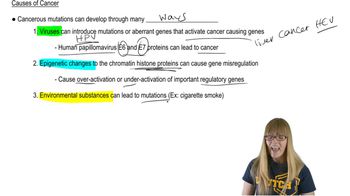
Cancer is often associated with epigenetic changes, which include modifications like histone acetylation. These changes can alter gene expression without altering the underlying DNA sequence. Mutations in HAT genes can lead to epigenetic alterations that promote uncontrolled cell growth and survival, key characteristics of cancer cells.
Video consigliato:
Pratica correlata
Domanda del libro di testo

A developmental disorder in humans called spina bifida is a neural tube defect linked to a maternal diet low in folate during pregnancy.

What does this suggest about the cause of spina bifida?

494
views
Domanda del libro di testo

Imprinting disorders do not involve changes in DNA sequence, but only the methylated state of the DNA. Does it seem likely that imprinting disorders could be treated by controlling the maternal environment in some way, perhaps by dietary changes?

475
views
Domanda del libro di testo

Should fertility clinics be required by law to disclose that some assisted reproductive technologies (ARTs) can result in epigenetic diseases? How would you and your partner balance the risks of ART with the desire to have a child?

493
views
Domanda del libro di testo

How can the role of epigenetics in cancer be reconciled with the idea that cancer is caused by the accumulation of genetic mutations in tumor-suppressor genes and proto-oncogenes?

562
views
Domanda del libro di testo

A developmental disorder in humans called spina bifida is a neural tube defect linked to a maternal diet low in folate during pregnancy.

Should researchers be looking for mutant alleles of genes that control formation and differentiation of the neural tube?

453
views
Domanda del libro di testo

A developmental disorder in humans called spina bifida is a neural tube defect linked to a maternal diet low in folate during pregnancy.

Does this exclude genetic mutations as a cause of this condition?

367
views