Ch. 20 - Recombinant DNA Technology
Klug - Concepts of Genetics 12th Edition
Klug12th EditionConcepts of GeneticsISBN: 9780135564776Non è quello che usi tu?Cambia libro di testo
Capitolo 20, Problema 1c

How has DNA-sequencing technology evolved in response to the emerging needs of genome scientists?

Guida verificata passo dopo passo
1
Step 1: Understand the initial state of DNA sequencing technology, starting with Sanger sequencing, which was the first widely used method and provided relatively low-throughput, accurate sequencing of short DNA fragments.
Step 2: Recognize the limitations of early sequencing methods, such as low speed, high cost, and limited scalability, which created a need for faster and more cost-effective technologies as genome projects expanded.
Step 3: Explore the development of next-generation sequencing (NGS) technologies, which increased throughput dramatically by allowing millions of DNA fragments to be sequenced simultaneously, reducing cost and time per genome.
Step 4: Consider the emergence of third-generation sequencing technologies, which focus on sequencing single molecules of DNA in real-time, providing longer read lengths and the ability to detect epigenetic modifications, thus addressing challenges in genome assembly and structural variation detection.
Step 5: Reflect on how these technological advancements have been driven by the needs of genome scientists for higher accuracy, speed, cost efficiency, and the ability to analyze complex genomic features, enabling large-scale projects like the Human Genome Project and personalized medicine.

Risposta video verificata per un problema simile:

Questa soluzione video è stata consigliata dai nostri tutor come utile per risolvere questo problema.
Durata del video:
1m

Concetti chiave

Ecco i concetti essenziali che devi comprendere per rispondere correttamente alla domanda.

Advancements in DNA Sequencing Technologies

DNA sequencing has evolved from first-generation methods like Sanger sequencing to high-throughput next-generation sequencing (NGS) and third-generation single-molecule sequencing. These advancements have increased speed, accuracy, and reduced costs, enabling large-scale genome projects and detailed genetic analysis.
Video consigliato:
Percorso guidato
08:55
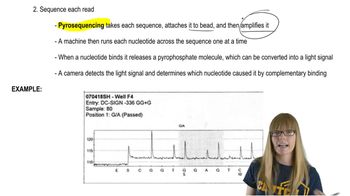
Sequencing Overview

Demand for High-Throughput and Cost-Effective Sequencing

As genome scientists sought to sequence entire genomes quickly and affordably, sequencing technologies adapted to process millions of DNA fragments simultaneously. This shift addressed the need for large data volumes, facilitating studies in population genetics, personalized medicine, and evolutionary biology.
Video consigliato:
Percorso guidato
03:38
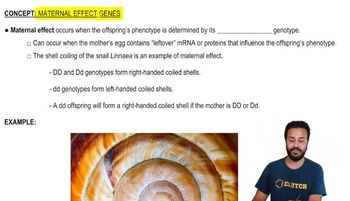
Maternal Effect

Integration of Bioinformatics and Data Analysis

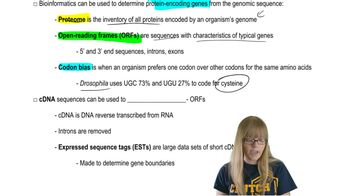
The explosion of sequencing data required advanced computational tools to store, analyze, and interpret genetic information. Bioinformatics has become essential for managing sequencing outputs, enabling genome assembly, variant detection, and functional annotation critical to modern genomics research.
Video consigliato: