 Indietro
Acid-Base Equilibria: Structured Study Notes for GOB Chemistry
Guida di studio - Note intelligenti
 Appunti personalizzati basati sui tuoi materiali, ampliati con definizioni chiave, esempi e contesto.
Acid-Base Equilibria
Overview
This chapter explores the fundamental concepts of acids and bases, their equilibria in aqueous solutions, and the quantitative relationships that govern their behavior. It covers definitions, models, calculations, and the chemical structure's influence on acid-base properties, as well as the extension to salt solutions and transition-metal complexes.
Acids and Bases: A Brief Review
Characteristic Properties
Acids and bases are two important classes of compounds in chemistry, each with distinct physical and chemical properties.
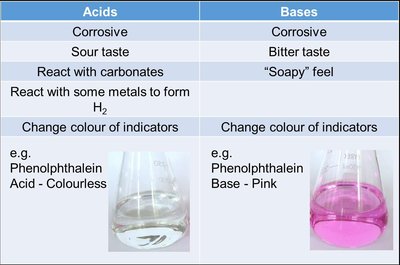
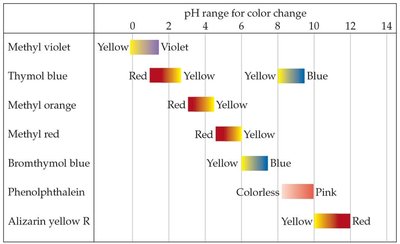
Acids: Corrosive, sour taste, react with carbonates, can produce hydrogen gas with metals, change color of indicators (e.g., phenolphthalein is colorless in acid).
Bases: Corrosive, bitter taste, soapy feel, change color of indicators (e.g., phenolphthalein is pink in base).
Acid-Base Models
Arrhenius Model
The Arrhenius model defines acids and bases based on their behavior in water:
Acid: Increases concentration of H+ ions in water (e.g., HCl).
Base: Increases concentration of OH- ions in water (e.g., NaOH).
Brønsted-Lowry Model
The Brønsted-Lowry model expands the definition:
Acid: Proton (H+) donor.
Base: Proton (H+) acceptor.
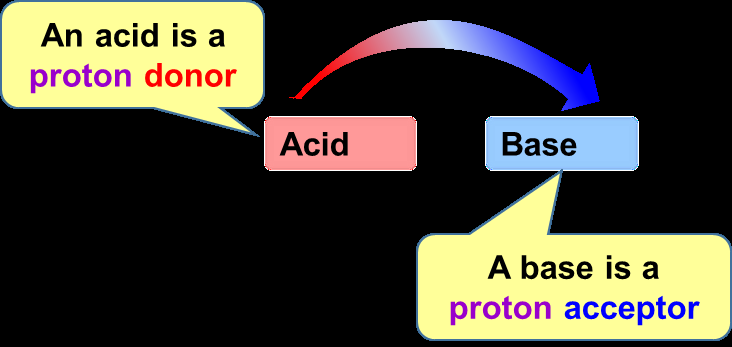
All Arrhenius acids and bases are Brønsted-Lowry acids and bases, but the Brønsted-Lowry model applies to a wider range of reactions.
Lewis Model
The Lewis model further generalizes acid-base chemistry:
Lewis Acid: Electron pair acceptor.
Lewis Base: Electron pair donor.
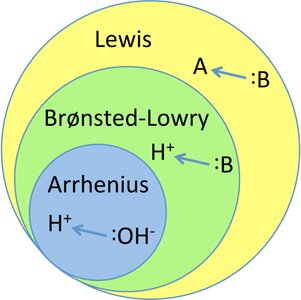
All Brønsted-Lowry acids and bases are Lewis acids and bases, but not all Lewis acids and bases are Brønsted-Lowry acids and bases.
Acid and Base Strength
Strong Acids and Bases
Strong acids and bases ionize completely in water, making them strong electrolytes.
Strong Acids: HCl, HBr, HI, HNO3, HClO3, HClO4, H2SO4
Strong Bases: Hydroxides of group 1 and 2 metals (e.g., NaOH, KOH, Ba(OH)2)
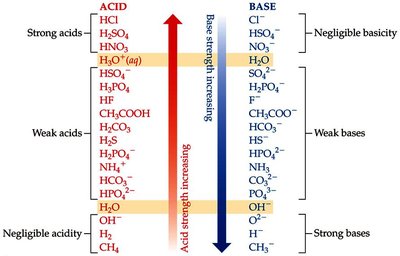
Strong acids have very large equilibrium constants and are product-favored; strong bases dissociate completely.
Weak Acids and Bases
Weak acids and bases ionize only partially in water, resulting in smaller equilibrium constants and reactant-favored equilibria.
Weak Acids: Acetic acid (CH3COOH), formic acid (HCOOH), etc.
Weak Bases: Ammonia (NH3), amines, anions of weak acids.
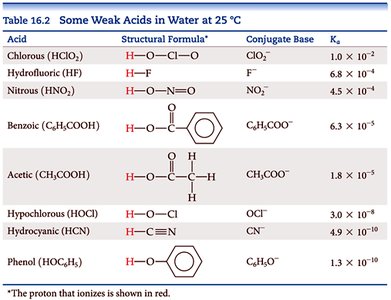
The acid dissociation constant () quantifies acid strength:
The larger the , the stronger the acid.
Polyprotic Acids
Definition and Examples
Polyprotic acids can donate more than one proton per molecule. Each successive ionization is less favorable.
Diprotic acids: H2SO4, H2CO3
Triprotic acids: H3PO4
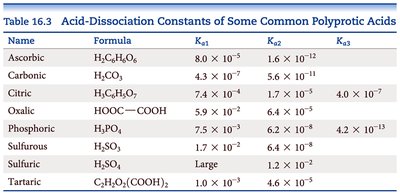
Each ionization step has its own value. If , the pH is determined mainly by the first ionization.

Autoionization of Water and Ion-Product
Autoionization
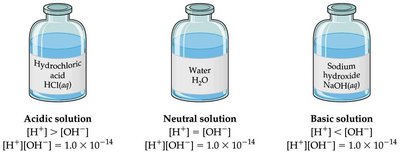
Water is amphoteric and can act as both an acid and a base. In pure water, a small fraction of molecules autoionize:
The equilibrium constant for this process is called the ion-product of water ():
at 25°C
The pH Scale
Definition and Calculations
The pH scale is a logarithmic measure of hydrogen ion concentration:
(at 25°C)
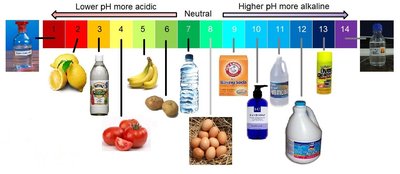
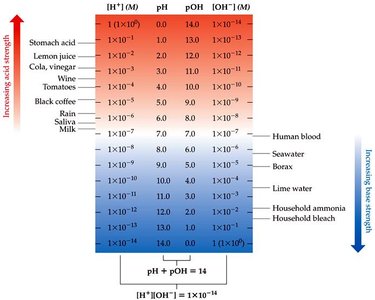
pH < 7 is acidic, pH = 7 is neutral, pH > 7 is basic.
Measuring pH
pH Meters and Indicators
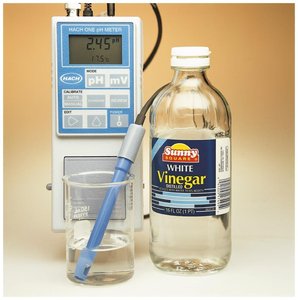
pH can be measured using:
pH meters: Provide accurate readings using electrodes.
Indicators: Compounds that change color depending on pH; less accurate but quick.
Acid-Base Conjugate Pairs
Definition and Examples
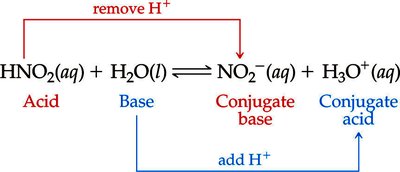
A conjugate acid-base pair consists of two species that differ by one proton. The acid donates a proton to form its conjugate base; the base accepts a proton to form its conjugate acid.
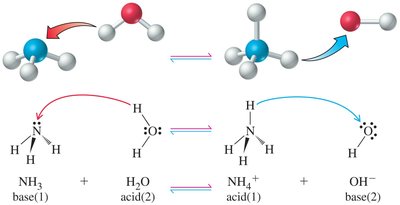
Relationship Between Ka and Kb
Quantitative Relationship
The acid dissociation constant () and base dissociation constant () are related:
(at 25°C)
The weaker the acid, the stronger its conjugate base.
Acid-Base Properties of Salt Solutions
Hydrolysis and Classification
Many salts react with water to produce acidic or basic solutions. The nature of the cation and anion determines the solution's pH:
Anions of strong acids: Neutral (e.g., Cl-)
Anions of weak acids: Basic (e.g., C2H3O2-)
Group I/II metal cations: Neutral
Polyatomic cations (e.g., NH4+): Acidic
Transition metal cations: Acidic due to hydrated ion formation
Factors Affecting Acid Strength
Bond Polarity, Strength, and Anion Stability
Acid strength depends on:
Bond polarity (H—A bond must be polarized)
Bond strength (weaker bonds are easier to break)
Anion stability (more stable anion means stronger acid)
Binary Acids
Binary acids consist of hydrogen and one other element. Within a group, bond strength is most important; within a period, bond polarity dominates.
Oxyacids
Oxyacids contain hydrogen, oxygen, and a nonmetal. Acidity increases with the electronegativity of the nonmetal and the number of oxygen atoms.
Carboxylic Acids
Carboxylic acids are organic acids with the —COOH group. Their acidity is enhanced by electron-withdrawing oxygen atoms and resonance stabilization of the conjugate base.
Lewis Acids and Bases
Definition and Examples
Lewis acids accept electron pairs; Lewis bases donate electron pairs. This model includes all Brønsted-Lowry acids and bases and extends to metal-ligand chemistry.
Transition-Metal Complexes
Metal-Ligand Bond and Coordination Numbers
Transition metals form complexes with ligands, which act as Lewis bases. The metal is a Lewis acid. The overall charge and coordination number depend on the metal and ligands.
Common coordination numbers: 4 (tetrahedral/square planar), 6 (octahedral)
Ligands donate electron pairs to the metal
Summary Table: Acid-Base Concepts
Model | Acid Definition | Base Definition |
|---|---|---|
Arrhenius | Produces H+ in water | Produces OH- in water |
Brønsted-Lowry | Proton donor | Proton acceptor |
Lewis | Electron pair acceptor | Electron pair donor |
Key Equations
Practice and Application
Identify acid-base conjugate pairs in reactions.
Calculate pH, pOH, and ion concentrations for strong and weak acids/bases.
Determine the acid-base properties of salt solutions based on their ions.
Explain the relationship between chemical structure and acid strength.
Recognize Lewis acids and bases and their reactions, including metal complexes.
