 Indietro
Lecture 1: Building Blocks of Molecules
Guida di studio - Note intelligenti
 Appunti personalizzati basati sui tuoi materiali, ampliati con definizioni chiave, esempi e contesto.
Building Blocks of Molecules
Introduction to Biochemistry and Matter
Biochemistry is the study of the chemistry of life, focusing on the molecules and reactions that occur in biological systems. Understanding these systems requires breaking them down into their component parts, studying these parts in isolation, and then reconstructing the system from these components. The main molecular components of life include proteins, nucleic acids, carbohydrates, and lipids, all of which are governed by the principles of chemistry.
Matter: Physical material of the universe; anything that has mass and occupies space.
Mass: The amount of matter present in a substance.
Pure substance: Has a uniform chemical composition.
Mixture: Has variable composition and can be physically separated.
Atoms, Elements, Molecules, and Compounds
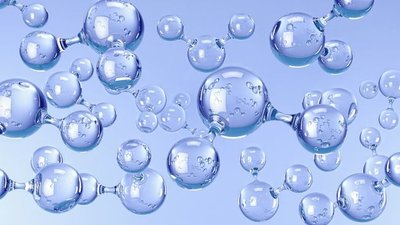
Atoms are the fundamental building blocks of matter. Elements are pure substances consisting of only one kind of atom. Molecules are the smallest units of a pure substance that retain its properties and are made up of atoms. Compounds are pure substances composed of multiple kinds of atoms chemically bonded together.
Atom: Smallest particle of an element.
Element: Homogeneous, pure substance with only one kind of atom.
Molecule: Smallest unit of a pure substance that retains its properties; made up of atoms.
Compound: Homogeneous, pure substance with multiple kinds of atoms.
Examples:
Water: H2O (2 hydrogens, 1 oxygen)
Table salt: NaCl (1 sodium, 1 chlorine)
Glucose: C6H12O6 (6 carbon, 12 hydrogen, 6 oxygen)
Elements in Biological Systems
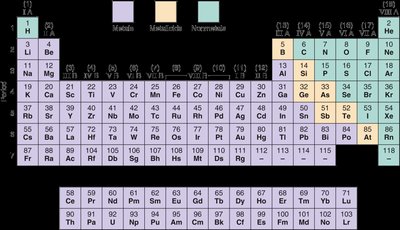
There are 118 known elements, but only a subset is commonly found in biological systems. The structure of biological molecules is determined by the elements that compose them, which in turn affects their function.
The most prevalent elements in the human body are carbon (C), nitrogen (N), oxygen (O), and hydrogen (H).
Other important elements include calcium (Ca), phosphorus (P), potassium (K), sulfur (S), chlorine (Cl), sodium (Na), and magnesium (Mg).
Element | Dry Weight (%) |
|---|---|
C | 61.7 |
N | 11.0 |
O | 9.3 |
H | 5.7 |
Ca | 5.0 |
P | 3.3 |
K | 1.0 |
S | 1.0 |
Cl | 0.7 |
Na | 0.7 |
Mg | 0.3 |
Representations of Molecules
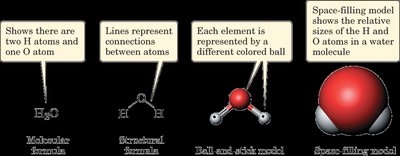
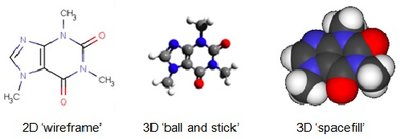
Molecules can be represented in several ways to illustrate their structure and composition:
Molecular formula: Shows the types and numbers of atoms (e.g., H2O).
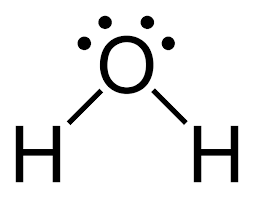
Structural formula: Shows how atoms are connected.
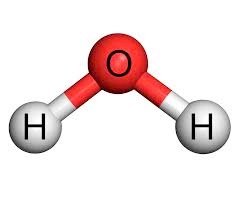
Ball-and-stick model: Uses colored balls to represent atoms and sticks to represent bonds.
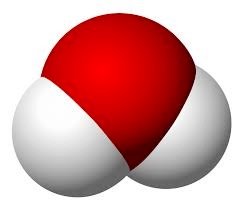
Space-filling model: Shows the relative sizes of atoms in a molecule.
Summary
Elements are made of atoms that can combine to form molecules or compounds.
The most prevalent elements in the human body are carbon (C), nitrogen (N), oxygen (O), and hydrogen (H).
