 Indietro
Lecture 7: Carboxylic Acids; Nitrogen, Sulfur, and Phosphorus Compounds
Guida di studio - Note intelligenti
 Appunti personalizzati basati sui tuoi materiali, ampliati con definizioni chiave, esempi e contesto.
Carboxylic Acids
Structure and Properties
Carboxylic acids are organic compounds containing a carbonyl group (C=O) bonded to a hydroxyl group (–OH), forming the carboxyl functional group (–COOH). They are more oxidized than aldehydes and ketones and are commonly found in biological molecules.
Hydrogen Bonding: Carboxylic acids can both donate and accept hydrogen bonds, leading to strong intermolecular forces.
Solubility: They are usually water-soluble unless the hydrophobic portion of the molecule is large (e.g., fatty acids).
Acidity: Carboxylic acids are weak acids, typically with pKa values around 3–4. They can donate a proton to water, forming a carboxylate ion.
Example: Acetic acid (CH3COOH) is a common carboxylic acid found in vinegar.
Carboxylate Salts
When carboxylic acids react with bases (such as NaOH), they form carboxylate salts, which are ionic and more water-soluble than the parent acid.
Reaction:
Application: Soaps are sodium or potassium salts of fatty acids (carboxylate salts).
Biological Relevance
Carboxylic acids are present in amino acids and proteins, contributing to their acidic properties and reactivity in biological systems.
Esters
Structure and Properties
Esters are derived from carboxylic acids and alcohols. They contain a carbonyl group bonded to an oxygen atom, which is further bonded to another carbon (–COOR).
Intermolecular Forces: Esters have dipole-dipole interactions but lack hydrogen bond donors, making them more volatile and lower boiling than carboxylic acids.
Solubility: Esters can hydrogen bond with water (as acceptors), but are less soluble than carboxylate salts.
Formation and Hydrolysis
Esterification: (acid-catalyzed)
Hydrolysis: Esters can be hydrolyzed back to acids and alcohols by water or base (saponification).
Saponification:
Example: Triacylglycerols (fats and oils) are esters of glycerol and fatty acids.
Amines
Structure and Classification
Amines are derivatives of ammonia (NH3) where one or more hydrogens are replaced by alkyl or aryl groups. They are classified as:
Primary (1°): One carbon attached to nitrogen
Secondary (2°): Two carbons attached
Tertiary (3°): Three carbons attached
Quaternary (4°) Ammonium: Four carbons, positively charged
Physical and Chemical Properties
Polarity: Amines are polar and can form hydrogen bonds (1° and 2° only).
Solubility: Generally water-soluble unless the hydrophobic group is large.
Basicity: Amines act as weak bases, accepting protons to form ammonium ions.
Amine Salts: Reaction with acids forms water-soluble amine salts.
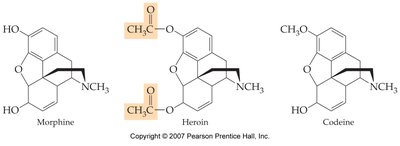
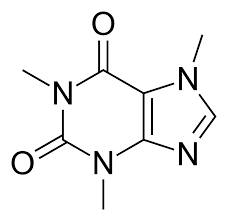
Example: Many drugs and neurotransmitters are amines or amine salts (e.g., Prozac, nicotine, caffeine).
Amides
Structure and Classification
Amides are formed by the reaction of carboxylic acids with amines. They contain a carbonyl group bonded to a nitrogen atom (–CONH2, –CONHR, or –CONR2).
Primary (1°): Nitrogen bonded to one carbon
Secondary (2°): Nitrogen bonded to two carbons
Tertiary (3°): Nitrogen bonded to three carbons
Properties and Reactivity
Hydrogen Bonding: 1° and 2° amides can hydrogen bond; 3° amides cannot.
Solubility: Amides are usually water-soluble unless the hydrophobic group is large.
Basicity: Amides are not basic due to resonance stabilization of the nitrogen lone pair.
Hydrolysis: Amides can be hydrolyzed under acidic or basic conditions to yield carboxylic acids or carboxylate salts and amines or amine salts.
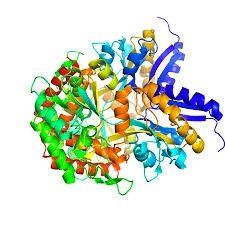
Biological Example: Peptide bonds in proteins are amide linkages between amino acids.
Thiols and Thioesters
Thiols
Thiols are sulfur analogs of alcohols (–SH group). They have a strong, often unpleasant odor and are more reactive than alcohols.
Intermolecular Forces: Thiols have dipole-dipole interactions but do not hydrogen bond.
Oxidation: Thiols can be oxidized to form disulfides (–S–S–), a reversible reaction important in protein structure.
Example: Methanethiol is added to natural gas for leak detection.
Thioesters
Thioesters are similar to esters but contain a sulfur atom in place of the single-bonded oxygen. They are formed from carboxylic acids and thiols and are important in metabolism (e.g., acetyl-CoA).
Phosphate Compounds
Phosphoesters and Phosphoanhydrides
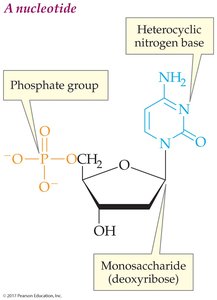
Phosphate esters contain a C–O–P bond, formed by the reaction of phosphoric acid with alcohols. Phosphoanhydrides contain a P–O–P bond, formed by the condensation of two phosphate groups.
Phosphoesters: Found in nucleotides and nucleic acids (DNA, RNA).
Phosphoanhydrides: Found in ATP and other energy-carrying molecules; breaking these bonds releases energy.
Phosphorylation Reactions
Phosphorylation is the transfer of a phosphate group from one molecule (often ATP) to another, a key process in metabolism and cellular signaling.
Example: The first step of glycolysis is the phosphorylation of glucose to glucose-6-phosphate by ATP.
Summary Table: Key Functional Groups and Properties
Functional Group | General Structure | Key Properties | Biological Role |
|---|---|---|---|
Carboxylic Acid | –COOH | Weak acid, hydrogen bonds, water-soluble | Amino acids, fatty acids |
Ester | –COOR | Dipole-dipole, volatile, less soluble | Fats, oils, fragrances |
Amine | –NH2, –NHR, –NR2 | Weak base, hydrogen bonds (1°, 2°), water-soluble | Neurotransmitters, drugs |
Amide | –CONH2, –CONHR, –CONR2 | Hydrogen bonds (1°, 2°), not basic | Proteins (peptide bonds) |
Thiol | –SH | Dipole-dipole, oxidizes to disulfide | Protein structure (cysteine) |
Phosphoester | C–O–P | Negative charge, energy transfer | DNA, RNA, ATP |
Phosphoanhydride | P–O–P | High energy, hydrolysis releases energy | ATP, GTP |
