 Indietro
Chapter 5: Nuclear Chemistry – Structured Study Notes for GOB Chemistry
Guida di studio - Note intelligenti
 Appunti personalizzati basati sui tuoi materiali, ampliati con definizioni chiave, esempi e contesto.
Chapter 5: Nuclear Chemistry
Introduction to Nuclear Chemistry
Nuclear chemistry explores the behavior of atomic nuclei, including their stability, radioactive decay, and applications in medicine and energy. It is a fundamental topic in General, Organic, and Biological (GOB) Chemistry, with direct relevance to health, environmental science, and technology.
Natural Radioactivity
Radioactive Isotopes and Stability
Atoms with unstable nuclei spontaneously emit radiation to become more stable. These atoms are called radioisotopes. Most elements up to atomic number 19 have stable nuclei, while elements with atomic numbers 20 and higher often have unstable isotopes.
Radioisotope: An isotope with an unstable nucleus that emits radiation.
Example: Carbon-14 (146C) is used in archaeological dating.
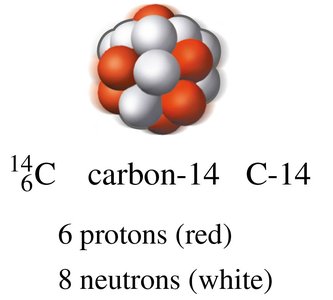

Stable vs. Radioactive Isotopes
Isotopes are classified as stable or radioactive based on their nuclear properties. The mass number and atomic number are used to identify isotopes.
Types of Radiation
Alpha, Beta, Positron, and Gamma Radiation
Radioisotopes emit different types of radiation:
Alpha (α) particles: Identical to a helium nucleus (42He), low energy, charge +2.
Beta (β) particles: High-energy electrons (0-1e), charge -1.
Positrons (β+): Positive electrons (0+1e), charge +1.
Gamma (γ) rays: Pure energy (00γ), no charge or mass.
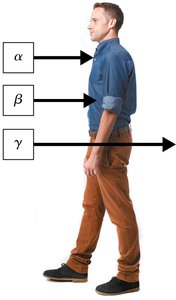
Alpha Decay
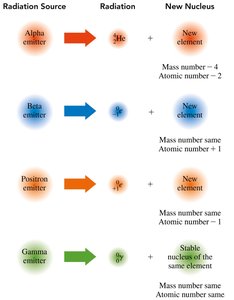
Alpha decay occurs when a nucleus emits an alpha particle, decreasing its mass number by 4 and atomic number by 2.
Example: Uranium-238 decays to thorium-234 by emitting an alpha particle.
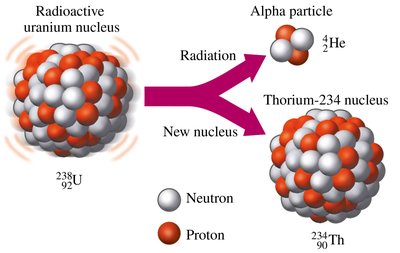
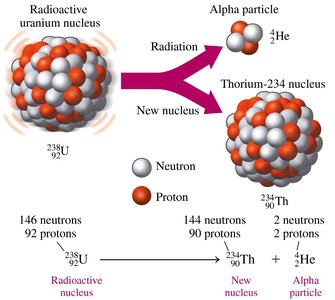
Beta Decay
Beta decay occurs when a neutron in the nucleus converts to a proton and emits a beta particle, increasing the atomic number by 1.
Example: Carbon-14 decays to nitrogen-14 by emitting a beta particle.

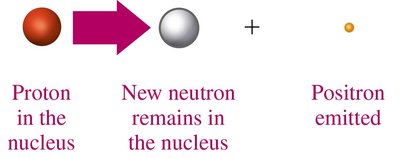
Positron Emission
Positron emission occurs when a proton converts to a neutron and emits a positron, decreasing the atomic number by 1.
Summary of Radiation Types
Each type of radiation results in a new nucleus with specific changes to mass and atomic numbers.
Biological Effects and Protection
Biological Effects of Radiation
Ionizing radiation damages rapidly dividing cells, including bone marrow, skin, reproductive organs, and cancer cells. Large doses are used to destroy cancer cells, but can also cause genetic mutations and other health issues.
Radiation Protection
Different types of radiation require specific shielding:
Alpha: Paper, clothing
Beta: Heavy clothing, lab coats, gloves
Gamma: Lead, thick concrete

Nuclear Reactions and Equations
Writing Nuclear Equations
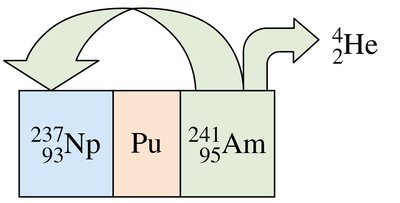
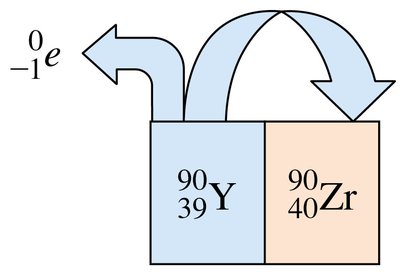
Nuclear equations show the changes in mass and atomic numbers during radioactive decay. The sum of mass numbers and atomic numbers must be equal on both sides of the equation.
Alpha decay:
Beta decay:
Positron emission:
Production of Radioactive Isotopes
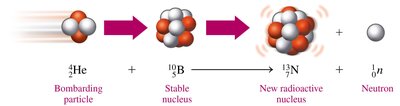
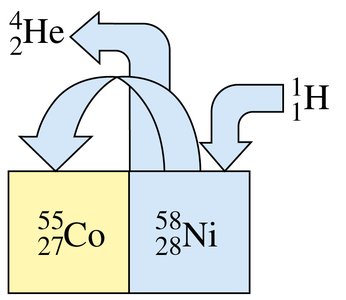
Bombardment Reactions
Radioisotopes can be produced by bombarding stable nuclei with particles such as alpha particles, protons, or neutrons.
Example:
Radiation Measurement
Detection and Units
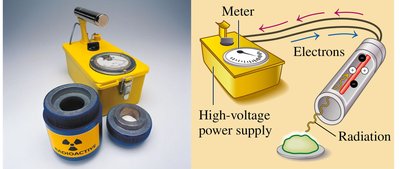
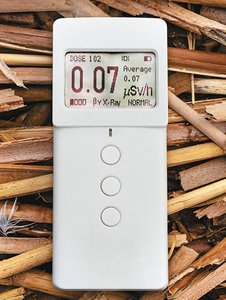
Radiation is detected using instruments such as Geiger counters and dosimeters. Key units include:
Curie (Ci): Activity, 1 Ci = disintegrations/s
Becquerel (Bq): SI unit, 1 Bq = 1 disintegration/s
Rad: Absorbed dose
Rem: Biological damage
Sv (Sievert): SI unit for biological damage, 1 Sv = 100 rem
Half-Life of Radioisotopes
Definition and Calculation
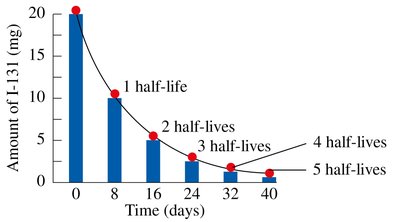
The half-life is the time required for half of the radioactive atoms in a sample to decay. It is used to determine the age of objects and the remaining activity of radioisotopes.
Decay curve: Shows the decrease in radioactivity over time.
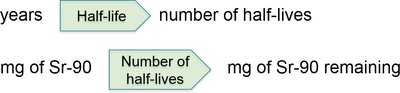
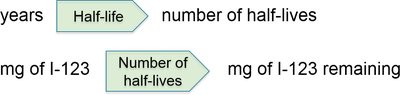
Formula: , where is the number of half-lives.
Applications of Radioactivity
Medical Applications
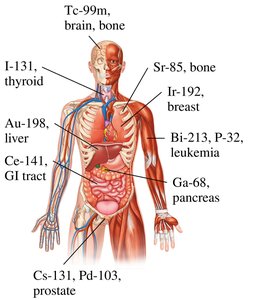
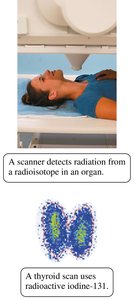
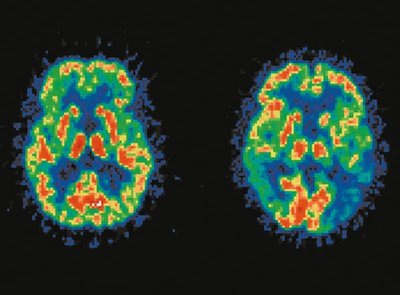
Radioisotopes are used in diagnosis and treatment of diseases. Short half-life isotopes are preferred for medical imaging and therapy.
Examples: Tc-99m for imaging, I-131 for thyroid treatment, F-18 for PET scans.
Environmental and Archaeological Applications
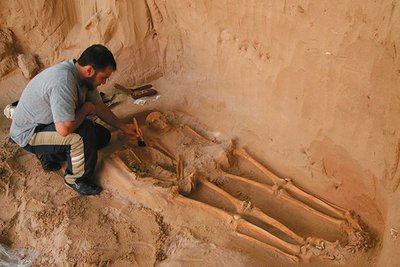
Radioisotopes are used for dating ancient objects, such as bones and artifacts, using carbon-14 dating.

Nuclear Fission and Fusion
Nuclear Fission
Fission is the splitting of a large nucleus (e.g., U-235) into smaller nuclei, releasing energy and neutrons. It is the basis for nuclear reactors and atomic bombs.
Equation:
Chain reaction: Neutrons produced can cause further fission events.
Nuclear Fusion
Fusion combines small nuclei (e.g., hydrogen isotopes) to form larger nuclei (e.g., helium), releasing even more energy. Fusion occurs in stars and is a potential energy source with less radioactive waste.
Equation:
Summary Table: Properties of Radiation and Shielding
Type | Symbol | Mass Number | Charge | Shielding |
|---|---|---|---|---|
Alpha Particle | α (42He) | 4 | +2 | Paper, clothing |
Beta Particle | β (0-1e) | 0 | -1 | Lab coat, gloves |
Positron | β+ (0+1e) | 0 | +1 | Lab coat, gloves |
Gamma Ray | γ (00γ) | 0 | 0 | Lead, concrete |
Summary Table: Units of Radiation Measurement
Measurement | Common Unit | SI Unit | Relationship |
|---|---|---|---|
Activity | Curie (Ci) | Becquerel (Bq) | 1 Ci = 3.7 × 10¹⁰ Bq |
Absorbed Dose | Rad | Gray (Gy) | 1 Gy = 100 rad |
Biological Damage | Rem | Sievert (Sv) | 1 Sv = 100 rem |
Summary Table: Half-Lives of Common Radioisotopes
Element | Radioisotope | Half-Life | Type of Radiation |
|---|---|---|---|
Carbon | 146C | 5730 yr | Beta |
Potassium | 4019K | 1.3 × 10⁹ yr | Beta, gamma |
Radium | 22688Ra | 1600 yr | Alpha |
Iodine | 13153I | 8.0 days | Gamma |
Technetium | 99m43Tc | 6.0 h | Beta, gamma |
Key Equations
Einstein's Mass-Energy Relation:
Half-life calculation:
Radiation dose:
Concept Map
Nuclear chemistry connects atomic structure, radioactivity, nuclear reactions, measurement, and applications in medicine and environmental science.
*Additional info: Academic context and explanations have been expanded for clarity and completeness. Only images directly relevant to the adjacent content have been included, as per strict relevance requirements.*
