 Indietro
Introduction to Organic Compounds: Structure, Nomenclature, and Functional Groups
Guida di studio - Note intelligenti
 Appunti personalizzati basati sui tuoi materiali, ampliati con definizioni chiave, esempi e contesto.
Chapter 4: Introduction to Organic Compounds
What is an Organic Compound?
Organic compounds are chemical substances that contain carbon atoms covalently bonded to other elements, most commonly hydrogen, oxygen, and nitrogen. They form the basis of all living organisms and are central to the study of biochemistry and molecular biology.
Biomolecules: Large organic molecules found in living organisms, such as carbohydrates, proteins, lipids, and nucleic acids.
Inorganic Compounds: Compounds that do not primarily contain carbon-hydrogen bonds, such as salts, metals, and minerals.
Section 4.1 Representing the Structures of Organic Compounds
Types of Structural Representations
Organic compounds can be represented in several ways to convey their structure and bonding:
Lewis Structure: Shows all atoms, bonds, and lone pairs explicitly.
Condensed Structural Formula: Groups atoms together to simplify the structure, omitting some bonds for clarity.
Skeletal (Line-Angle) Structure: Uses lines to represent carbon-carbon bonds; carbon and hydrogen atoms bonded to carbon are implied but not shown.
Drawing Skeletal Structures:
Determine the number of carbons connected end to end.
Draw the bonds between the carbons (the carbon skeleton).
Draw bonds to noncarbon atoms (heteroatoms).
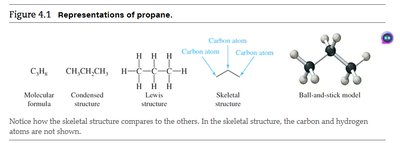
Examples of Organic Compounds
Organic compounds can range from simple molecules like methane to complex pharmaceuticals. Their structures can be depicted using the methods above.
Section 4.2 Alkanes: The Simplest Organic Compounds
Alkanes
Alkanes are saturated hydrocarbons containing only single bonds between carbon atoms. They are nonpolar and generally unreactive except under combustion or halogenation conditions.
General Formula:
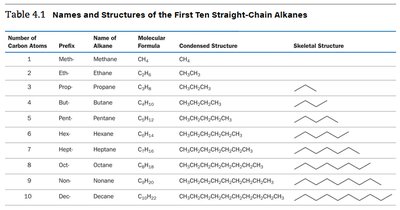
Examples: Methane (CH4), Ethane (C2H6), Propane (C3H8), etc.
Cycloalkanes
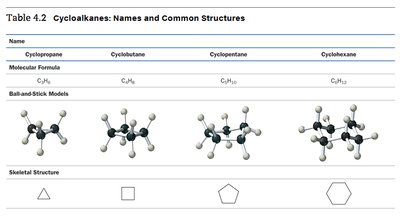
Cycloalkanes are alkanes whose carbon atoms are arranged in a ring. Their general formula is .
Section 4.3 Families of Organic Compounds—Functional Groups
Heteroatoms and Functional Groups
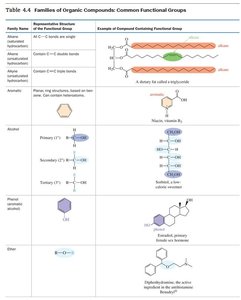
Heteroatoms are atoms in an organic molecule other than carbon or hydrogen (e.g., O, N, S, halogens). Functional groups are specific groups of atoms within molecules that are responsible for the characteristic chemical reactions of those molecules.
Carbonyl Group: A carbon atom double-bonded to an oxygen atom (C=O), found in aldehydes, ketones, carboxylic acids, esters, and amides.
Carboxylic Acids and Other Functional Groups
Carboxylic acids contain the carboxyl group (-COOH) and are important in biochemistry and metabolism. Other functional groups include alcohols, amines, ethers, and halides.
Unsaturated Hydrocarbons—Alkenes, Alkynes, and Aromatics
Alkenes
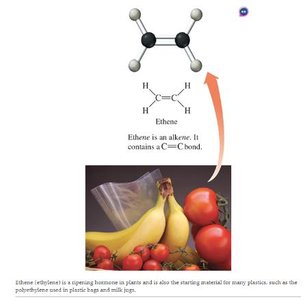
Alkenes are hydrocarbons containing at least one carbon-carbon double bond. They are more reactive than alkanes and are important in biological and industrial chemistry.
General Formula:
Example: Ethene (ethylene), a plant hormone and industrial chemical.
Terpenes
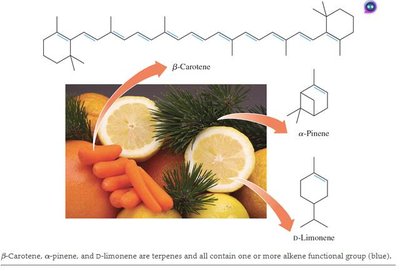
Terpenes are a large and diverse class of naturally occurring organic compounds produced by plants, especially conifers. They are built from isoprene units and often contain alkenes.
Alkynes
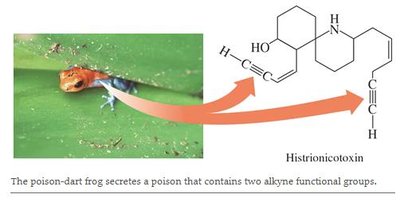
Alkynes are hydrocarbons with at least one carbon-carbon triple bond. They are less common in nature but are found in some natural toxins and pharmaceuticals.
General Formula:
Aromatics
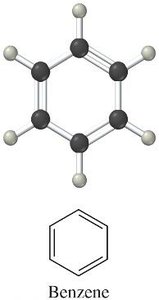
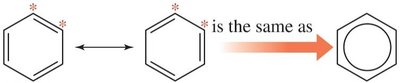
Aromatic compounds contain conjugated planar ring systems with delocalized pi electrons, such as benzene. They are important in both biology and industry.
Pharmaceuticals and Lipids
Pharmaceuticals as Organic Compounds
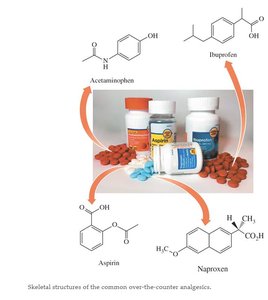
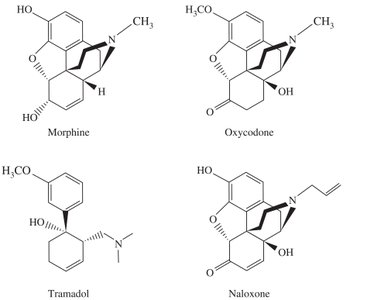
Many common pharmaceuticals are organic compounds with specific functional groups that determine their biological activity. Examples include acetaminophen, ibuprofen, aspirin, and naproxen.
Lipids
Lipids are a diverse group of hydrophobic organic molecules, including fats, oils, and steroids. Fatty acids are a key component, classified as saturated (no double bonds), monounsaturated (one double bond), or polyunsaturated (multiple double bonds).
Saturated fatty acids: Long, straight-chain compounds with no double bonds and a carboxylic acid group at one end.
Monounsaturated: Contain one double bond.
Polyunsaturated: Contain two or more double bonds.
Most biologically important fatty acids have 12–22 carbon atoms and even numbers of carbons.
Section 4.4 Nomenclature of Simple Alkanes
Branched-Chain Alkanes
The International Union of Pure and Applied Chemistry (IUPAC) provides systematic rules for naming organic compounds. The name consists of three parts: substituents, parent name (longest chain), and suffix (family name).
Find the longest continuous chain of carbon atoms (parent chain).
Identify and name groups bonded to the main chain (substituents or alkyl groups).
Number the parent chain from the end nearest a substituent.
Assign numbers to each substituent and list them in alphabetical order, using prefixes (di-, tri-, tetra-) for multiples.

Cycloalkanes
Cycloalkanes are named similarly to branched-chain alkanes, with the ring serving as the parent structure if it has more carbons than any substituent. Numbering starts at a substituent and proceeds to give the lowest possible numbers to substituents.
Summary Table: Names and Structures of the First Ten Straight-Chain Alkanes
Number of Carbon Atoms | Prefix | Name of Alkane | Molecular Formula | Condensed Structure | Skeletal Structure |
|---|---|---|---|---|---|
1 | Meth- | Methane | CH4 | CH4 | (•) |
2 | Eth- | Ethane | C2H6 | CH3CH3 | — |
3 | Prop- | Propane | C3H8 | CH3CH2CH3 | —\— |
4 | But- | Butane | C4H10 | CH3CH2CH2CH3 | —\—\— |
5 | Pent- | Pentane | C5H12 | CH3(CH2)3CH3 | —\—\—\— |
6 | Hex- | Hexane | C6H14 | CH3(CH2)4CH3 | —\—\—\—\— |
7 | Hept- | Heptane | C7H16 | CH3(CH2)5CH3 | —\—\—\—\—\— |
8 | Oct- | Octane | C8H18 | CH3(CH2)6CH3 | —\—\—\—\—\—\— |
9 | Non- | Nonane | C9H20 | CH3(CH2)7CH3 | —\—\—\—\—\—\—\— |
10 | Dec- | Decane | C10H22 | CH3(CH2)8CH3 | —\—\—\—\—\—\—\—\— |
Summary Table: Cycloalkanes
Name | Molecular Formula | Ball-and-Stick Model | Skeletal Structure |
|---|---|---|---|
Cyclopropane | C3H6 | Triangle model | △ |
Cyclobutane | C4H8 | Square model | □ |
Cyclopentane | C5H10 | Pentagon model | ⬟ |
Cyclohexane | C6H12 | Hexagon model | ⬢ |
Summary Table: Common Functional Groups
Family Name | Functional Group | Example |
|---|---|---|
Alkane | —C—C— (single bond) | Ethane |
Alkene | —C=C— (double bond) | Ethene |
Alkyne | —C≡C— (triple bond) | Ethyne |
Aromatic | Benzene ring | Benzene |
Alcohol | —OH | Ethanol |
Aldehyde | —CHO | Ethanal |
Ketone | —CO— | Propanone |
Carboxylic Acid | —COOH | Ethanoic acid |
Ester | —COOR | Methyl ethanoate |
Amine | —NH2 | Methylamine |
Amide | —CONH2 | Acetamide |
Additional info: This guide covers the foundational concepts of organic chemistry relevant to GOB Chemistry, including the structure, nomenclature, and functional groups of organic molecules, as well as their importance in biological and pharmaceutical contexts.
