 Indietro
Matter, Its Classification, States, and Properties – GOB Chemistry Chapter 3 Study Notes
Guida di studio - Note intelligenti
 Appunti personalizzati basati sui tuoi materiali, ampliati con definizioni chiave, esempi e contesto.
Classification of Matter
What is Matter?
Matter is defined as anything that has mass and occupies space. All physical objects, substances, and materials are forms of matter.
Mass: The amount of matter in an object.
Volume: The amount of space an object occupies.
Classification of Matter
Matter can be classified based on its composition into pure substances and mixtures.
Pure Substances: Have a fixed or definite composition. They can be elements or compounds.
Mixtures: Contain two or more substances physically mixed, not chemically combined. Their composition can vary.
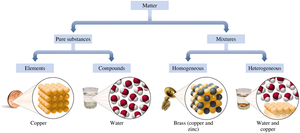
Pure Substances: Elements and Compounds
A pure substance is a type of matter with a fixed composition. It can be:
Element: Composed of only one type of atom (e.g., copper, Cu; magnesium, Mg; helium, He).
Compound: Composed of two or more elements chemically combined in a fixed ratio (e.g., water, H2O; sodium chloride, NaCl; carbon monoxide, CO).
Mixtures
A mixture consists of two or more substances physically mixed together. The substances can be present in any proportion and can be separated by physical methods (e.g., filtration, distillation).
Homogeneous Mixture (Solution): Uniform composition throughout; different parts are not visible (e.g., tea with sugar, air).
Heterogeneous Mixture: Composition varies; different parts are visible (e.g., pasta and tomato sauce, water and copper).
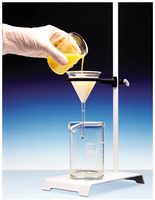
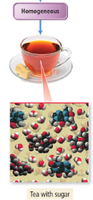
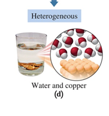
States and Properties of Matter
States of Matter
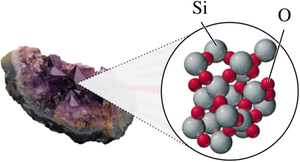
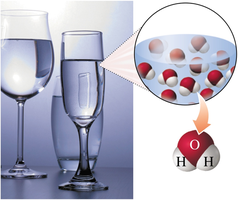
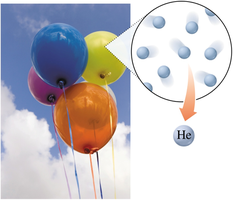
Matter exists in three primary states: solid, liquid, and gas. Each state has distinct properties based on the arrangement and movement of particles.
Solids: Definite shape and volume; particles are closely packed in a fixed arrangement and move slowly.
Liquids: Indefinite shape (take the shape of their container) but definite volume; particles are close but can move past each other.
Gases: Indefinite shape and volume; particles are far apart and move rapidly, filling the container.
Physical Properties
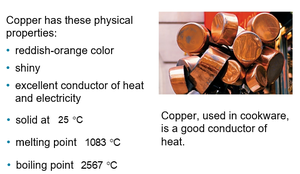
Physical properties are characteristics that can be observed or measured without changing the identity of the substance. Examples include shape, state, color, melting point, boiling point, and density.
Physical and Chemical Changes
Physical Change: A change in state or appearance without changing the substance's identity (e.g., melting, boiling, cutting).
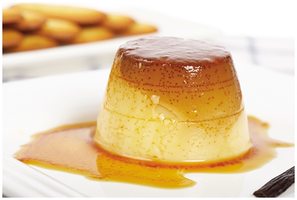
Chemical Change: A change where a new substance forms with different properties (e.g., rusting, burning, caramelizing sugar).
Temperature and Energy
Temperature
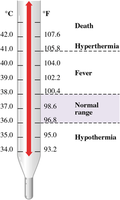
Temperature measures how hot or cold an object is compared to another. It is measured with a thermometer and can be expressed in Celsius (°C), Fahrenheit (°F), or Kelvin (K).
Celsius: 0°C (freezing point of water), 100°C (boiling point of water).
Fahrenheit: 32°F (freezing), 212°F (boiling).
Kelvin: Absolute zero is 0 K (no negative values); 0 K = -273°C.
Energy
Energy is the ability to do work or produce heat. It exists in two main forms:
Kinetic Energy: Energy of motion (e.g., moving objects, flowing water).
Potential Energy: Stored energy due to position or composition (e.g., water at the top of a dam, chemical bonds).
Heat and Units of Energy
Heat is the energy associated with the movement of particles. The SI unit of energy is the joule (J), but calories (cal) and kilocalories (kcal) are also used, especially in nutrition.
1 calorie (cal) = energy to raise 1 g of water by 1°C
1 Calorie (Cal, with capital C) = 1 kilocalorie (kcal) = 1000 cal
Specific Heat
Specific heat (SH) is the amount of heat required to raise the temperature of 1 g of a substance by 1°C. It is measured in J/(g·°C).
Substances with high specific heat require more energy to change temperature.
Equation: Where: = heat (J), = mass (g), = specific heat (J/g·°C), = temperature change (°C)
Changes of State
Melting and Freezing
Melting: Solid to liquid at the melting point. Freezing: Liquid to solid at the freezing point.
Heat of Fusion: Amount of heat needed to melt 1 g of solid or released when 1 g of liquid freezes. For water: 334 J/g (melting), -334 J/g (freezing)
Sublimation and Deposition
Sublimation: Solid changes directly to gas (e.g., dry ice). Deposition: Gas changes directly to solid.
Evaporation, Boiling, and Condensation
Evaporation: Surface molecules of a liquid gain enough energy to become gas.
Boiling: Molecules throughout the liquid gain enough energy to vaporize.
Condensation: Gas molecules lose energy and become liquid.
Heat of Vaporization
The heat of vaporization is the energy required to convert 1 g of liquid to gas at the boiling point, or released when 1 g of gas condenses to liquid.
For water: 2260 J/g (vaporization), -2260 J/g (condensation)
Heating and Cooling Curves
A heating curve shows temperature changes and phase transitions as heat is added. Diagonal lines indicate temperature changes; horizontal lines (plateaus) indicate changes of state. A cooling curve shows the reverse as heat is removed.
Additional info: This guide covers the classification of matter, states and properties, temperature and energy, and changes of state, as outlined in a typical GOB Chemistry curriculum. All images included directly reinforce the adjacent explanations and are essential for visualizing key concepts.
