 Indietro
Lecture 2: Molecular Structure and Interactions with Water
Guida di studio - Note intelligenti
 Appunti personalizzati basati sui tuoi materiali, ampliati con definizioni chiave, esempi e contesto.
Covalent Bonding and Lewis Structures
Introduction to Covalent Bonding
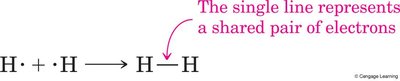
Covalent bonding is a fundamental concept in chemistry, describing the sharing of electron pairs between atoms to achieve stable electron configurations. Lewis structures are used to represent these shared and unshared electrons in molecules. - Covalent bond: Attractive force between nuclei (+) and shared electrons (-). - Lone pair: Pair of electrons not involved in bonding. - Lewis structure: Diagram showing bonds and lone pairs. 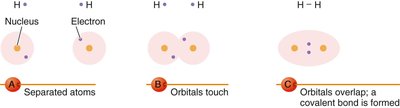
Valence Electrons and Bonding Patterns
The number of bonds and lone pairs an element forms depends on its group in the periodic table and its valence electrons. - Group IVA (14): 4 valence electrons, 4 bonds, 0 lone pairs (e.g., CH4) - Group VA (15): 5 valence electrons, 3 bonds, 1 lone pair (e.g., NH3) - Group VIA (16): 6 valence electrons, 2 bonds, 2 lone pairs (e.g., H2O) - Group VIIA (17): 7 valence electrons, 1 bond, 3 lone pairs (e.g., HF) - Group VIIIA (18): 8 valence electrons, 0 bonds, 4 lone pairs (e.g., Ne) 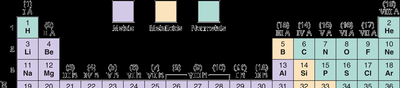
Rules for Lewis Structures
- Each atom should have a full octet (duet for H). - The total number of electrons equals the sum of valence electrons of all atoms. - Charges affect electron count: negative charge adds electrons, positive charge subtracts electrons. - Atoms should have the expected number of bonds; deviations indicate charges. - Some atoms (period 3 elements like P and S) can exceed the octet.
Examples of Lewis Structures
- CH4: Carbon makes 4 bonds, no lone pairs; each hydrogen makes 1 bond. - NH4+: Nitrogen makes 4 bonds, no lone pairs; positive charge means more sharing. - CO2: Carbon makes 4 bonds, no lone pairs; each oxygen makes 2 bonds, 2 lone pairs. - CO32-: Carbon makes 4 bonds, no lone pairs; one oxygen makes 2 bonds, 2 lone pairs; two oxygens make 1 bond, 3 lone pairs.
Exceptions to the Octet Rule
- Period 3 elements (P, S) can have expanded octets. - Phosphate (PO43-): P makes 5 bonds, no lone pairs. - Sulfate (SO42-): S makes 6 bonds, no lone pairs.
3D Shapes of Molecules (VSEPR Theory)
Valence Shell Electron Pair Repulsion (VSEPR)
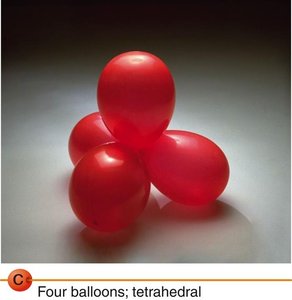
The shape of a molecule is determined by the repulsion between electron pairs around a central atom. Electron groups (bonded or lone pairs) spread out to minimize repulsion. - Linear: 2 bond groups, 180° bond angle (e.g., CO2) - Trigonal planar: 3 bond groups, 120° bond angle (e.g., SO3) - Tetrahedral: 4 bond groups, 109.5° bond angle (e.g., CH4) 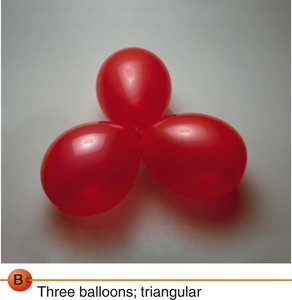
Polarity
Bond Polarity and Electronegativity
Polarity arises from differences in electronegativity between atoms. - Nonpolar covalent bond: Electronegativity difference < 0.5 - Polar covalent bond: Electronegativity difference 0.5–1.9 - Ionic bond: Electronegativity difference > 1.9 - Dipole: Uneven charge distribution across a bond or molecule.
Molecular Polarity
The overall polarity of a molecule depends on both bond polarity and molecular shape. - Nonpolar molecules: Symmetric, bond dipoles cancel (e.g., CH4) - Polar molecules: Asymmetric, bond dipoles do not cancel (e.g., H2O, NH3)
Intermolecular Forces
Types of Intermolecular Forces
Intermolecular forces (IMFs) hold molecules together and determine physical properties. - London dispersion forces: Temporary dipoles in nonpolar molecules; weakest IMF. - Dipole-dipole interactions: Attraction between polar molecules. - Hydrogen bonds: Strongest IMF; occurs when H is bonded to N, O, or F.
States of Matter and Energy Changes
- Solid: Molecules tightly held together. - Liquid: Molecules less tightly held. - Gas: Molecules have least interactions. - Endothermic: Heat absorbed (e.g., melting, boiling). - Exothermic: Heat released (e.g., freezing, condensation).
Hydrogen Bonding
Hydrogen Bond Donors and Acceptors
Hydrogen bonds require a donor (H attached to N, O, or F) and an acceptor (lone pair on N, O, or F). - Donor: Atom with H - Acceptor: Atom with lone pair 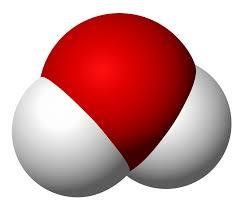
Solutions and Their Properties
Definitions and Types of Mixtures
- Mixture: Variable composition, can be homogeneous or heterogeneous. - Solution: Homogeneous mixture of ions or small molecules. - Colloid: Homogeneous mixture with larger particles. - Solute: Substance dissolved in solvent. - Solubility: Maximum amount of solute that dissolves at a given temperature and pressure.
Solubility and Intermolecular Forces
- "Like dissolves like": Polar solutes dissolve in polar solvents; nonpolar solutes dissolve in nonpolar solvents. - Water is polar and hydrates ions and polar molecules. 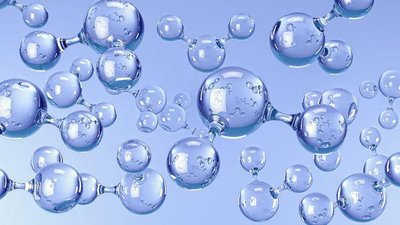
Electrolytes and Osmolarity
- Electrolytes: Substances that conduct electricity in water; ionize or dissociate. - Strong electrolytes: Ionic compounds (e.g., NaCl) - Weak electrolytes: Partially ionize (e.g., acetic acid) - Nonelectrolytes: Do not ionize (e.g., sucrose) - Osmolarity: Concentration of all dissolved particles in solution.
Osmosis and Dialysis
- Osmosis: Solvent passes through a semipermeable membrane. - Dialysis: Solvent and some small solute particles pass through. - Isotonic: Equal osmolarity; cells remain normal. - Hypotonic: Lower osmolarity; cells swell. - Hypertonic: Higher osmolarity; cells shrivel. 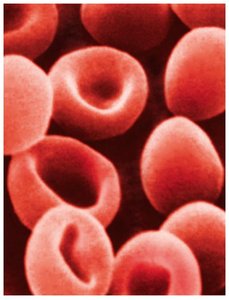
Summary Table: Bonding Patterns and Molecular Polarity
Group | Valence Electrons | Expected Bonds | Lone Pairs | Example Compound | Molecular Symmetry | Molecular Polarity |
|---|---|---|---|---|---|---|
IVA (14) | 4 | 4 | 0 | CH4 | symmetric | nonpolar |
VA (15) | 5 | 3 | 1 | NH3 | asymmetric | polar |
VIA (16) | 6 | 2 | 2 | H2O | asymmetric | polar |
VIIA (17) | 7 | 1 | 3 | HF | asymmetric | polar |
VIIIA (18) | 8 | 0 | 4 | Ne | symmetric | nonpolar |
Lecture Summaries
Lewis structures represent shared and unshared electrons; bonding patterns depend on valence electrons and group number.
VSEPR theory explains molecular shapes: linear, trigonal planar, tetrahedral.
Bond polarity is determined by electronegativity differences; molecular polarity depends on shape and bond dipoles.
Intermolecular forces (London, dipole-dipole, hydrogen bonds) determine physical properties and changes of state.
Hydrogen bonds are the strongest intermolecular force, requiring a donor and acceptor.
Solutions are homogeneous mixtures; solubility depends on intermolecular forces. Electrolytes dissociate in water, affecting osmolarity and solution properties.
Osmosis and dialysis involve movement across semipermeable membranes; tonicity affects cell volume.
