 Indietro
Lecture 6: Oxygen Compounds: Alcohols and Carbonyls
Guida di studio - Note intelligenti
 Appunti personalizzati basati sui tuoi materiali, ampliati con definizioni chiave, esempi e contesto.
Oxygen Compounds: Alcohols and Carbonyls
Properties of Alcohols, Ethers, and Phenols
Alcohols, ethers, and phenols are organic compounds containing oxygen atoms bonded to carbon. The addition of oxygen to hydrocarbons increases polarity and enables new types of intermolecular forces, especially hydrogen bonding.
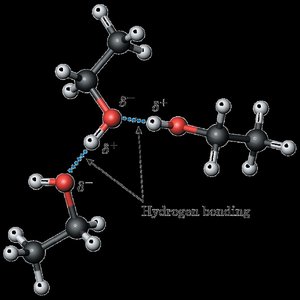
Alcohols: Contain an -OH group; both hydrogen bond donor and acceptor. Usually water-soluble unless the hydrocarbon portion dominates.
Ethers: Contain an oxygen atom between two carbons (R-O-R); only hydrogen bond acceptor, not donor. Weaker intermolecular forces than alcohols.
Phenols: Aromatic ring with an -OH group; more polarized C-O bond, stronger acid than alcohols due to resonance stabilization of the conjugate base.
Intermolecular Forces: Alcohols exhibit hydrogen bonding, ethers exhibit dipole-dipole interactions.
Solubility Ranking: Alcohol > Ether > Alkane (due to polarity and hydrogen bonding).
Example: Cholesterol contains a single alcohol group but is mostly hydrophobic, explaining its association with lipids and membranes.
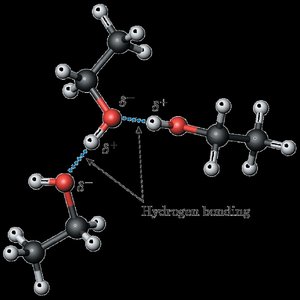
Hydrogen Bonding in Alcohols: Alcohols can form hydrogen bonds both as donors and acceptors, which significantly increases their boiling points and solubility in water.
Classification and Acidity of Alcohols and Phenols
Alcohols are classified based on the number of carbon atoms attached to the carbon bearing the -OH group:
Primary (1°) Alcohol: -OH group attached to a carbon with one other carbon.
Secondary (2°) Alcohol: -OH group attached to a carbon with two other carbons.
Tertiary (3°) Alcohol: -OH group attached to a carbon with three other carbons.
Acidity: Phenols are more acidic than alcohols due to resonance stabilization of the phenoxide ion. Alcohols and phenols can donate a proton to water, but phenols have a lower pKa.
Example: Amino acids such as serine, threonine, and tyrosine contain alcohol or phenol groups, contributing to their chemical properties.
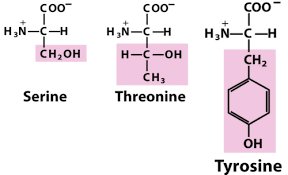
Reactions of Alcohols: Dehydration and Oxidation
Alcohols undergo several important reactions:
Dehydration: Removal of water to form an alkene (elimination reaction). This is the reverse of hydration.
Oxidation: Alcohols can be oxidized to carbonyl-containing compounds. The product depends on the alcohol's classification:
Primary alcohols: Oxidized to aldehydes, then to carboxylic acids.
Secondary alcohols: Oxidized to ketones.
Tertiary alcohols: No reaction (no hydrogen to remove).
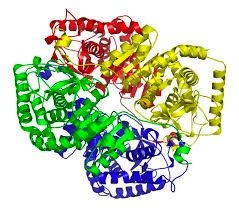
Example: Ethanol metabolism in the liver involves oxidation to acetaldehyde and then to acetate, with NAD+ as a cofactor.
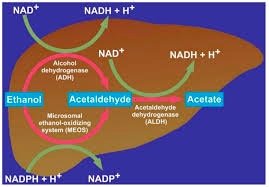
Oxidation Reactions and Biological Applications
Oxidation of alcohols is a key process in biochemistry and analytical chemistry:
Breathalyzer Test: Uses potassium dichromate (K2Cr2O7) to oxidize ethanol (a primary alcohol) to acetic acid, with a color change from orange (Cr(VI)) to green (Cr(III)).
Methanol Poisoning: Treated by administering ethanol, which competes for alcohol dehydrogenase, preventing toxic formaldehyde formation.
Properties and Reactions of Carbonyl Groups
Carbonyl groups (C=O) are highly polarized and found in several functional groups:
Aldehydes: Carbonyl at the end of a chain (R-CHO).
Ketones: Carbonyl within the chain (R-CO-R).
Carboxylic Acids: Carbonyl with an -OH group (R-COOH).
Esters: Carbonyl with an -OR group (R-COOR).
Amides: Carbonyl with an -NR2 group (R-CONR2).
Intermolecular Forces: Aldehydes and ketones are hydrogen bond acceptors but not donors, so they interact with water but not with themselves via hydrogen bonding.
Redox Reactions of Aldehydes and Ketones
Aldehydes and ketones undergo oxidation and reduction:
Aldehyde Oxidation: Forms carboxylic acids.
Ketone Oxidation: No reaction (no hydrogen to remove).
Aldehyde Reduction: Forms primary alcohols.
Ketone Reduction: Forms secondary alcohols.
Example: Reduction of ketone bodies (acetoacetate to 3-hydroxybutyrate) and pyruvate to lactate are important in metabolism, with NADH as a cofactor.
Condensation and Hydrolysis: Formation of (Hemi)acetals and (Hemi)ketals
Alcohols add to aldehydes and ketones to form hemiacetals, hemiketals, acetals, and ketals. These reactions are important in carbohydrate chemistry and biochemistry.
Condensation Reaction: Two molecules combine with the loss of water.
Hydrolysis Reaction: Addition of water breaks a molecule into two parts.
Cyclic Hemiacetals/Hemiketals: Formed intramolecularly, especially in sugars like glucose.
Example: Glucose exists predominantly as a cyclic hemiacetal, which is in equilibrium with its straight-chain aldehyde form.
Summary Table: Alcohol Oxidation Products
Alcohol Type | Oxidation Product |
|---|---|
Primary (1°) | Aldehyde → Carboxylic Acid |
Secondary (2°) | Ketone |
Tertiary (3°) | No Reaction |
Summary Table: Carbonyl Functional Groups
Functional Group | Structure | Hydrogen Bond Donor? |
|---|---|---|
Aldehyde | R-CHO | No |
Ketone | R-CO-R | No |
Carboxylic Acid | R-COOH | Yes |
Alcohol | R-OH | Yes |
Ether | R-O-R | No |
Key Equations
Alcohol Oxidation:
Secondary Alcohol Oxidation:
Aldehyde Reduction:
Ketone Reduction:
Biochemical Relevance
Alcohols, aldehydes, and ketones are central to metabolic pathways, including glycolysis, ethanol metabolism, and ketogenesis. Their redox reactions are catalyzed by enzymes and often involve cofactors like NAD+/NADH.

Additional info: These notes cover GOB Chemistry topics from Chapters 14 and 15, focusing on oxygen-containing organic compounds, their properties, classification, and reactions, including biological and laboratory applications.
