Ch.10 Proteins Workers of the Cell
Frost - General, Organic and Biological Chemistry 4th Edition
Frost4th EditionGeneral, Organic and Biological ChemistryISBN: 9780134988696Non è quello che usi tu?Cambia libro di testo
Capitolo 6, Problema 50

What kind of interaction attracts the cofactor Mg2+ and ATP to each other? (Hint: Look at the structure of the phosphate group.)

Guida verificata passo dopo passo
1
Examine the structure of ATP, specifically the phosphate groups. ATP contains three phosphate groups (α, β, and γ), which are negatively charged due to the presence of oxygen atoms bonded to phosphorus.
Understand the nature of Mg²⁺. Magnesium ions (Mg²⁺) are positively charged, making them attracted to negatively charged species through electrostatic interactions.
Identify the type of interaction. The attraction between the negatively charged phosphate groups of ATP and the positively charged Mg²⁺ ion is an ionic interaction, which is a type of electrostatic force.
Consider the role of Mg²⁺ as a cofactor. Mg²⁺ stabilizes the negative charges on the phosphate groups of ATP, making it easier for ATP to participate in biochemical reactions.
Conclude that the interaction between Mg²⁺ and ATP is primarily driven by ionic interactions, facilitated by the charge difference between the negatively charged phosphate groups and the positively charged Mg²⁺ ion.

Risposta video verificata per un problema simile:

Questa soluzione video è stata consigliata dai nostri tutor come utile per risolvere questo problema.
Durata del video:
3m

Concetti chiave

Ecco i concetti essenziali che devi comprendere per rispondere correttamente alla domanda.

Cofactors in Biochemistry

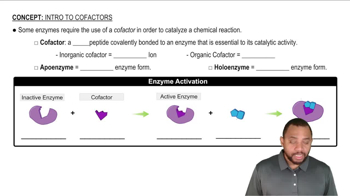
Cofactors are non-protein chemical compounds that assist enzymes in catalyzing reactions. They can be metal ions, like Mg²⁺, or organic molecules. In the context of ATP, Mg²⁺ acts as a cofactor that stabilizes the negative charges on the phosphate groups, facilitating the transfer of energy during biochemical reactions.
Video consigliato:
Percorso guidato
2:39
Intro to Cofactors Concept 1

Structure of ATP

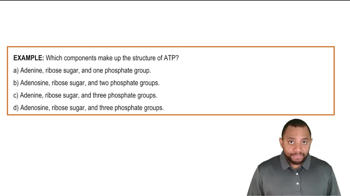
Adenosine triphosphate (ATP) consists of an adenosine molecule bonded to three phosphate groups. The phosphate groups are negatively charged and repel each other, creating a high-energy state. The presence of Mg²⁺ helps to shield these negative charges, allowing ATP to interact more effectively with enzymes and other molecules.
Video consigliato:
Percorso guidato
1:03
Adenosine Triphosphate (ATP) Example 2

Ionic Interactions

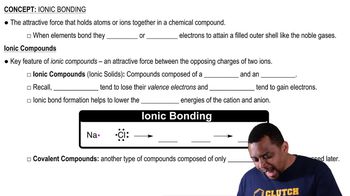
Ionic interactions occur between charged particles, such as the positively charged Mg²⁺ and the negatively charged phosphate groups in ATP. These interactions are crucial for stabilizing the structure of ATP and facilitating its role in energy transfer within cells. The attraction between these opposite charges is fundamental to the biochemical processes involving ATP.
Video consigliato:
Percorso guidato
02:33
Ionic Bonding Concept 1