Ch.12 Food as Fuel An Overview of Metabolism
Frost - General, Organic and Biological Chemistry 4th Edition
Frost4th EditionGeneral, Organic and Biological ChemistryISBN: 9780134988696Non è quello che usi tu?Cambia libro di testo
Capitolo 8, Problema 3b

Indicate whether the following processes represent anabolism or catabolism.
b. synthesis of fats

Guida verificata passo dopo passo
1
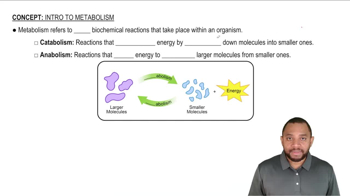
Understand the definitions of anabolism and catabolism: Anabolism refers to the process of building larger molecules from smaller ones, often requiring energy input, while catabolism involves breaking down larger molecules into smaller ones, releasing energy.
Identify the type of process described in the problem: The synthesis of fats involves combining smaller molecules, such as glycerol and fatty acids, to form larger fat molecules.
Recognize that synthesis processes typically fall under anabolism because they involve constructing complex molecules from simpler ones.
Consider the energy aspect: Anabolic processes, including fat synthesis, generally require energy input, often in the form of ATP, to drive the formation of bonds between smaller molecules.
Conclude that the synthesis of fats is an anabolic process based on the characteristics of building larger molecules and requiring energy.

Risposta video verificata per un problema simile:

Questa soluzione video è stata consigliata dai nostri tutor come utile per risolvere questo problema.
Durata del video:
4m

Concetti chiave

Ecco i concetti essenziali che devi comprendere per rispondere correttamente alla domanda.

Anabolism

Anabolism refers to the set of metabolic processes that build larger molecules from smaller ones. This process requires energy, often derived from ATP, and is essential for growth, repair, and maintenance of cells. Anabolic reactions include the synthesis of proteins, nucleic acids, and lipids, such as fats.
Video consigliato:
Percorso guidato
1:23
Intro to Metabolism Concept 1

Catabolism

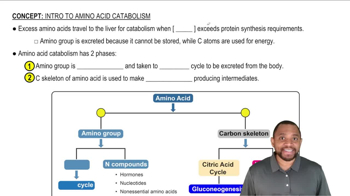
Catabolism is the metabolic pathway that breaks down larger molecules into smaller units, releasing energy in the process. This energy is often captured in the form of ATP and is used to fuel various cellular activities. Catabolic processes include the breakdown of carbohydrates, fats, and proteins for energy production.
Video consigliato:
Percorso guidato
2:06
Intro to Amino Acid Catabolism Concept 1

Metabolism

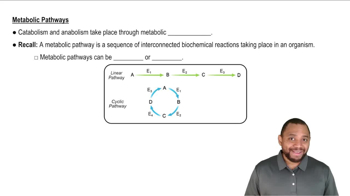
Metabolism encompasses all chemical reactions that occur within a living organism to maintain life. It is divided into two main categories: anabolism and catabolism. Understanding metabolism is crucial for comprehending how organisms convert food into energy and how they utilize that energy for growth and maintenance.
Video consigliato:
Percorso guidato
0:52
Metabolic Pathways Concept 2