Ch.8 Gases, Liquids and Solids
McMurry - Fundamentals of General, Organic, and Biological Chemistry 8th Edition
McMurry8th EditionFundamentals of General, Organic, and Biological ChemistryISBN: 9780134015187Non è quello che usi tu?Cambia libro di testo
Capitolo 8, Problema 114b

Obtain phase diagrams for water and carbon dioxide.
b. Would it be possible to skate on 'dry ice,' that is, solid CO2?

Guida verificata passo dopo passo
1
Analyze the phase diagram for carbon dioxide provided in the image. Note the regions corresponding to solid, liquid, gas, and the supercritical region. Observe the triple point and critical point values.
Understand that skating requires a surface that can melt under pressure, creating a thin layer of liquid for smooth movement. For water, this occurs because ice melts under the pressure exerted by the skate blade, forming a liquid layer.
Examine the phase diagram for carbon dioxide. The triple point of CO₂ occurs at approximately -56.6°C and 5.1 atm. At standard atmospheric pressure (1 atm), solid CO₂ (dry ice) sublimates directly into gas without forming a liquid phase.
Since dry ice does not form a liquid phase at standard atmospheric pressure, it cannot create the thin liquid layer necessary for skating. The sublimation process would not provide the same effect as melting ice.
Conclude that it would not be possible to skate on dry ice under normal conditions because the physical properties of CO₂ do not allow for the formation of a liquid layer under pressure at standard atmospheric conditions.

Risposta video verificata per un problema simile:

Questa soluzione video è stata consigliata dai nostri tutor come utile per risolvere questo problema.
Durata del video:
58s

Concetti chiave

Ecco i concetti essenziali che devi comprendere per rispondere correttamente alla domanda.

Phase Diagrams

Phase diagrams are graphical representations that show the states of a substance (solid, liquid, gas) at various temperatures and pressures. They illustrate the conditions under which different phases coexist, such as the triple point where all three phases exist simultaneously. Understanding phase diagrams is crucial for predicting the behavior of substances like water and carbon dioxide under varying environmental conditions.
Video consigliato:
Percorso guidato
00:37
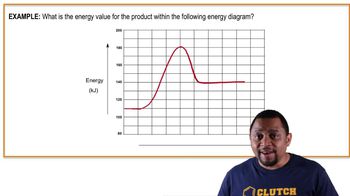
Energy Diagrams Example 1

Critical Point

The critical point on a phase diagram marks the end of the liquid-gas boundary, beyond which the distinction between liquid and gas phases disappears. At this point, the substance enters a supercritical state, exhibiting properties of both phases. For carbon dioxide, the critical point is significant in determining its behavior under high pressure and temperature, which is relevant when considering the feasibility of skating on dry ice.
Video consigliato:
Percorso guidato
03:05
Boiling Point Elevation Concept 1

Dry Ice and Its Properties

Dry ice is the solid form of carbon dioxide (CO₂) and sublimates directly into gas at atmospheric pressure without becoming liquid. Its low temperature (-78.5°C) and sublimation properties make it useful for refrigeration and special effects. Understanding the physical properties of dry ice, including its phase behavior and the conditions under which it remains solid, is essential for evaluating whether one can skate on it safely.
Video consigliato:
Percorso guidato
02:11
Chemical Properties Example 1