Ch.22 Carbohydrate Metabolism
McMurry - Fundamentals of General, Organic, and Biological Chemistry 8th Edition
McMurry8th EditionFundamentals of General, Organic, and Biological ChemistryISBN: 9780134015187Non è quello che usi tu?Cambia libro di testo
Capitolo 22, Problema 39

What is the major purpose of the pentose phosphate pathway? What cofactor (coenzyme) is used?

Guida verificata passo dopo passo
1
The major purpose of the pentose phosphate pathway (PPP) is to generate NADPH and ribose-5-phosphate. NADPH is a reducing agent used in biosynthetic reactions (e.g., fatty acid synthesis and cholesterol synthesis) and in maintaining the antioxidant system of the cell. Ribose-5-phosphate is a precursor for nucleotide and nucleic acid synthesis.
The pathway is divided into two phases: the oxidative phase and the non-oxidative phase. The oxidative phase generates NADPH, while the non-oxidative phase produces ribose-5-phosphate and other sugars that can enter glycolysis or other metabolic pathways.
The cofactor (coenzyme) used in the oxidative phase of the pentose phosphate pathway is NADP⁺ (nicotinamide adenine dinucleotide phosphate). It is reduced to NADPH during the oxidation of glucose-6-phosphate.
The first step of the oxidative phase involves the enzyme glucose-6-phosphate dehydrogenase, which catalyzes the oxidation of glucose-6-phosphate to 6-phosphoglucono-δ-lactone, reducing NADP⁺ to NADPH in the process.
The pentose phosphate pathway is particularly active in tissues that require high levels of NADPH, such as the liver, adipose tissue, and red blood cells, where it plays a critical role in biosynthesis and protection against oxidative stress.

Risposta video verificata per un problema simile:

Questa soluzione video è stata consigliata dai nostri tutor come utile per risolvere questo problema.
Durata del video:
4m

Concetti chiave

Ecco i concetti essenziali che devi comprendere per rispondere correttamente alla domanda.

Pentose Phosphate Pathway (PPP)

The Pentose Phosphate Pathway is a metabolic pathway parallel to glycolysis that generates NADPH and ribose-5-phosphate. NADPH is crucial for biosynthetic reactions and maintaining cellular redox balance, while ribose-5-phosphate is essential for nucleotide synthesis. The PPP plays a significant role in cellular metabolism, particularly in tissues that require high levels of fatty acid and nucleic acid synthesis.
Video consigliato:
Percorso guidato
2:13
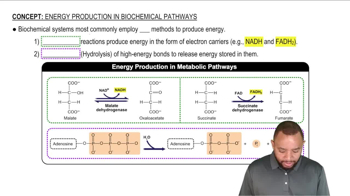
Energy Production In Biochemical Pathways Concept 1

NADPH

NADPH (Nicotinamide adenine dinucleotide phosphate) is a cofactor that acts as a reducing agent in various biochemical reactions. It is vital for anabolic reactions, such as fatty acid and cholesterol synthesis, and for the detoxification of reactive oxygen species. The production of NADPH in the PPP is essential for maintaining the balance of oxidation and reduction in cells, supporting various biosynthetic processes.

Ribose-5-Phosphate

Ribose-5-phosphate is a sugar phosphate that serves as a precursor for the synthesis of nucleotides and nucleic acids. It is produced in the Pentose Phosphate Pathway and is crucial for the formation of RNA and DNA. The availability of ribose-5-phosphate is particularly important in rapidly dividing cells, where nucleotide synthesis is required for cell proliferation.
Video consigliato:
Percorso guidato
1:34
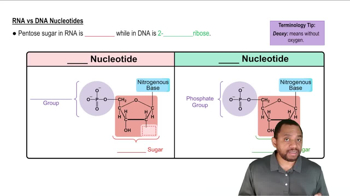
Intro to Nucleic Acids Concept 2