Ch.25 Protein and Amino Acid Metabolism
McMurry - Fundamentals of General, Organic, and Biological Chemistry 8th Edition
McMurry8th EditionFundamentals of General, Organic, and Biological ChemistryISBN: 9780134015187Non è quello che usi tu?Cambia libro di testo
Capitolo 25, Problema 44a

Name the four compounds within the citric acid cycle that the carbon skeletons of the glucogenic amino acid enter as.

Guida verificata passo dopo passo
1
Understand that glucogenic amino acids are those that can be converted into glucose through gluconeogenesis. These amino acids are metabolized into intermediates of the citric acid cycle.
Recall that the citric acid cycle (also known as the Krebs cycle or TCA cycle) is a series of chemical reactions used by all aerobic organisms to release stored energy through the oxidation of acetyl-CoA.
Identify the four key intermediates of the citric acid cycle that glucogenic amino acids can enter as carbon skeletons: oxaloacetate, α-ketoglutarate, succinyl-CoA, and fumarate.
Understand that the carbon skeletons of glucogenic amino acids are converted into these intermediates through transamination or deamination reactions, which remove the amino group and leave behind a keto acid that can enter the cycle.
Recognize that once these intermediates are formed, they can contribute to the production of glucose through gluconeogenesis, as oxaloacetate is a key precursor for glucose synthesis.

Risposta video verificata per un problema simile:

Questa soluzione video è stata consigliata dai nostri tutor come utile per risolvere questo problema.
Durata del video:
1m

Concetti chiave

Ecco i concetti essenziali che devi comprendere per rispondere correttamente alla domanda.

Citric Acid Cycle

The citric acid cycle, also known as the Krebs cycle, is a key metabolic pathway that takes place in the mitochondria. It involves a series of chemical reactions used by all aerobic organisms to generate energy through the oxidation of acetyl-CoA derived from carbohydrates, fats, and proteins. Understanding this cycle is essential for identifying how glucogenic amino acids contribute to energy production.
Video consigliato:
Percorso guidato
2:31
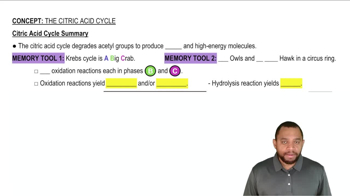
Citric Acid Cycle Summary Concept 12

Glucogenic Amino Acids

Glucogenic amino acids are those that can be converted into glucose through gluconeogenesis. They enter metabolic pathways that lead to the production of glucose, particularly during periods of fasting or intense exercise. Recognizing which amino acids are glucogenic helps in understanding their role in the citric acid cycle and energy metabolism.
Video consigliato:
Percorso guidato
3:03
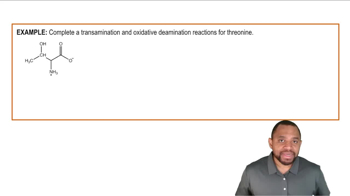
Amino Acid Catabolism: Amino Group Example 2

Carbon Skeletons

The carbon skeleton of an amino acid refers to the carbon chain that remains after the amino group is removed. This structure can be converted into various intermediates that enter the citric acid cycle. Identifying the specific carbon skeletons of glucogenic amino acids is crucial for determining how they integrate into the cycle and contribute to energy production.
Video consigliato:
Percorso guidato
2:41
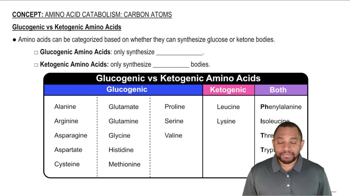
Amino Acid Catabolism: Carbon Atoms Concept 1