Ch.26 Nucleic Acids and Protein Synthesis
McMurry - Fundamentals of General, Organic, and Biological Chemistry 8th Edition
McMurry8th EditionFundamentals of General, Organic, and Biological ChemistryISBN: 9780134015187Non è quello che usi tu?Cambia libro di testo
Capitolo 26, Problema 10

Is a DNA molecule neutral, negatively charged, or positively charged? Explain.

Guida verificata passo dopo passo
1
DNA molecules are composed of nucleotides, which consist of a sugar (deoxyribose), a phosphate group, and a nitrogenous base.
The phosphate group in each nucleotide contains a negatively charged oxygen atom, which gives the DNA molecule an overall negative charge.
These negatively charged phosphate groups are present along the backbone of the DNA molecule, making the entire structure negatively charged.
The negative charge of DNA is important for its interactions with other molecules, such as positively charged proteins (e.g., histones) that help in DNA packaging.
In summary, a DNA molecule is negatively charged due to the presence of phosphate groups in its structure.

Risposta video verificata per un problema simile:

Questa soluzione video è stata consigliata dai nostri tutor come utile per risolvere questo problema.
Durata del video:
1m

Concetti chiave

Ecco i concetti essenziali che devi comprendere per rispondere correttamente alla domanda.

DNA Structure

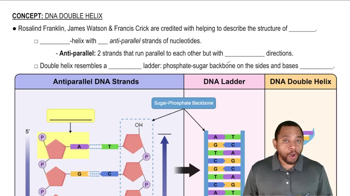
DNA, or deoxyribonucleic acid, is a molecule composed of two strands that coil around each other to form a double helix. Each strand is made up of nucleotides, which consist of a sugar, a phosphate group, and a nitrogenous base. The phosphate groups in the backbone of the DNA contribute to its overall charge.
Video consigliato:
Percorso guidato
3:27
DNA Double Helix Concept 1

Charge of DNA

DNA molecules are negatively charged due to the presence of phosphate groups in their structure. Each phosphate group carries a negative charge, which results in the overall negative charge of the DNA molecule. This charge plays a crucial role in the interactions of DNA with proteins and other molecules in the cell.
Video consigliato:
Percorso guidato
5:08
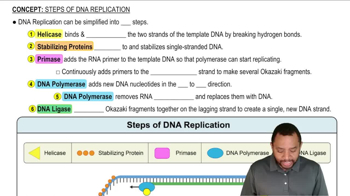
Steps of DNA Replication Concept 1

Biological Implications of Charge

The negative charge of DNA is significant for its biological functions, including its interaction with positively charged proteins, such as histones, which help package DNA into chromatin. This charge also influences the behavior of DNA during processes like electrophoresis, where DNA fragments are separated based on size and charge.
Video consigliato:
Percorso guidato
02:22
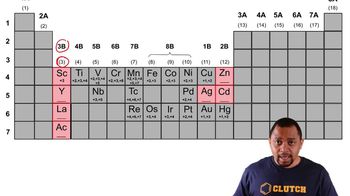
Periodic Table: Transition Metals Charges Concept 1