

Ch.16 Amino Acids, Proteins, and Enzymes
Timberlake - Chemistry: An Introduction to General, Organic, and Biological Chemistry 14th Edition
Timberlake14th EditionChemistry: An Introduction to General, Organic, and Biological ChemistryISBN: 9781292472249Non è quello che usi tu?Cambia libro di testo
Capitolo 16, Problema 56b

Adults who are lactose intolerant cannot break down the disaccharide in milk products. To help digest dairy food, a product known as Lactaid can be given prior to consuming dairy products. (16.4, 16.5)
b. What might happen to the enzyme if the Lactaid were stored at 55 °C?

Guida verificata passo dopo passo
1
Understand the role of enzymes: Enzymes are biological catalysts that speed up chemical reactions, such as the breakdown of lactose in milk products. They are proteins and are sensitive to environmental conditions like temperature.
Recall the effect of temperature on enzymes: Enzymes have an optimal temperature range where they function most effectively. For most human enzymes, this range is around 37 °C (body temperature). Temperatures significantly above this range can denature the enzyme.
Explain denaturation: Denaturation is the process where the enzyme's structure is altered due to external stress, such as high temperature. This change in structure can prevent the enzyme from binding to its substrate and performing its function.
Relate this to the problem: If Lactaid (which contains the enzyme lactase) is stored at 55 °C, the high temperature could denature the lactase enzyme, rendering it inactive and unable to break down lactose effectively.
Conclude the importance of proper storage: To ensure Lactaid remains effective, it should be stored at a temperature within the recommended range, typically below room temperature or as specified on the product label, to prevent enzyme denaturation.

Risposta video verificata per un problema simile:

Questa soluzione video è stata consigliata dai nostri tutor come utile per risolvere questo problema.
Durata del video:
5m

Concetti chiave

Ecco i concetti essenziali che devi comprendere per rispondere correttamente alla domanda.

Lactase Enzyme Function

Lactase is an enzyme that breaks down lactose, a disaccharide found in milk, into glucose and galactose, which can be easily absorbed by the body. In individuals who are lactose intolerant, the body produces insufficient lactase, leading to digestive discomfort when consuming dairy products.
Video consigliato:
Percorso guidato
02:16
Logarithmic Functions

Enzyme Stability and Temperature

Enzymes are proteins that can be sensitive to temperature changes. Storing an enzyme like lactase at elevated temperatures, such as 55 °C, can lead to denaturation, where the enzyme's structure is altered, resulting in a loss of its functional activity. This can significantly reduce the effectiveness of Lactaid in aiding digestion.
Video consigliato:
Percorso guidato
01:30
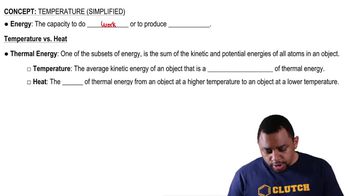
Temperature (Simplified) Concept 1

Impact of Denaturation on Enzyme Activity

Denaturation refers to the process where an enzyme loses its three-dimensional structure due to external stressors like heat, pH changes, or chemicals. When lactase denatures, it can no longer bind to lactose effectively, leading to decreased digestion of dairy products and potential gastrointestinal issues for lactose-intolerant individuals.
Video consigliato:
Percorso guidato
5:33
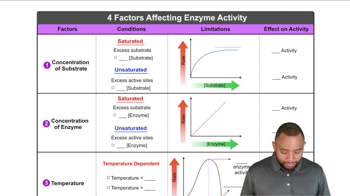
Factors Affecting Enzyme Activity Concept 2
Pratica correlata
Domanda del libro di testo

Ethylene glycol (HO—CH2—CH2—OH) is a major component of antifreeze. If ingested, it is first converted to HOOC—CHO (oxoethanoic acid) and then to HOOC—COOH (oxalic acid), which is toxic.

<IMAGE>

a. What class of enzyme catalyzes the reactions described?

1128
views
Domanda del libro di testo

Adults who are lactose intolerant cannot break down the disaccharide in milk products. To help digest dairy food, a product known as Lactaid can be given prior to consuming dairy products. (16.4, 16.5)

a. What is the name of enzyme present in Lactaid, and what is the major class of this enzyme?

28
views
Domanda del libro di testo

Ethylene glycol (HO—CH2—CH2—OH) is a major component of antifreeze. If ingested, it is first converted to HOOC—CHO (oxoethanoic acid) and then to HOOC—COOH (oxalic acid), which is toxic.

<IMAGE>

b. The treatment for the ingestion of ethylene glycol is an intravenous solution of ethanol. How might this help prevent toxic levels of oxalic acid in the body?

730
views
Domanda del libro di testo

Identify the amino acids and type of interaction that occurs between the following R groups in tertiary protein structures:

a.

720
views
Domanda del libro di testo

Fresh pineapple contains the enzyme bromelain that hydrolyzes peptide bonds in proteins.

<IMAGE>

a. The directions for a gelatin (protein) dessert say not to add fresh pineapple. However, canned pineapple where pineapple is heated to high temperatures can be added. Why?

1056
views
Domanda del libro di testo

Fresh pineapple contains the enzyme bromelain that hydrolyzes peptide bonds in proteins.

<IMAGE>

b. Fresh pineapple is used in a marinade to tenderize tough meat. Why?

888
views