Ch.16 Amino Acids, Proteins, and Enzymes
Timberlake - Chemistry: An Introduction to General, Organic, and Biological Chemistry 14th Edition
Timberlake14th EditionChemistry: An Introduction to General, Organic, and Biological ChemistryISBN: 9781292472249Non è quello che usi tu?Cambia libro di testo
Capitolo 16, Problema 49b

Methanol and ethanol are oxidized by alcohol dehydrogenase. In methanol poisoning, ethanol is given intravenously to prevent the formation of formaldehyde that has toxic effects.
b. Would ethanol compete for the active site or bind to a different site?

Guida verificata passo dopo passo
1
Understand the role of alcohol dehydrogenase: Alcohol dehydrogenase is an enzyme that catalyzes the oxidation of alcohols. It converts methanol into formaldehyde and ethanol into acetaldehyde. Formaldehyde is toxic, so preventing its formation is critical in methanol poisoning.
Recognize the concept of competitive inhibition: Ethanol is administered because it acts as a competitive inhibitor. A competitive inhibitor competes with the substrate (in this case, methanol) for the active site of the enzyme.
Explain how ethanol competes: Ethanol and methanol are structurally similar molecules. Because of this similarity, ethanol can bind to the active site of alcohol dehydrogenase, preventing methanol from binding and being converted into formaldehyde.
Clarify the mechanism: When ethanol occupies the active site, it prevents methanol from being oxidized. This allows methanol to be excreted from the body without being converted into its toxic metabolite, formaldehyde.
Conclude the answer: Ethanol competes for the active site of alcohol dehydrogenase rather than binding to a different site. This competitive inhibition is the basis for its use in treating methanol poisoning.

Risposta video verificata per un problema simile:

Questa soluzione video è stata consigliata dai nostri tutor come utile per risolvere questo problema.
Durata del video:
1m

Concetti chiave

Ecco i concetti essenziali che devi comprendere per rispondere correttamente alla domanda.

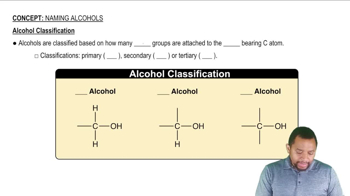
Alcohol Dehydrogenase

Alcohol dehydrogenase is an enzyme that catalyzes the oxidation of alcohols, converting them into aldehydes or ketones. In the context of methanol and ethanol, this enzyme plays a crucial role in metabolizing these substances in the liver. Understanding its function is essential for grasping how ethanol can mitigate the toxic effects of methanol by competing for the same metabolic pathway.
Video consigliato:
Percorso guidato
1:10
Alcohol Classification Concept 2

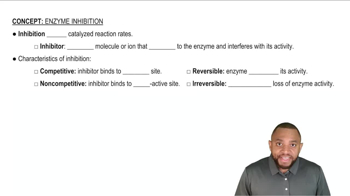
Competitive Inhibition

Competitive inhibition occurs when a substance, such as ethanol, competes with a substrate (methanol) for binding to the active site of an enzyme. This type of inhibition can effectively reduce the rate of reaction for the original substrate, thereby preventing the formation of toxic metabolites like formaldehyde. Recognizing this concept is vital to understanding how ethanol is used therapeutically in methanol poisoning.
Video consigliato:
Percorso guidato
1:19
Enzyme Inhibition Concept 1

Toxic Metabolites

Toxic metabolites are harmful byproducts formed during the metabolism of substances like methanol. In this case, methanol is converted into formaldehyde and formic acid, both of which are highly toxic. Understanding the nature of these metabolites helps clarify the urgency of treating methanol poisoning with ethanol, which prevents their formation by inhibiting the enzyme responsible for their production.
Video consigliato:
Percorso guidato
3:30
Gluconeogenesis Concept 12