
Ch.18 Metabolic Pathways and ATP Production
Timberlake - Chemistry: An Introduction to General, Organic, and Biological Chemistry 14th Edition
Timberlake14th EditionChemistry: An Introduction to General, Organic, and Biological ChemistryISBN: 9781292472249Non è quello che usi tu?Cambia libro di testo
Capitolo 18, Problema 92

What citric acid cycle intermediate(s) can be produced from the carbon atoms of each of the following amino acids?
a. tryptophan
b. histidine
c. threonine
d. phenylalanine

Guida verificata passo dopo passo
1
Step 1: Understand the citric acid cycle (also known as the Krebs cycle or TCA cycle). It is a series of chemical reactions used by all aerobic organisms to release stored energy through the oxidation of acetyl-CoA derived from carbohydrates, fats, and proteins. Amino acids can be converted into intermediates of the cycle through various metabolic pathways.
Step 2: Analyze the amino acid tryptophan. Tryptophan can be metabolized into intermediates such as pyruvate or acetyl-CoA, which can then enter the citric acid cycle. Additionally, it can contribute to the production of intermediates like α-ketoglutarate.
Step 3: Examine histidine. Histidine is converted into glutamate through a series of reactions. Glutamate can then be deaminated to form α-ketoglutarate, which is an intermediate in the citric acid cycle.
Step 4: Investigate threonine. Threonine can be metabolized into acetyl-CoA or glycine. Acetyl-CoA directly enters the citric acid cycle, while glycine can contribute to the formation of intermediates like pyruvate.
Step 5: Consider phenylalanine. Phenylalanine is converted into tyrosine, which can then be further metabolized into fumarate and acetoacetate. Fumarate is a direct intermediate of the citric acid cycle.

Concetti chiave

Ecco i concetti essenziali che devi comprendere per rispondere correttamente alla domanda.

Citric Acid Cycle (Krebs Cycle)

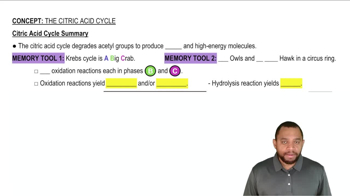
The citric acid cycle, also known as the Krebs cycle, is a key metabolic pathway that takes place in the mitochondria. It involves a series of chemical reactions used by all aerobic organisms to generate energy through the oxidation of acetyl-CoA derived from carbohydrates, fats, and proteins. Understanding this cycle is essential for determining how amino acids can be converted into intermediates that enter the cycle.
Video consigliato:
Percorso guidato
2:31
Citric Acid Cycle Summary Concept 12

Amino Acid Catabolism

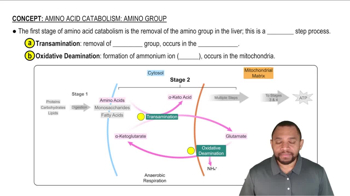
Amino acid catabolism refers to the process by which amino acids are broken down to produce energy or to create metabolic intermediates. This process can lead to the production of various citric acid cycle intermediates, depending on the specific amino acid. Recognizing the pathways of catabolism for each amino acid is crucial for answering the question regarding their conversion into citric acid cycle intermediates.
Video consigliato:
Percorso guidato
2:21
Amino Acid Catabolism: Amino Group Concept 1

Metabolic Intermediates

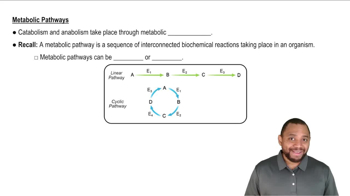
Metabolic intermediates are compounds that form in the middle of metabolic pathways and can be used in various biochemical reactions. In the context of the citric acid cycle, intermediates such as citrate, alpha-ketoglutarate, and succinyl-CoA can be derived from the breakdown of certain amino acids. Identifying which intermediates can be produced from specific amino acids is key to understanding their role in energy metabolism.
Video consigliato:
Percorso guidato
0:52
Metabolic Pathways Concept 2