Ch.4 Atoms and Elements
Timberlake - Chemistry: An Introduction to General, Organic, and Biological Chemistry 14th Edition
Timberlake14th EditionChemistry: An Introduction to General, Organic, and Biological ChemistryISBN: 9781292472249Non è quello che usi tu?Cambia libro di testo
Capitolo 4, Problema 8b

Write the names for the elements in each of the following formulas of compounds used in medicine:
a. salt substitute, KCl

Guida verificata passo dopo passo
1
Step 1: Identify the chemical formula provided in the problem, which is KCl.
Step 2: Break down the formula into its individual elements. K represents potassium, and Cl represents chlorine.
Step 3: Recall the naming convention for elements. Potassium is the name of the element with the symbol K, and chlorine is the name of the element with the symbol Cl.
Step 4: Understand that KCl is a compound formed by the combination of potassium and chlorine, often referred to as potassium chloride in medicine.
Step 5: Conclude that the elements in the formula KCl are potassium and chlorine, and the compound is commonly known as potassium chloride.

Risposta video verificata per un problema simile:

Questa soluzione video è stata consigliata dai nostri tutor come utile per risolvere questo problema.
Durata del video:
1m

Concetti chiave

Ecco i concetti essenziali che devi comprendere per rispondere correttamente alla domanda.

Chemical Nomenclature

Chemical nomenclature is the systematic naming of chemical compounds based on their composition and structure. It follows specific rules set by organizations like the International Union of Pure and Applied Chemistry (IUPAC). Understanding nomenclature is essential for accurately identifying and communicating about chemical substances, such as KCl, which is known as potassium chloride.
Video consigliato:
Percorso guidato
00:58
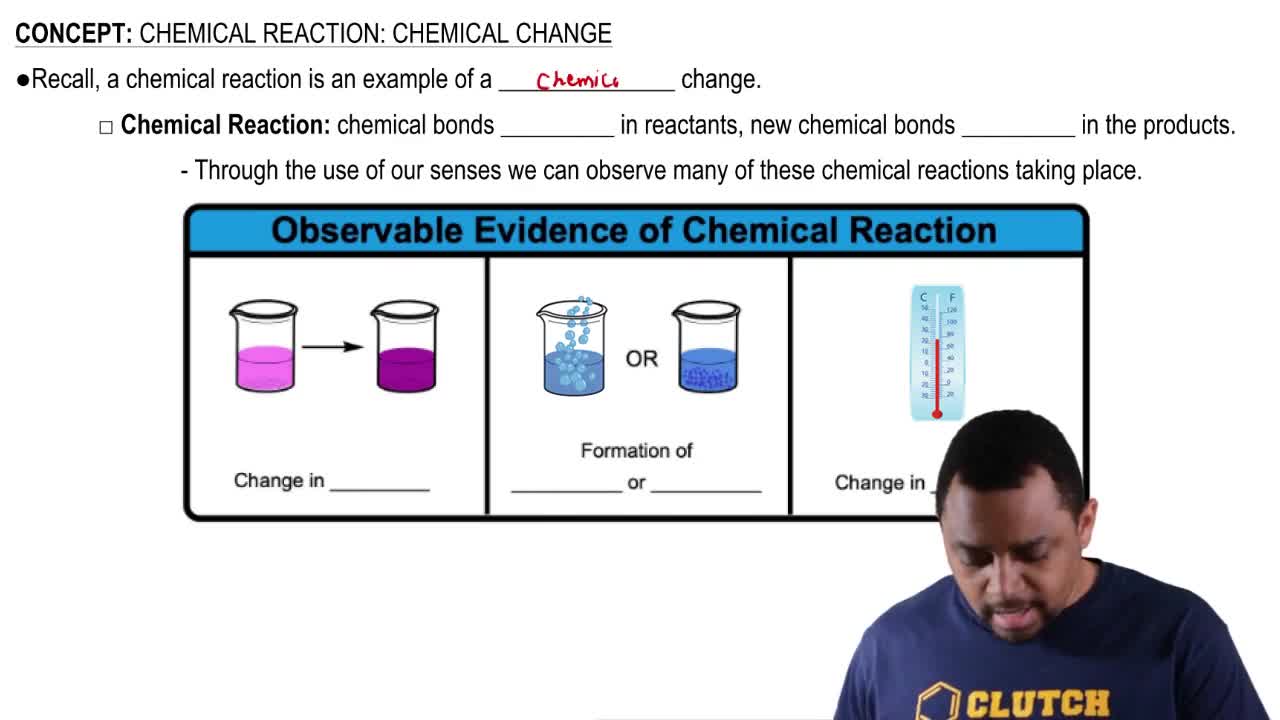
Chemical Reaction: Chemical Change Concept 1

Ionic Compounds

Ionic compounds are formed when atoms transfer electrons, resulting in the formation of charged ions. These compounds typically consist of a metal and a non-metal, where the metal donates electrons and the non-metal accepts them. In the case of KCl, potassium (K) is a metal that loses an electron to form a positive ion (K+), while chlorine (Cl) gains an electron to form a negative ion (Cl-), resulting in the ionic compound potassium chloride.
Video consigliato:
Percorso guidato
02:11
Naming Ionic Compounds

Pharmaceutical Applications

Pharmaceutical applications refer to the use of chemical compounds in medicine for therapeutic purposes. Understanding the properties and functions of compounds like KCl is crucial, as potassium chloride is often used to treat or prevent potassium deficiency in patients. Knowledge of how these compounds interact within the body helps in the formulation of effective medical treatments.
Video consigliato:
Percorso guidato
04:09
The Ideal Gas Law Applications