Ch.7 Chemical Quantities and Reactions
Timberlake - Chemistry: An Introduction to General, Organic, and Biological Chemistry 14th Edition
Timberlake14th EditionChemistry: An Introduction to General, Organic, and Biological ChemistryISBN: 9781292472249Non è quello che usi tu?Cambia libro di testo
Capitolo 7, Problema 67a

Why do chemical reactions require energy of activation?

Guida verificata passo dopo passo
1
Chemical reactions require energy of activation because reactant molecules must overcome an energy barrier to transform into products. This energy barrier is known as the activation energy (Eₐ).
The activation energy is necessary to break the bonds in the reactant molecules, allowing them to rearrange and form new bonds in the product molecules.
At the molecular level, reactants need to collide with sufficient energy and proper orientation to initiate the reaction. The activation energy ensures that only collisions with enough energy lead to a successful reaction.
The activation energy also helps to prevent spontaneous reactions from occurring too easily, which could lead to uncontrolled or undesirable chemical changes.
In summary, the energy of activation is a critical factor that ensures chemical reactions occur in a controlled manner and only when the reactants have enough energy to transition to the product state.

Risposta video verificata per un problema simile:

Questa soluzione video è stata consigliata dai nostri tutor come utile per risolvere questo problema.
Durata del video:
3m

Concetti chiave

Ecco i concetti essenziali che devi comprendere per rispondere correttamente alla domanda.

Energy of Activation

The energy of activation is the minimum energy required to initiate a chemical reaction. It represents the energy barrier that reactants must overcome for the reaction to proceed. This energy is necessary to break bonds in the reactants and form new bonds in the products, facilitating the transformation of reactants into products.
Video consigliato:
Percorso guidato
1:06
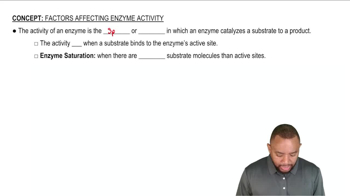
Factors Affecting Enzyme Activity Concept 1

Reaction Mechanism

A reaction mechanism is a step-by-step description of the pathway taken during a chemical reaction. It outlines the sequence of elementary steps that occur, including the formation of intermediates and the transition states. Understanding the mechanism helps explain how energy is utilized and transformed throughout the reaction, including the role of activation energy.
Video consigliato:
Percorso guidato
1:30
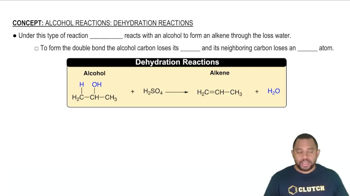
Alcohol Reactions: Dehydration Reactions Concept 1

Catalysts

Catalysts are substances that increase the rate of a chemical reaction by lowering the energy of activation without being consumed in the process. They provide an alternative pathway for the reaction, making it easier for reactants to convert into products. This is crucial in many industrial and biological processes, where high activation energy can limit reaction rates.
Video consigliato:
Percorso guidato
1:17
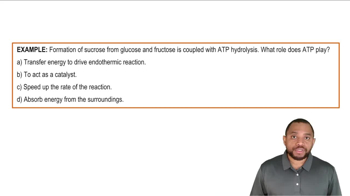
Coupled Reactions Example 3