 Indietro
Human Biology, Science, and Society: Chapter 1 Study Notes
Guida di studio - Note intelligenti
 Appunti personalizzati basati sui tuoi materiali, ampliati con definizioni chiave, esempi e contesto.
Human Biology, Science, and Society
What is Biology?
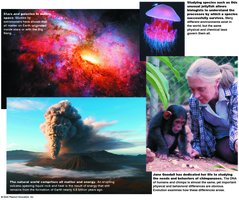
Biology is the scientific study of living things, derived from the Greek words bios (life) and logia (study). It examines organisms and their interactions with each other and their environment. Biology encompasses a wide range of topics, from molecular processes to ecosystem dynamics.
Organisms: Living entities that interact with their surroundings.
Environment: The external conditions affecting organisms.
Interactions: Includes both physical and chemical processes.
The Characteristics of Life
Living things possess unique properties that distinguish them from nonliving matter. These characteristics are fundamental to the definition of life.
Molecular Composition: Living things have a distinct molecular makeup, often involving complex organic molecules.
Energy and Raw Materials: Organisms require energy (often from food or sunlight) and materials for growth and maintenance.
Cellular Structure: All living things are composed of cells, the basic unit of life.
Homeostasis: The ability to maintain stable internal conditions despite external changes.
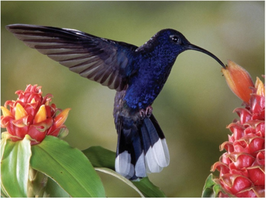
Response to Environment: Organisms can sense and react to external stimuli.
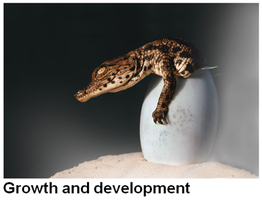
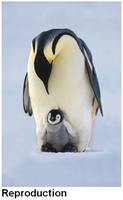
Growth and Reproduction: Living things grow and reproduce, ensuring the continuation of their species.
Evolution: Populations of organisms evolve over time through genetic changes.
Classification of Living Things
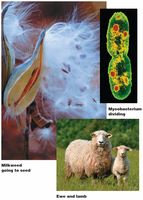
Living organisms are classified based on shared characteristics. The classification system organizes life into hierarchical groups, facilitating scientific study and understanding of biodiversity.
Three Domains:
Domain Bacteria: Simple, unicellular organisms without a nucleus.
Domain Archaea: Similar to bacteria but with distinct molecular features; often found in extreme environments.
Domain Eukarya: Organisms with cells containing a nucleus; includes four kingdoms.
Four Kingdoms of Domain Eukarya:
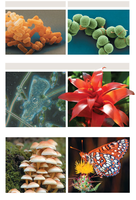
Protista: Unicellular and simple multicellular eukaryotes (e.g., protozoa, algae).
Plantae: Multicellular, photosynthetic eukaryotes (plants).
Animalia: Multicellular, heterotrophic eukaryotes (animals).
Fungi: Eukaryotic decomposers (molds, yeasts, mushrooms).
Taxonomic Hierarchy
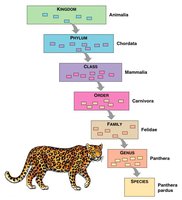
Organisms are classified into increasingly specific groups:
Kingdom
Phylum
Class
Order
Family
Genus
Species
Example: Humans are classified as follows:
Domain: Eukarya
Kingdom: Animalia
Phylum: Chordata
Class: Mammalia
Order: Primates
Family: Hominidae
Genus: Homo
Species: sapiens
Fundamental Criteria for Classification
Presence of Nucleus: Eukaryotes have a membrane-bound nucleus; prokaryotes (Bacteria and Archaea) do not.
Number of Cells: Organisms may be unicellular or multicellular.
Type of Metabolism: Includes photosynthesis, heterotrophy, and decomposition.
Defining Features of Humans
Humans possess several unique characteristics that distinguish them from other animals.
Bipedalism: Ability to stand upright and walk on two legs.
Large Brain: Relative to body size, humans have a highly developed brain.
Complex Language: Capacity for both spoken and written communication.
Opposable Thumbs: Enables grasping and manipulation of objects.
Levels of Biological Organization
Human biology can be studied at various levels, from atoms to the biosphere. Each level exhibits emergent properties not found at lower levels.
Atom
Molecule
Cell
Tissue
Organ
Organ System
Organism
Population
Community
Ecosystem
Biosphere
The Scientific Method
Science is both a body of knowledge and a process for acquiring new knowledge. The scientific method is a systematic approach to investigating natural phenomena.
Observation and Generalization: Gathering information and identifying patterns.
Formulating a Hypothesis: Proposing a tentative explanation for observations.
Making Testable Predictions: Using deductive reasoning to generate specific predictions.
Experimentation and Observation: Testing predictions through controlled experiments.
Modification: Revising hypotheses and predictions based on experimental results.
Types of Data
Qualitative Data: Descriptive information.
Quantitative Data: Numerical measurements.
Variables in Experiments
Independent Variable: Manipulated by the researcher (e.g., dosage of a drug).
Dependent Variable: Measured outcome (e.g., blood pressure).
Controlled Experiments
Experiments are designed to test the effect of an independent variable while keeping other variables constant. Control groups receive a placebo, while experimental groups receive the treatment.
Scientific Theory
A scientific theory is a well-supported, broad explanation for a set of observations. Theories are based on multiple tested hypotheses and are subject to revision as new evidence emerges.
Examples: Evolution, Cell Theory
Evaluating Scientific Information
Scientific information varies in reliability. Peer-reviewed journals and reputable science magazines are more reliable than anecdotal evidence or unverified internet sources.
Critical Thinking: Includes skepticism, understanding statistics, distinguishing facts from opinions, and recognizing the difference between correlation and causation.
Anecdotal Evidence: Based on personal experience, not scientific data.
The Role of Science in Society
Science advances technology and improves human well-being, but it has limitations. It helps inform choices and policy decisions.
